
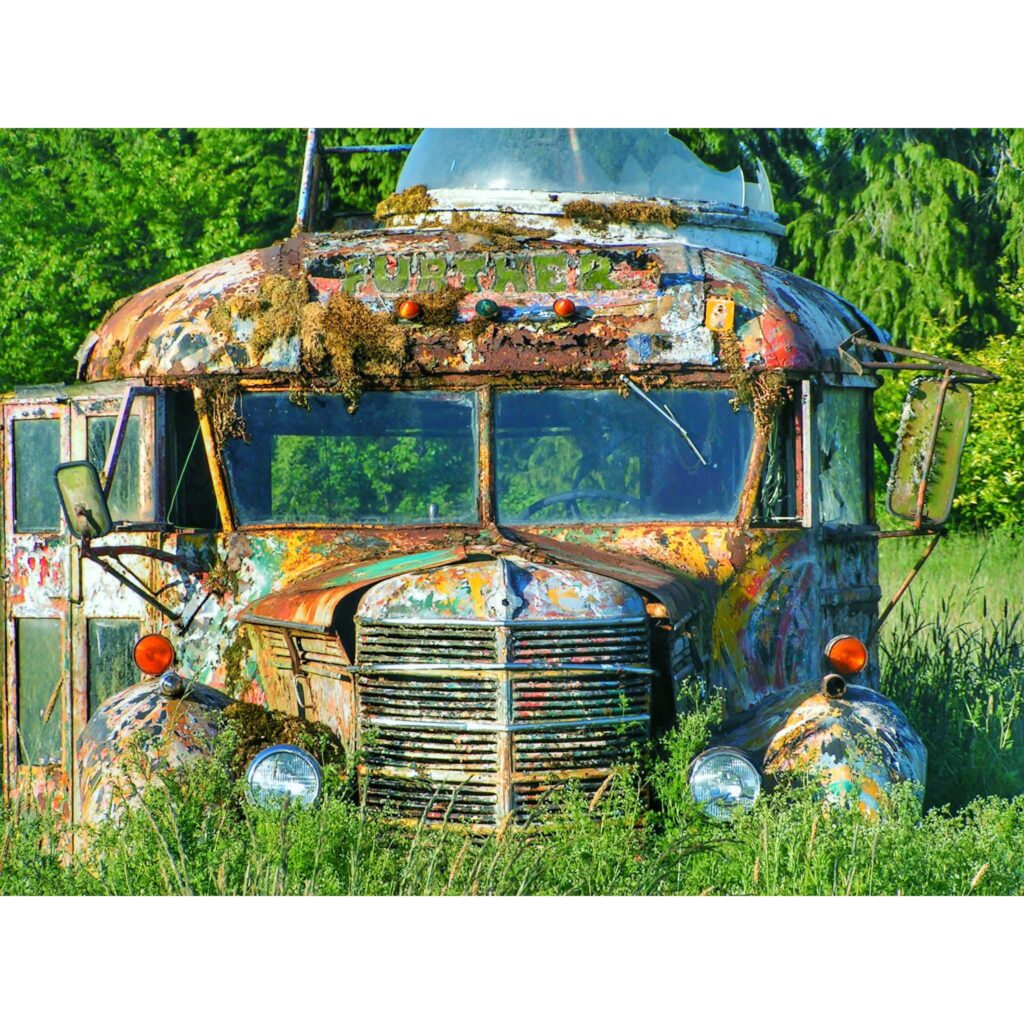
The Furthur Bus Leaves the Barn and Heads Toward Restoration

The most famous bus in counterculture history has finally come out of hiding. Furthur, the hand-painted 1939 International Harvester school bus driven by author Ken Kesey and the Merry Pranksters, left its longtime home on the Kesey family farm near Pleasant Hill, Oregon, in August 2026 for its first public exhibition ahead of a formal, multi-phased restoration. It had not been seen by the public in more than five decades, and for the fans who came to see it in San Francisco, the moment felt like meeting a piece of history in person.
Leaving the Kesey Farm
After the 1969 trip to the original Woodstock festival, the bus returned to Oregon and never really left again. It sat on the Kesey family property for decades, eventually moving from an open field into a barn for some protection from the weather. In mid August 2026, it was loaded onto a trailer and made the journey to San Francisco, the city where so much of its story began. Ken Kesey himself once turned down a request from the Smithsonian, because the museum could store the bus but could not put it on display. The family chose to wait for the right opportunity, and this was it.
For readers who follow the Dead, the name carries extra weight. The bus was the vehicle for the 1964 cross-country trip with the Merry Pranksters, and its destination sign, Furthur, later lent its name to the band that Bob Weir and Phil Lesh led together. Its paint and spirit run through the whole Acid Test era that shaped the Dead’s earliest days.
Forever Grateful at Golden Gate Park
The bus was the centerpiece of Forever Grateful / Golden Gate Park, a counterculture exhibition presented by the Haight Street Art Center at the County Fair Building in Golden Gate Park from September 5 through October 25, 2026. It was the center’s second Grateful Dead focused exhibition of the year and was designed for participation, with interactive booths, liquid light shows, vintage concert photography, live performers, projections, puppetry and storytelling installations. Jerry Garcia’s mint condition BMW stood nearby, on public display for the first time. Coverage of the opening, including a report from OregonLive, captured how many people lined up to see a bus most had only known from photographs.
The timing was deliberate. The organizers wanted the public to see Furthur in its weathered, authentic state, rust and faded paint included, before any restoration work began. That raw condition is part of what made the exhibition so moving, and it will not exist in quite the same way again.
A Careful, Multi Phase Restoration
With the exhibition now closed, the bus enters the first phase of restoration. The effort is led by the Oregon nonprofit Furthur Down the Road Foundation, founded by Stephanie Kesey, along with Ken Kesey’s son Zane Kesey, with the Haight Street Art Center team helping to develop the full multi phase plan. The stated goal is to return the bus to its original 1960s condition and preserve Ken Kesey’s legacy.
The approach is about preservation, not replacement. Specialists plan to remove the rust and repair decades of structural decay while saving as much of the original sheet metal and hand painted psychedelic artwork as possible. The multi stage work is expected to stabilize the chassis, rebuild the drivetrain, and restore the interior roof top platform and the sound wiring used during the 1964 cross-country trip and the early Acid Tests.
Cost estimates vary widely, from roughly the amount raised so far to as much as a couple million dollars. The foundation has been raising money for years through online auctions, authenticated pieces of Neal Cassady’s seat leather, and donated Grateful Dead posters from artists Stanley Mouse and Mike DuBois, and reports say a couple hundred thousand dollars has been raised to date. Zane Kesey told OPB it is the first time he has felt solid hope about the project, instead of simply trying to roll a rock up a hill.
A Bus That Carried a Culture
Furthur is more than a vehicle. It is the rolling symbol of an era that produced the Acid Tests, the early Dead and a generation of artists who believed art could be a shared experience. Ken Kesey once said the bus was his best work, better than his books. Seeing it in person, and knowing it will now be carefully brought back to life, gives that statement a new kind of meaning. The hope among its caretakers is that after restoration it will remain visible to the public for generations, and the Haight Street Art Center is even exploring a permanent counterculture museum display.
If you want to help, the foundation accepts contributions through its website, and updates on the restoration will be shared there as the work progresses.

