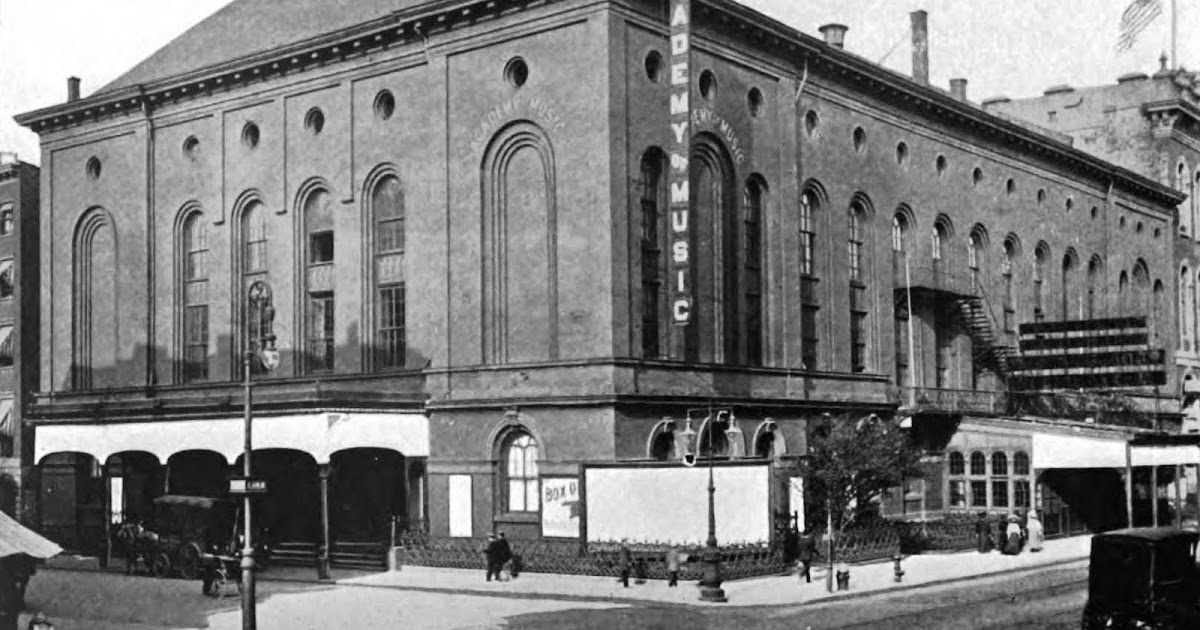
The Grateful Dead Live Tonight on Don's Pick is from the Academy of Music in New York on Today's Date, March 21, 1972
The Grateful Dead Live: March 21, 1972 — The Night That Ignited a Legendary Era
There are live recordings—and then there are moments that transcend the category entirely. Performances that do not simply document a band on stage, but instead capture a turning point, a shift in chemistry, a recalibration of sound that echoes forward through decades.
On March 21, 1972, at the Academy of Music in New York City, Grateful Dead delivered exactly that kind of performance.
This was not just another night on the calendar.
It was the opening statement of a seven-night residency—and the ignition point for what would become one of the most revered periods in live music history: the road to Europe ’72.
For listeners of Live Jam and followers of Don’s Pick, this show stands as a definitive example of what live music is capable of when a band is operating at full creative bandwidth.
The Context: A Band on the Edge of Transformation
By early 1972, the Grateful Dead were no longer a psychedelic experiment—they were a fully realized live organism, capable of moving between structured songwriting and open-ended improvisation without friction.
This residency at the Academy of Music was designed as a proving ground. A space to refine arrangements, test new material, and solidify a lineup that was evolving in real time.
The stage configuration that night was historically unique:
- Jerry Garcia leading both guitar work and tonal exploration
- Ron McKernan still present, bringing blues-rooted intensity
- Keith Godchaux adding a new harmonic dimension
- Donna Jean Godchaux stepping into the lineup during this residency
This overlap of eras—Pigpen’s raw blues influence alongside Keith and Donna’s more refined musicality—created a rare sonic balance that would not last long, but remains deeply valued by listeners and historians.
The Live Debuts That Changed the Setlist Forever
The March 21 performance introduced two songs that would go on to become essential parts of the Dead’s live catalog:
- “Looks Like Rain” — debuted with Jerry Garcia on pedal steel guitar, adding a textural layer rarely heard in the band’s live performances
- “The Stranger (Two Souls in Communion)” — a deeply expressive piece that leaned into emotional storytelling and vocal delivery
These were not tentative premieres. They were fully realized performances that immediately integrated into the band’s evolving identity.
Set One: Precision, Momentum, and Controlled Fire
The first set followed a structure that would define much of the Dead’s 1972 approach—tight, song-driven performances with subtle improvisational expansion.
Opening with “Bertha”, the band established immediate energy, moving through a sequence that balanced Americana, blues, and emerging jam vehicles:
- “Black-Throated Wind”
- “Sugaree”
- “Mr. Charlie”
- “Tennessee Jed”
- “Playing in the Band”
Each performance was crisp, but never rigid. The arrangements breathed. Tempos shifted organically. Transitions felt conversational rather than rehearsed.
The defining moment of the first set arrived with a 14-minute “Good Lovin’”, driven by Pigpen’s vocal command and the band’s ability to stretch a familiar structure into something expansive without losing momentum.
The transition into “Casey Jones” closed the set with authority—tight, driving, and unmistakably live.
Set Two: The Expansion Begins
If the first set demonstrated control, the second set unleashed exploration.
The sequence of:
- “Truckin’” → “Drums” → “The Other One” → “Wharf Rat”
represents one of the earliest fully realized examples of the Dead’s second-set architecture—a continuous flow of improvisation, thematic development, and dynamic contrast.
“Truckin’” functioned as the gateway, opening into rhythmic abstraction during “Drums,” before dissolving into the fluid, unpredictable territory of “The Other One.”
Here, the band moved beyond song form entirely. Time signatures blurred. Tonal centers shifted. Communication became instinctual.
“Wharf Rat” brought the performance back into focus, delivering emotional weight after the abstract exploration.
The Closing Sequence: A Masterclass in Live Energy
The final stretch of the show demonstrated the Dead’s ability to re-engage the audience after deep improvisation:
- “Sugar Magnolia”
- “Ramble On Rose”
- “Me and My Uncle”
- “Big Railroad Blues”
And then the closing run:
- “Not Fade Away” → “Goin’ Down the Road Feeling Bad” → “One More Saturday Night”
This sequence was not just a finale—it was a release. A collective moment where band and audience converged in rhythm, repetition, and shared energy.
The Venue: Intimacy Before the Arena Era
The Academy of Music, later known as the Palladium, provided a setting that is almost impossible to replicate today.
Located on 14th Street in Manhattan, the venue offered:
- A relatively intimate capacity compared to later arena shows
- Close proximity between band and audience
- An acoustic environment that emphasized clarity and presence
This residency captured the Grateful Dead at a scale where nuance could still be felt in the room—before the transition to larger venues altered the listening experience.
Don’s Pick: Why This Show Matters Now
Every Saturday night, Don’s Pick delivers a curated listening experience that cuts through noise and focuses on what truly matters in music—performance, depth, and authenticity.
The March 21, 1972 show is exactly the kind of recording that defines the spirit of Don’s Pick.
It offers:
- A band in transition, capturing multiple eras simultaneously
- Live debuts that would become foundational
- A balance between structured songwriting and open improvisation
- A recording that feels immediate, even decades later
This is not just a recommendation.
It is essential listening.
The Legacy of March 21, 1972
Looking back, this performance stands as more than the opening night of a residency. It is the prologue to a historic run that would lead directly into the Europe ’72 tour—widely regarded as one of the greatest live periods in rock history.
But even without that context, the show holds its own.
It is a complete document of what the Grateful Dead did best:
- Build momentum across a full performance
- Introduce new material without hesitation
- Expand songs into improvisational landscapes
- Reconnect with the audience at exactly the right moments
The Bottom Line
The March 21, 1972 performance at the Academy of Music is not just a great live recording—it is a blueprint.
It shows what happens when:
- A band is fully engaged
- A setlist is thoughtfully constructed
- Improvisation is embraced rather than controlled
- The live environment is treated as the primary canvas
For Live Jam, for Don’s Pick, and for anyone who understands the power of live music, this show represents the standard.
This is where the moment matters.
This is where music evolves in real time.
This is where the Grateful Dead became something more than a band—they became an experience.