April Fools’ Alchemy in Passaic Tonight! Don's Pick is from April Fools Day 1980!
 DJ Don Edwards
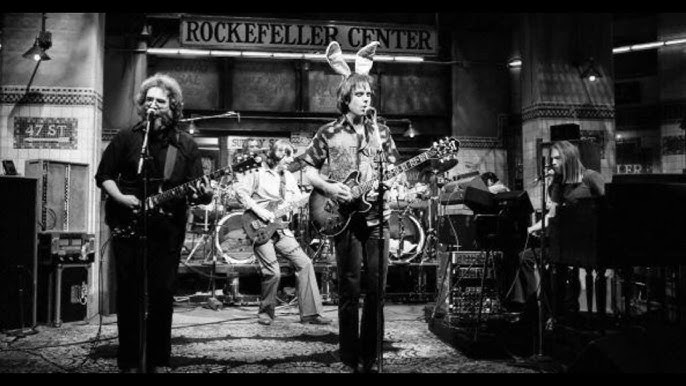
April Fools’ Alchemy in Passaic: The Grateful Dead’s 1980 Capitol Theatre Show That Turned Chaos Into Canon—and Why It Still Resonates Today. There are concerts that live in memory, and then there are nights that evolve into mythology—events retold, dissected, and replayed until they become part of the cultural fabric itself. On April 1, 1980, the Grateful Dead delivered one of those nights inside the intimate walls of the Capitol Theatre in Passaic, New Jersey. What unfolded that evening was not simply a performance but a masterclass in spontaneity, humor, and the band’s singular ability to dissolve the boundary between stage and audience. It remains one of the most talked-about shows in the band’s extensive live history, a moment where irreverence and musicianship collided in a way only the Dead could execute.
The setting itself was crucial. The Capitol Theatre, with a capacity of just over 3,000, offered a level of intimacy that amplified every nuance of the band’s performance. This was not a cavernous arena where spectacle dominated; it was a room where connection mattered, where the smallest shift in energy could ripple through the crowd. Tickets for the three-night run—from March 30 through April 1—were distributed through a rare fan mailing list lottery, ensuring that those in attendance were deeply invested, tuned in, and ready for whatever might unfold. In the world of the Dead, expectation was always paired with unpredictability, and on this particular night, the band leaned fully into that dynamic.
The opening moments of the show have since become legend. As the band launched into Chuck Berry’s “Promised Land,” it quickly became apparent that something was off. Jerry Garcia and Brent Mydland were behind the drum kits, Bob Weir had moved to the keyboards, Phil Lesh was handling lead guitar duties, while Bill Kreutzmann and Mickey Hart had taken on bass, rhythm guitar, and vocals. The result was intentionally chaotic—a version of the song that stumbled, swerved, and resisted cohesion at every turn. It was a deliberate dismantling of expectation, a prank executed with precision in its lack of precision.
When the song concluded, Garcia’s now-iconic “April Fools!” call cut through the room, and the band reset, returning to their familiar positions. What followed was a second take on “Promised Land,” this time delivered with the tightness and energy that defined their live sound. In that moment, the prank revealed its deeper purpose. It was not simply a joke; it was a reminder of the band’s ethos. The Dead were never just about perfection—they were about possibility, about embracing the unexpected and transforming it into something meaningful.
The rest of the first set unfolded with a balance of structure and looseness that reflected the band’s dual identity. Songs like “Candyman,” “Friend of the Devil,” and “Deal” were delivered with clarity and momentum, while transitions such as “Me and My Uncle” into “Big River” showcased the seamless interplay that had become a hallmark of their performances. Even in the wake of the opening prank, the band maintained a sense of cohesion, grounding the set in musicality while allowing space for spontaneity.
If the first set established the tone, the second set elevated the night into something more expansive. Opening with “Feel Like a Stranger,” the band signaled a shift toward deeper exploration. The transition from “China Cat Sunflower” into “I Know You Rider” carried a familiar warmth, but it was the sequence that followed—“Estimated Prophet” into “He’s Gone” into “The Other One”—that defined the set’s significance. This was the Grateful Dead operating at full capacity, weaving together themes, motifs, and improvisational passages into a continuous narrative that unfolded in real time.
The “Drums” and “Space” segments that followed extended this exploration, pushing beyond traditional song structure into abstract territory where rhythm and texture took precedence over melody. These moments, often polarizing for casual listeners, were central to the Dead’s identity, representing their willingness to venture into uncharted territory. The return to form with “Stella Blue” provided a moment of emotional grounding, its reflective tone offering contrast to the preceding experimentation, before “Around and Around” brought the set to a high-energy close.
The encore, “Shakedown Street,” served as both a celebration and a release, encapsulating the groove-oriented direction the band had embraced in this era. It was a fitting conclusion to a night that had moved fluidly between humor, introspection, and musical innovation.
Contextually, the April 1 show cannot be separated from the broader run at the Capitol Theatre. Just two nights earlier, on March 30, the band had welcomed an unexpected guest: John Belushi, whose onstage cartwheels during “U.S. Blues” added another layer of unpredictability to the run. These moments, while seemingly incidental, contributed to the atmosphere that defined the three nights—an environment where anything felt possible, and where the line between performance and experience blurred.
What makes the April 1, 1980 show endure is not just the novelty of the prank or the strength of the setlist, but the way those elements coexist. The humor of the opening does not diminish the musical achievements of the night; it enhances them, providing a lens through which the band’s philosophy becomes clearer. The Grateful Dead were never interested in presenting a static product. Each show was an event, a living, evolving entity shaped by the interplay between musicians and audience.
This ethos continues to resonate today, not only through recordings and archival releases but through the ongoing culture that surrounds the band’s legacy. It is a culture built on discovery, on the idea that each performance offers something unique, something that cannot be replicated. For listeners revisiting the April 1 show, the experience is not simply nostalgic—it is instructive, a reminder of what live music can achieve when it embraces risk and spontaneity.
That spirit is carried forward in contemporary spaces as well, including the weekly broadcast of Don’s Pick, a radio show that has become a destination for listeners seeking a deeper connection to music’s expansive landscape. Airing every Saturday night, Don’s Pick reflects a curatorial approach that mirrors the Grateful Dead’s own philosophy—eclectic, intentional, and driven by a genuine passion for discovery. Each episode is constructed with care, offering a sequence of selections that move beyond surface-level listening and into a more immersive experience. Within that framework, moments like the April 1, 1980 performance find new life, contextualized within a broader narrative that celebrates both the history and the ongoing evolution of live music.
In revisiting the Capitol Theatre show, what becomes clear is that its significance extends beyond a single night. It represents a way of thinking about performance—one that values authenticity over perfection, exploration over predictability. It is a reminder that the most memorable moments in music often arise not from meticulous planning, but from the willingness to embrace the unexpected.
For New Jersey, the legacy of that night is a point of cultural pride, a moment when a local venue became the stage for a performance that continues to echo through decades of musical history. For the Grateful Dead, it stands as a testament to their enduring influence, a snapshot of a band at once playful and profound, capable of turning an April Fools’ joke into a defining chapter of their story.