
The modern Grateful Dead universe is no longer simply surviving on nostalgia. It is expanding, evolving, and redefining what the live improvisational music scene looks like in America in 2026. What once existed as a devoted underground network of parking lot gatherings, regional tribute acts, cassette traders, and dedicated Deadheads has transformed into a fully realized touring ecosystem powered by elite musicianship, intergenerational audiences, destination festivals, museum collaborations, and an unwavering devotion to the improvisational spirit that made the Grateful Dead one of the most influential live bands in music history.
Across the country, the current wave of Grateful Dead-inspired performance culture is operating at an astonishing scale. Large outdoor amphitheaters, legendary theaters, destination resorts, summer festivals, and iconic rock venues are once again being filled with audiences chasing the same sense of spontaneity, musical risk, emotional connection, and communal energy that defined the original Grateful Dead experience for decades. But this is not imitation for the sake of imitation. The modern tribute movement has matured into something much larger. These bands are no longer simply recreating songs. They are preserving a philosophy of live performance that many believe has disappeared from mainstream touring music.
At the center of this growing movement stands Dark Star Orchestra, a band that has spent years building one of the most respected and historically accurate live recreations in modern touring music. Their newly announced 2026 touring slate confirms that the appetite for Grateful Dead live culture has never been stronger. The group’s enormous multi-phase summer expansion is shaping up to be one of the largest tribute-band touring operations in the country, stretching from intimate theaters to major outdoor venues and destination events.
One of the most significant announcements surrounding the band is the upcoming two-night stand at the legendary Greek Theatre in Berkeley on July 31 and August 1. Presented as “The Music Never Stops: A Rex Foundation Benefit & Tribute to Bob Weir,” the event represents far more than another concert run. It symbolizes the continued connection between the original Grateful Dead community and the musicians carrying the torch today. The Rex Foundation itself has long represented one of the enduring philanthropic extensions of the Grateful Dead legacy, and the decision to pair that mission with a major tribute celebration underscores how interconnected this entire ecosystem has become.
Beyond the Berkeley stand, Dark Star Orchestra’s 2026 summer routing demonstrates just how nationally embedded the Grateful Dead tribute scene now is. The tour launches in New Hampshire before heading into major East Coast markets, including multi-night appearances at the Rooftop at Pier 17 in New York City and the historic Bethel Woods Center for the Arts, the site forever associated with the spirit of Woodstock-era counterculture. These are not secondary-market venues. These are iconic stages tied directly to American live music history, and the fact that Grateful Dead tribute performances continue to command them speaks volumes about the longevity of the music itself.
Even more revealing is the continued growth of destination-based Deadhead experiences. Dark Star Orchestra’s confirmation of the return of Jam in the Sand for 2027 in Jamaica highlights how the community has evolved into a travel-driven culture experience that mirrors the destination festival boom seen throughout the jam-band world. What began decades ago as fans following a touring band city to city has now become fully immersive music tourism centered around shared improvisational culture.
At the same time, Joe Russo’s Almost Dead continues to push the musical boundaries of what Dead interpretation can sound like in the modern era. Where Dark Star Orchestra leans heavily into historically informed recreations, JRAD operates with a more explosive, progressive, and high-velocity approach that has attracted younger improvisational audiences alongside veteran Deadheads. Their recent New Orleans residency at the Fillmore became one of the most talked-about jam performances of the year after surprise guest appearances by jazz legend Branford Marsalis and guitar powerhouse Warren Haynes elevated the performances into marathon improvisational explorations.
Extended versions of “Touch of Grey” and “Scarlet Begonias” reportedly unfolded into sprawling collaborative jam sequences that perfectly captured the modern evolution of Grateful Dead-inspired performance. It was jazz improvisation, psychedelic rock exploration, southern jam-band energy, and freeform musical communication all happening simultaneously in front of audiences that increasingly span multiple generations.
That generational crossover may ultimately become the defining story of the modern Grateful Dead revival. Younger audiences who never saw the original band are discovering the music through live reinterpretation rather than archival recordings alone. The songs remain alive because the performance structures remain alive. No two nights are identical. No setlist is guaranteed. No solo is locked into place. That unpredictability — the very thing that once made the Grateful Dead both controversial and beloved — is precisely what modern audiences appear to be craving again in an era dominated by algorithmic playlists and heavily programmed performances.
JRAD’s summer schedule further confirms the scale of this renewed momentum. The band launches its seasonal run with a major appearance at the Stone Pony Summer Stage, one of the East Coast’s most iconic live music venues and a cornerstone of the New Jersey concert landscape. From there, the group embarks on a sprawling 13-city amphitheater run stretching through late August, further cementing their place as one of the premier live improvisational acts operating anywhere in the country today.
Meanwhile, another remarkable development is unfolding in Boston, where the Folk Americana Roots Hall of Fame and Rhino Records are collaborating on a special event commemorating the exact 50th anniversary of the Grateful Dead’s historic June 11, 1976 performance. Taking place at the Boch Center Wang Theatre, the evening merges live tribute performance, historical exhibition elements, archival appreciation, and official merchandise activations into a full-scale cultural celebration.
The event itself demonstrates how deeply institutionalized the Grateful Dead legacy has become within American music history. Museums, archives, cultural institutions, and historic theaters are increasingly treating the Grateful Dead not simply as a rock band, but as an essential chapter in the evolution of live American performance art. That distinction matters. Few bands have inspired such an enduring ecosystem of reinterpretation, scholarship, fandom, improvisation, and cultural continuity decades after their peak touring years.
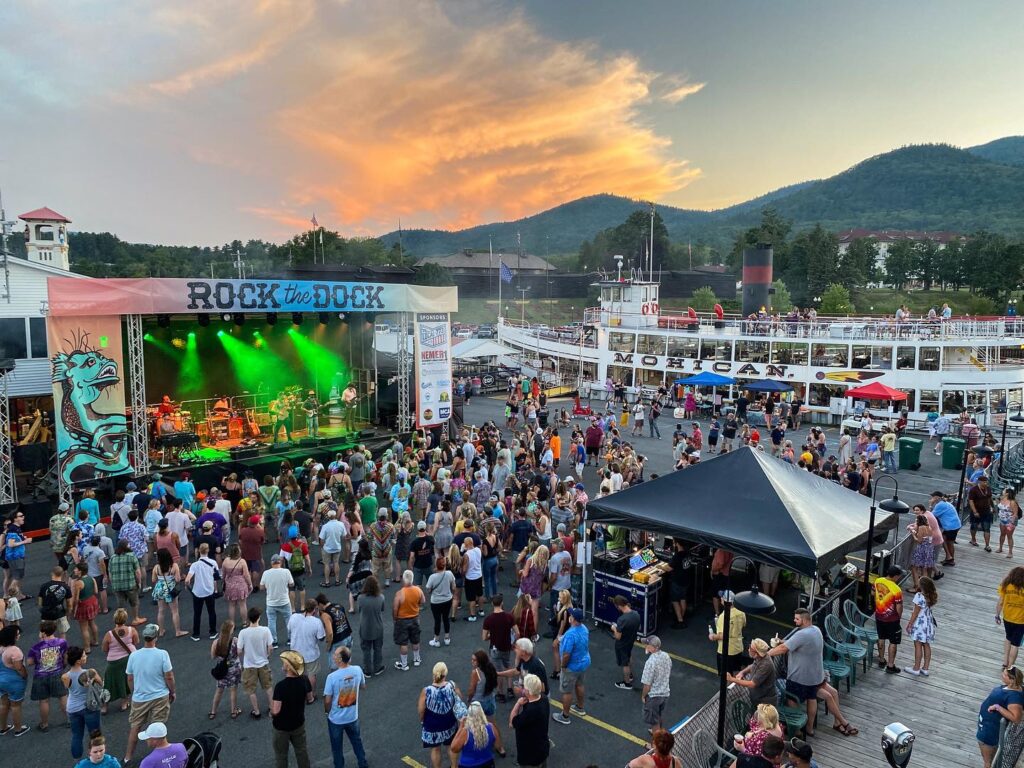
Regional festivals are also playing a major role in the continued expansion of the tribute scene. Events like the Rock the Dock Music Festival in Lake George are increasingly centering entire lineups around Grateful Dead-inspired acts and improvisational crossover bands. Dark Star Orchestra’s headlining slot alongside tribute act Neon Avenue and improvisational outfit Spafford reflects how interconnected the jam-band and tribute ecosystems have become. What once might have been viewed as separate scenes are now blending into one expansive improvisational touring culture.
The larger truth emerging from all of this is impossible to ignore. The Grateful Dead’s music never truly stopped touring. It simply evolved into a decentralized network carried forward by musicians, communities, festivals, radio programs, and audiences committed to preserving the spirit of exploration that defined the original band. The modern tribute scene is not operating as a museum piece. It is functioning as a living organism that continues to mutate, grow, and inspire new generations of performers.
That spirit is also alive tonight on The Music Plays The Band Radio Show, a program devoted entirely to live performances by Grateful Dead cover bands and tribute artists carrying the catalog forward across America. The show has become an important destination for listeners seeking both established names and emerging regional acts interpreting the Grateful Dead songbook through their own unique musical lens. In many ways, the program represents exactly what has always made the Dead universe different from every other rock phenomenon. The music belongs to the community as much as it belongs to the performers themselves.
For decades, Deadheads have understood something the broader music industry is finally beginning to fully appreciate: the Grateful Dead were never simply about songs. They were about process. Improvisation. Risk. Discovery. Reinvention. Collective experience. Audience participation. Musical conversation. The reason this culture continues thriving in 2026 is because those principles remain timeless in a live setting.
As more major venues embrace tribute acts, more festivals incorporate improvisational lineups, and more younger listeners discover the emotional unpredictability of long-form live performance, the Grateful Dead’s influence continues expanding far beyond nostalgia. It now represents one of the last truly organic live music communities in modern American culture.
And judging by the scale of the current touring announcements, the explosive audience demand, the museum collaborations, the sold-out residencies, and the relentless growth of bands like Dark Star Orchestra and Joe Russo’s Almost Dead, this next chapter of the Grateful Dead live universe may ultimately become even larger than anyone expected.

