
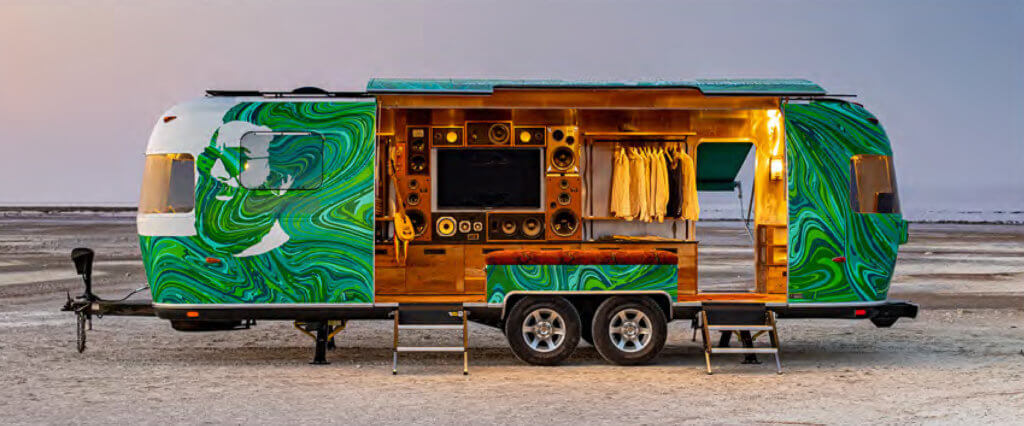
Planet Drum Circle is Today & The JGB Radio Show is Tonight! The Ace Radio Show is Tomorrow night, The Phil & Friends Radio is Tuesday Night…
Jul 05, 2026
The Rhythm at the Center of Everything: Planet Drum Circle, Mickey Hart’s World Mission, and the Science of Why Drumming Heals
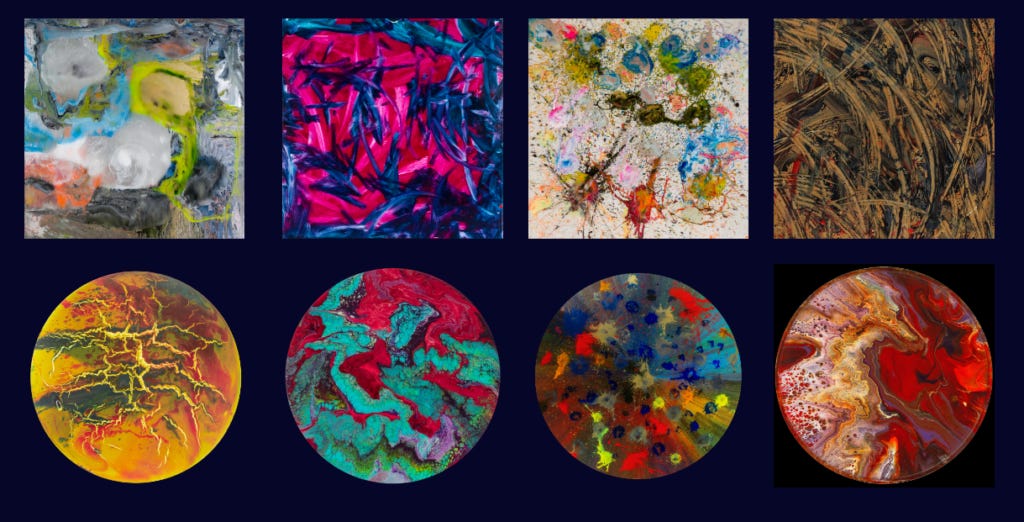
There is a question that sits underneath all of Mickey Hart’s work, one that he has been pursuing with the focused intensity of a scientist and the passion of a true believer for more than half a century: what does rhythm actually do to a human being? Not what does it feel like, which anyone who has ever stood close to a drum set or danced at a concert already knows in the body, but what does it actually do — neurologically, physiologically, spiritually, cosmically — when acoustic vibration meets living tissue? Hart has spent his life building an answer to that question, and tonight on The Grateful Dead Live, Planet Drum Circle is the most direct expression of where that answer has led.
Every Sunday, for one hour, Planet Drum Circle gathers listeners into a rhythmic space unlike anything else on the radio — a broadcast guided by Mickey Hart and Bill Kreutzmann, the two percussionists whose interplay defined the sonic architecture of the Grateful Dead for thirty years, and now defines something larger still. This is not a show about nostalgia, though the history it draws from is extraordinary. It is a show about rhythm as a living force, as a universal language that preceded every other musical form, and as a tool for connection across cultural and geographic distances that most music cannot bridge. Planet Drum Circle is the audio expression of a worldview that Hart has been articulating for decades and that becomes more urgent and more scientifically substantiated with every passing year. Click Here to Read the Full Grateful Dead Live Substack!
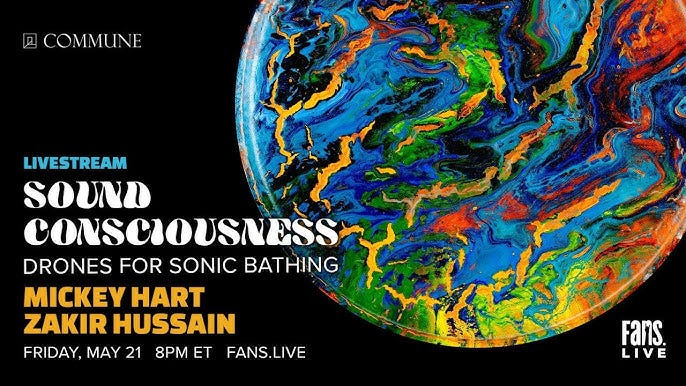
Sound Consciousness: When Rhythm Becomes a Wellness Practice. Hart’s work at the intersection of percussion and human wellbeing found one of its most fully realized expressions in Sound Consciousness: Drones for Sonic Bathing, a digital meditation course developed in collaboration with Zakir Hussain — the legendary Indian tabla virtuoso whose passing in late 2024 made him one of the most mourned figures in all of world music, and whose work with Hart represents some of the most profound cross-cultural rhythmic dialogue in contemporary musical history.
The course, available through the mindfulness platform Commune, is built around the use of drone sounds — prolonged, continuous tones sustained at specific frequencies — as a framework for nervous system regulation and deep meditative states. Hart describes these sonic architectures as environments rather than compositions, spaces that the listener enters and inhabits rather than music that is performed for a passive audience. The distinction is precise and important: in a drone environment, the boundary between listener and sound begins to dissolve, the ordinary cognitive noise of waking consciousness quiets, and the kind of deep physical and neurological rest that most people rarely achieve becomes accessible.
Tune in today 11AM EST. The circle is open.
Click Here to Read the Full Grateful Dead Live Substack!
Jerry Garcia Never Really Left: The JGB Radio Show, Bertha on the Road, and the Living Legacy of a Man Who Changed Everything
There is a version of Jerry Garcia’s story that ends on August 9, 1995. That is the date, the fact, the marker in time that every obituary and tribute piece begins with. But there is another version — the truer version, the one that the music itself insists upon — where the story has no ending at all. It simply keeps moving, finding new shapes, new voices, new ways of arriving in rooms full of people who need exactly what Garcia spent his life providing. Tonight, on The Grateful Dead Live, the JGB Radio Show makes that version of the story audible. Every Sunday night beginning at 9 PM Eastern, the Jerry Garcia Band Radio Show is exactly where it belongs: in the air, in your speakers, in the ongoing conversation between Garcia’s music and everyone who has ever been changed by it.
The JGB Radio Show is not simply a program about what Jerry Garcia sounded like with his solo ensemble. It is a sustained argument about what that music meant and continues to mean — about the specific kind of emotional and improvisational intelligence Garcia brought to a band configuration that was entirely his own, distinct from the Grateful Dead in ways that reveal dimensions of his artistry that the larger band’s communal energy sometimes obscured. The Jerry Garcia Band gave Garcia a different kind of room to work in. Smaller, more intimate, more responsive to his particular musical instincts. What he did inside that room remains some of the most extraordinary improvised music in American popular history, and the JGB Radio Show exists to make sure it is heard.
Jerry Garcia and the Band That Was Purely His Own. To understand what the Jerry Garcia Band represented in Garcia’s musical life, it helps to understand what distinguished it from the Grateful Dead — not as a lesser or supplementary project but as a genuinely separate creative environment that made different demands and produced different results. Click Here to Read the Full Grateful Dead Live Substack!
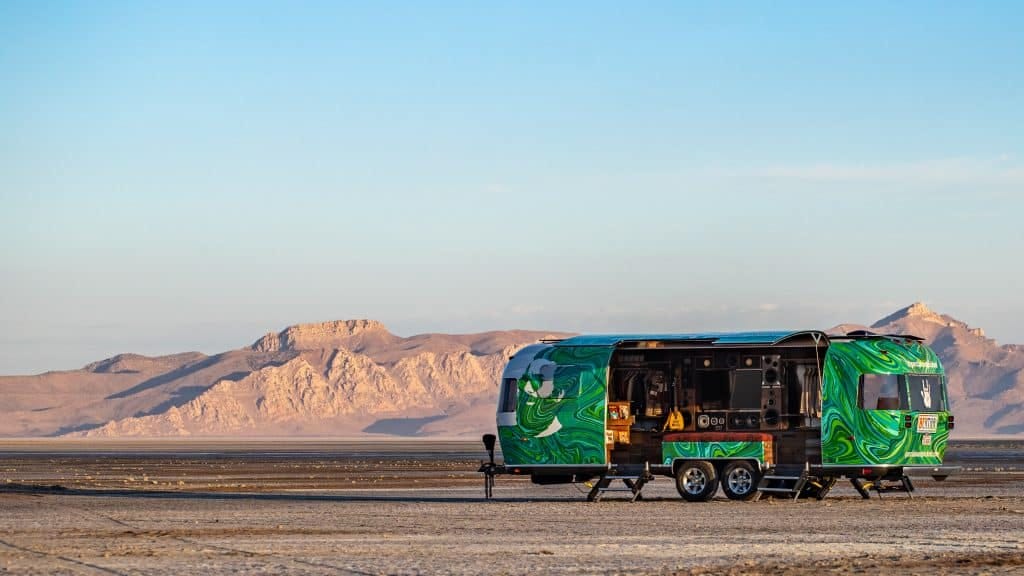
Bertha Is Rolling: Garcia Hand Picked Takes the Legacy on the Road. While the JGB Radio Show keeps Garcia’s music alive in the sonic dimension, a remarkable physical project has been doing something analogous in the material world — and its name is drawn from exactly the right source. Bertha, the custom-retrofitted Airstream trailer that serves as the experiential flagship for the Garcia Hand Picked cannabis brand, is named after the classic 1971 Grateful Dead song, and everything about the way it operates reflects the specific values that Garcia attached to that name. Click Here to Read the Full Grateful Dead Live Substack!
What Comes Next: The Future of the Grateful Dead, the Technology That Could Resurrect Them, and the Living Community That Never Stopped
Every great story eventually arrives at the question of what happens after. For the Grateful Dead, that question has been asked many times — after the Summer of Love, after the acid tests, after the commercial peak of the late 1980s, after Jerry Garcia’s passing in 1995, after the Fare Thee Well concerts at Soldier Field in 2015, after Dead & Company’s extraordinary run through the Sphere in Las Vegas. Each time, the community has found an answer that surprised even its most devoted members. The music has migrated, mutated, and returned in forms that nobody fully anticipated, and the result has always been something that, however different from what preceded it, was recognizably connected to the spirit that started the whole thing rolling in a San Francisco garage more than sixty years ago. Click Here to Read the Full Grateful Dead Live Substack!
The Dead & Company Question: What John Mayer Does Next
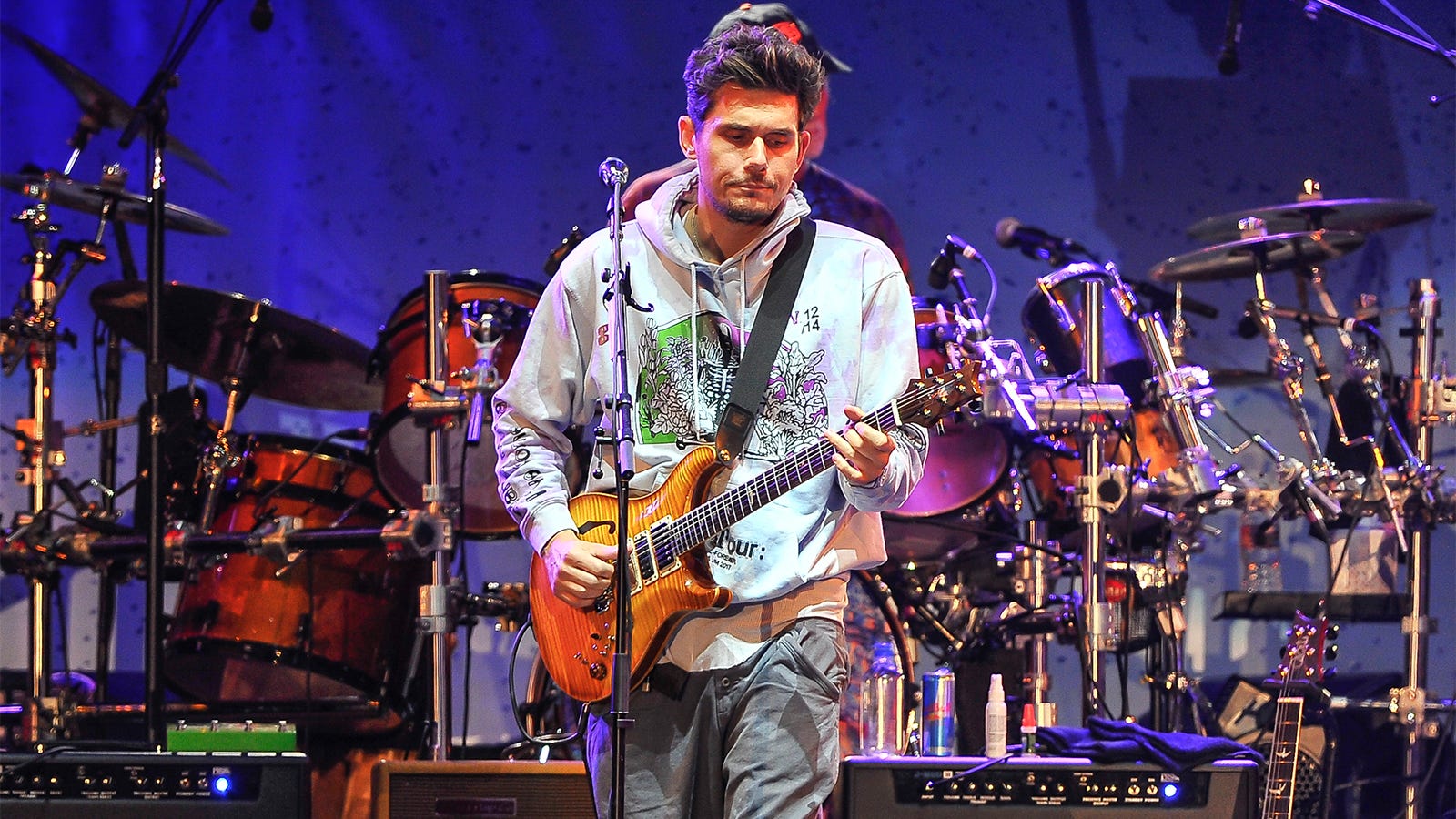
The future of Dead & Company as a touring entity is the subject of more informed speculation than perhaps any other question currently circulating in the jam and legacy rock world, and the reason is straightforward: the situation is genuinely unprecedented. John Mayer, whose involvement with the band began in 2015 and whose musical commitment to the catalog has only deepened in the decade since, holds a significant legal stake in the Dead & Company name. That ownership, combined with his demonstrated willingness to treat the repertoire as a serious long-term artistic commitment rather than a guest appearance, positions him as the most likely architect of whatever the band’s next phase looks like. Click Here to Read the Full Grateful Dead Live Substack!
Fare Thee Well Radio Show features FIVE (5) Hours of Live Music every week!
Every Thursday Night at 9PM EST
Click Here to Read the Full Grateful Dead Live Substack!
The Sphere and the Speculation Around a “Dead Forever” Residency
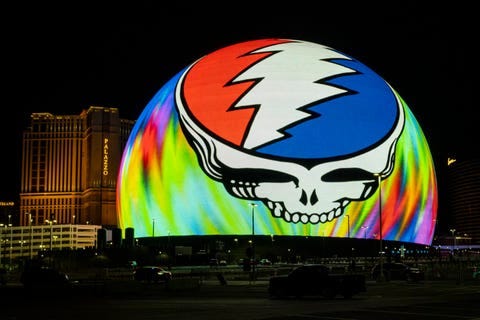
The Dead & Company residency at Las Vegas’s Sphere — the immersive concert venue that opened in 2023 as the most technologically sophisticated music space ever built — produced some of the most visually and sonically extraordinary Grateful Dead performances in the catalog’s history, and it did so in a venue that was designed specifically for the kind of repeat-engagement residency model that the Dead’s audience has always supported. Deadheads do not go to a show once. They go many times, over many nights, in a relationship with a touring entity that treats each performance as a distinct and unrepeatable event. The Sphere model fits that relationship better than almost any other contemporary concert format.
The speculation circulating in industry circles concerns what the venue’s future relationship with the Dead’s brand might look like. Reports of options clauses tied to the original residency agreement have fueled discussion about whether some form of holographic or hybrid legacy performance could eventually occupy the Sphere under a “Dead Forever” or similar framework. The Sphere’s technical capabilities — its wraparound LED screen covering the entire interior surface of the building, its immersive audio system capable of delivering individualized sound to different sections of the audience simultaneously — make it the most natural venue in existence for exactly the kind of AI-augmented, archivally driven experience that the community has begun to seriously discuss. Click Here to Read the Full Grateful Dead Live Substack!
Fare Thee Well Radio Show features FIVE (5) Hours of Live Music every week!
Every Thursday Night at 9PM EST
Click Here to Read the Full Grateful Dead Live Substack!
Holograms, AI, and the Posthumous Concert Question
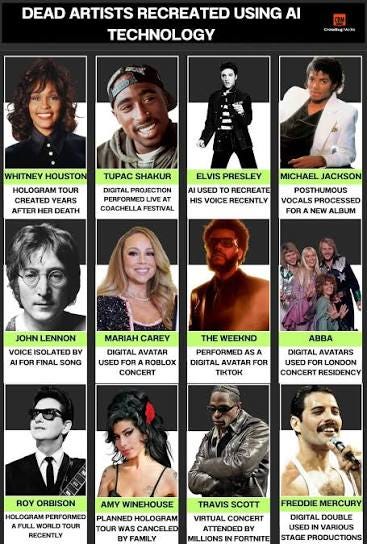
The broader question of what AI-driven and holographic technology means for the future of Grateful Dead performances is one of the most genuinely contested issues in the community right now, and it deserves honest engagement rather than either reflexive enthusiasm or reflexive dismissal. The models that exist — ABBA’s Voyage residency in London, which uses real-time digital avatar technology to present the band as they appeared in the 1970s, and the various KISS and other legacy act holographic projects under development — demonstrate that the technology is real, that audiences will accept it under the right conditions, and that the ethical and artistic questions it raises are not resolved by the technology’s existence.
For the Grateful Dead, the specific opportunity is compelling in ways that are distinct from other legacy acts. The band’s multi-track archive is extraordinarily deep — decades of soundboard recordings, audience recordings, and professionally produced live documents that capture the full sonic complexity of the ensemble at every stage of their career. The visual archive is similarly rich. Combining those resources with modern AI image generation, motion capture, and projection technology could theoretically produce a “performance” that draws on the best of the 1970s, the 1980s, and the stadium era simultaneously, assembled in configurations that the living band never actually played. Click Here to Read the Full Grateful Dead Live Substack!
Fare Thee Well Radio Show features FIVE (5) Hours of Live Music every week!
Every Thursday Night at 9PM EST
Click Here to Read the Full Grateful Dead Live Substack!
The Living Scene: Tribute Bands Carrying the Flame
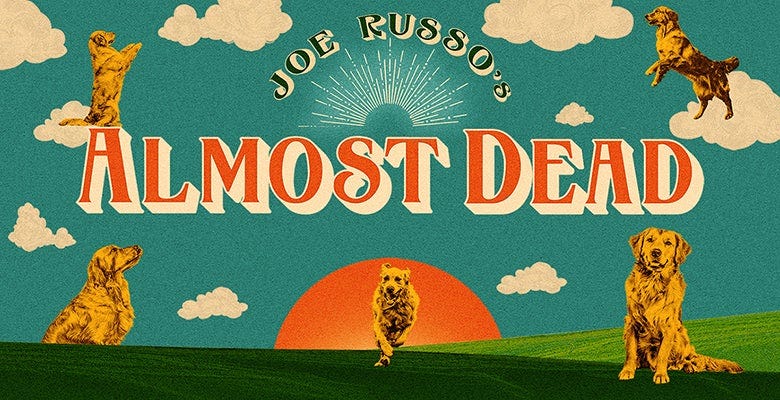
While the broader community processes questions of holograms and AI and the future of the brand, the most immediate and practically significant keeper of the Grateful Dead’s musical flame is the tribute and jam scene — and in 2026, that scene is more active, more geographically distributed, and more musically sophisticated than at any previous point in its history.
At the national touring level, Joe Russo’s Almost Dead continues to redefine what a Grateful Dead tribute can sound like, with a fall 2026 schedule that runs from the MGM Music Hall at Fenway in Boston through Pier 17 in New York City to the Midwest. Dark Star Orchestra is making its most significant philanthropic statement of the year with a two-night Rex Foundation benefit at the Greek Theatre in Berkeley, followed by fall dates in Charlottesville, Harrisburg, and Atlantic City. Live Dead & Brothers — the ensemble combining legacy members from both the Grateful Dead and Allman Brothers families — is actively touring behind their Summer 2026 dates. Terrapin Flyer’s Wave That Flag Summer Tour is in the Rocky Mountain and Pacific Northwest regions. Bearly Dead headlines Brooklyn Bowl in New York on July 11th. Click Here to Read the Full Grateful Dead Live Substack!
The Music Plays The Band Radio Show features FIVE (5) Hours of Live Music every week!
Every Wednesday Night at 9PM EST
Click Here to Read the Full Grateful Dead Live Substack!
The Archive as Living Resource
One dimension of the Grateful Dead’s future that is easy to overlook amid the speculation about holograms and touring configurations is the ongoing vitality of the archival project itself. The band’s recordings — from the early soundboards of the late 1960s through the multi-track documentation of the Sphere residency — represent one of the deepest and most carefully maintained live music archives in existence, and the releases that continue to emerge from that archive consistently demonstrate that there is more extraordinary material available than any single release cycle can adequately convey. Click Here to Read the Full Grateful Dead Live Substack!
What the Next Chapter Looks Like
The honest answer to the question of where the Grateful Dead go from here is that nobody knows precisely, and that uncertainty is itself a form of fidelity to what the band always was. The Grateful Dead spent thirty years demonstrating that the most interesting musical experiences are the ones that cannot be fully anticipated in advance, that the value of any given night was located in the specific and unrepeatable combination of musicians, audience, room, and moment. The future of their legacy is turning out to operate on the same principle.
The music never stops. It just keeps finding new places to play. Click Here to Read the Full Grateful Dead Live Substack!

