Nobody wanted to call it the Grateful Dead.
That’s the thing people forget, or maybe never knew. When the surviving members finally pulled themselves together enough to tour again after Garcia died in August 1995, they made a deliberate choice to leave the name alone. Out of respect, out of grief, out of an honest acknowledgment that the Grateful Dead without Jerry Garcia wasn’t the Grateful Dead.
I couldn’t go. I want to be clear about that. When the surviving members started putting things back together, I wasn’t at a point where I could see anything related to the Grateful Dead. Jerry had just died and I couldn’t fathom any of it without him. I still can’t, honestly. Nobody plays like Jerry. Nobody sustains a note the way he did. Nobody puts all of it together the way he did, the tone, the phrasing, the spaces between the notes, that specific way he had of building something that felt like it was going somewhere important and then arriving exactly there.
Trey gets closer than almost anyone, I suppose, but even Trey is linear in a sense, whereas Jerry somehow turned every note over so fast that it’s never been replicated, as far as I know. The DSO guys have studied the language deeply enough to approximate it. John Mayer brought genuine respect and real technical skill to Dead and Company. But close is really where we’ve gotten so far. Nobody sustains that note. Nobody creates that musical space. People get close, but again, not really.
Then add in his unique vocal pattern, which no one can touch by a mile. You would think that in two decades someone would have developed a vocal approach that could do it exactly like Jerry, but nothing has come even remotely close.
So when this whole post-Jerry era started, I was watching from a distance. I know I missed things. Maybe you went. Maybe you were there for the early Other Ones shows and you have your own story about what that was like. Either way makes sense.
Tonight, the Fare Thee Well Radio Show on The Grateful Dead Live is the right context for all of this. The show exists to honor the arc of everything the surviving members built in the years after Garcia was gone, the different names, the different configurations, the different attempts to answer the same impossible question. There were five distinct answers. Here’s how each one worked.
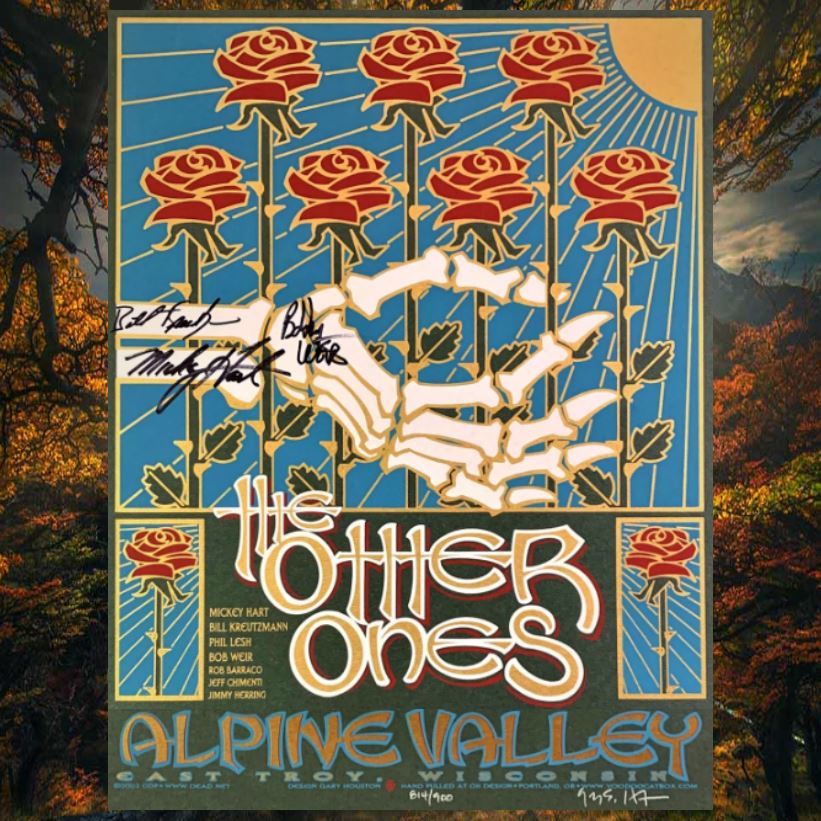
The Other Ones (1998 to 2002): The Name That Said Everything
They took the name from one of the band’s own songs. “The Other One.” It’s not subtle but it’s honest.
Three years after Jerry died, Bob Weir, Phil Lesh, and Mickey Hart decided the community needed something to gather around again. They weren’t wrong. Deadheads had been drifting, showing up to Phil and Friends shows, RatDog gigs, Furthur Festival events, looking for something that felt more whole. The Other Ones was the attempt to provide it.
The initial 1998 lineup was Weir, Lesh, and Hart. No Kreutzmann yet. He came back in 2000, and by 2002 all four principal surviving members were touring together under the same name for the first time since the band stopped. That was not a small thing.
The guest players reflected the same collaborative spirit the Dead had always kept around them. Bruce Hornsby, one of the most naturally fitting keyboard presences the original band ever shared a stage with. Steve Kimock on guitar, technically sophisticated and deeply rooted in the tradition. Jimmy Herring, whose blues and jazz background gave the lead guitar role a melodic intelligence that honored what Garcia built without pretending to replicate it. Susan Tedeschi adding a vocal dimension that opened up new territory.
The Other Ones were imperfect in the ways anything built after enormous loss is going to be imperfect. But they were serious, and they mattered to people who needed them to matter.
The Dead (2003 to 2009): Just Say What You Are
In 2003 they stopped deflecting and called themselves what everyone was already calling them.
The Dead. That’s it. No qualifier.
It was a direct continuation of the 2002 Other Ones lineup, with all four core members, Jimmy Herring still on guitar, and Jeff Chimenti and Rob Barraco on keyboards. Chimenti was building institutional knowledge that would eventually carry all the way through to Dead and Company a decade later.
They toured heavily in 2004, went quiet for a few years, then came back for a significant 2009 arena tour that felt like a proper goodbye to that particular configuration before things shifted again.
Calling themselves The Dead was actually an act of ownership. Eight years after Jerry died, they stopped hiding behind a different name. That took longer than people remember.
Furthur (2009 to 2014): Two Members, a Different Direction
This is where the pattern breaks, and it’s worth understanding why.
Every other unified configuration involved all four surviving core members. Furthur didn’t. Bill Kreutzmann and Mickey Hart chose not to participate. This was strictly Weir and Lesh, the two of them wanting to explore the catalog with a faster, more aggressive rhythm approach.
For drums, they hired Joe Russo, who would later build his own massive following through Joe Russo’s Almost Dead. For lead guitar, they turned to John Kadlecik, the co-founder of Dark Star Orchestra, who had spent over a decade doing something more than covering Garcia: studying the logic behind how he built solos, why he made the choices he made, how he used silence, what made his phrasing identifiable at fifty feet from the stage.
Kadlecik wasn’t pretending to be Jerry. That distinction matters. He’d built his career on understanding Garcia’s musical language deeply enough to speak it fluently. Those are genuinely different things.
A lot of serious Deadheads who followed Furthur across multiple years consider it the most musically creative project the surviving members ran between Garcia’s death and the Fare Thee Well shows. That’s not a universal opinion. But it comes from people who knew exactly what they were comparing it to, and it’s worth taking seriously.
Furthur ran until 2014. Then Weir and Lesh went separate ways again.
Fare Thee Well (2015): One Last Time, All Four
The 50th anniversary produced the only thing that could have produced it. All four of them. On stage together. One final time.
Five nights. Two cities. The final three at Soldier Field in Chicago, which is where Garcia played his very last show with the original band in July 1995. The venue choice wasn’t incidental. Nobody pretended it was.
For lead guitar, they chose Trey Anastasio. Not because anyone thought Trey was Jerry. Nobody thinks that. Nobody should. But Trey had spent his entire career building something large enough and rooted enough in the same tradition that he could stand in that space and be himself rather than performing someone else. That’s different from “close.” That’s its own thing.
Bruce Hornsby came back to the keyboards alongside Jeff Chimenti. Three nights, over 70,000 people each night at Soldier Field. The pay-per-view stream became one of the largest music events in cable history.
[Your Story Here: did you watch Fare Thee Well live or on the stream? Were you finally ready, all those years later? Because I think I was.]
It was the last time the Core Four shared a stage. That remains true.
Dead and Company (2015 to the Present): The Long Run
Immediately after Fare Thee Well, most of the group moved into Dead and Company. Phil Lesh chose not to join, preferring his own touring path through Phil and Friends.
The lineup was Bob Weir, Bill Kreutzmann, and Mickey Hart, with John Mayer on lead guitar, Oteil Burbridge on bass, and Jeff Chimenti on keyboards. Mayer brought something people didn’t fully anticipate before they actually saw it live: a real musical devotion to the catalog that went well past professional competence, plus the technical ability to make something of his own inside the tradition rather than leaning on it.
Kreutzmann stepped away before the final 2023 tour, leaving Weir and Hart as the two remaining original members. The Sphere residency in Las Vegas documented some of the most visually extraordinary performances in the band’s entire history. Then Weir passed, and that era closed.
What All of This Actually Means
I think about the fact that they kept going, all those years, through all those different names and configurations, and I find it remarkable even when I couldn’t personally be part of it for a long stretch of time.
It would have been easier to stop. A lot of bands have stopped for far less reason. The fact that they kept trying to find the right configuration, kept showing up for audiences who needed the music even when the musicians weren’t always certain they had the answer yet, that’s not nothing. That’s actually most of the story.
The Fare Thee Well Radio Show exists to honor that entire arc, not just the famous nights but the years of figuring it out along the way.
Tune in tonight. It’s a good night for this particular history.