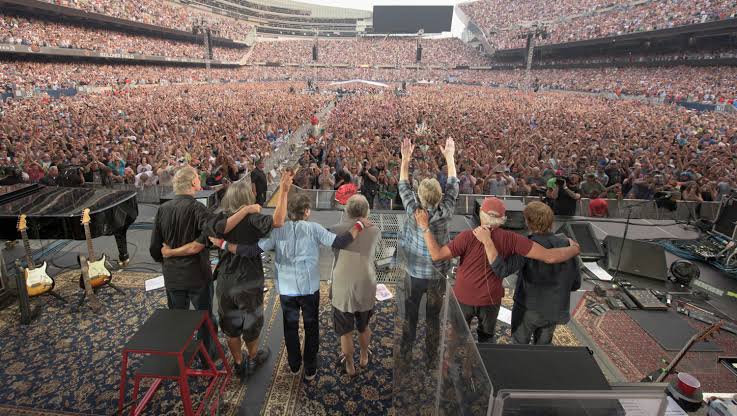
Sixty years after a group of adventurous musicians began redefining the possibilities of live performance in San Francisco, the Grateful Dead remain one of the most active, discussed, collected, and celebrated musical institutions in the world. Few bands in rock history have sustained such a passionate community across multiple generations, and even fewer have managed to remain culturally relevant long after their most active touring years. Yet in 2026, the Grateful Dead universe continues to thrive through archival releases, legacy projects, touring ensembles, and a fan culture that remains as engaged as ever.
The latest wave of activity illustrates exactly why the Grateful Dead continue to occupy a unique position in American music. From a newly announced 60th-anniversary vinyl release documenting the band’s earliest psychedelic explorations to ongoing additions from the celebrated Dave’s Picks archival series and the growing success of the Terrapin Roadshow, the Grateful Dead’s story is not simply being preserved—it is actively evolving.
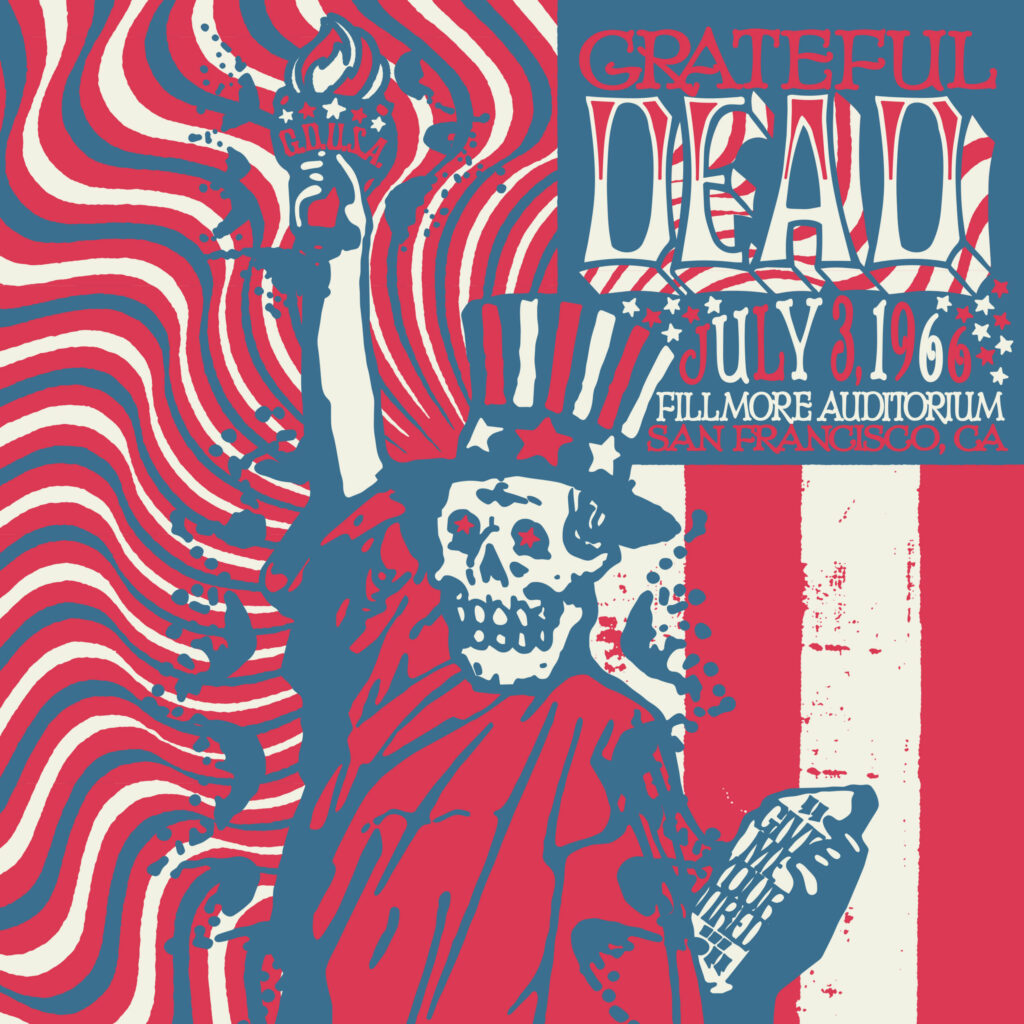
Perhaps no announcement better captures the enduring fascination with the band’s earliest years than the upcoming release of the complete July 3, 1966 Fillmore Auditorium performance. Arriving six decades after the original concert, the collection offers listeners an opportunity to revisit one of the foundational periods of Grateful Dead history, when the band was still developing the improvisational language that would eventually influence generations of musicians.
The significance of a 1966 Fillmore recording extends far beyond simple nostalgia. This was the era before arena tours, before platinum records, before stadium crowds, and before the Grateful Dead became one of the most successful touring organizations in music history. The Fillmore years represent the band’s formative period, a time when experimentation outweighed expectations and every performance carried the feeling of discovery.
Listening to these early recordings reveals a remarkably different Grateful Dead from the one many fans first encountered during later decades. The music is raw, aggressive, exploratory, and deeply rooted in blues, folk, garage rock, and the emerging psychedelic movement. Songs often feel less structured and more spontaneous, reflecting a band searching for new ways to blend traditional American music with improvisation and sonic exploration.
What makes the Fillmore release especially compelling is the opportunity to hear the origins of ideas that would later become central to the Grateful Dead experience. The fearless approach to improvisation, the willingness to abandon conventional song structures, and the commitment to collective musical conversation are all present, even in their earliest forms.
The release also arrives at a fascinating moment for longtime fans who have spent decades studying the evolution of the Grateful Dead’s live sound. The contrast between the primal energy of 1966 and the polished sophistication of later years remains one of the most interesting aspects of the band’s history. It is a reminder that the Grateful Dead were never static. Every era introduced new approaches, new influences, and new musical priorities.
That ongoing fascination with the band’s evolution continues to fuel one of the most successful archival projects in music history: the Dave’s Picks series.
For Deadheads, the quarterly Dave’s Picks releases have become much more than collectible recordings. They have evolved into an ongoing exploration of the Grateful Dead vault, providing expertly curated snapshots from every phase of the band’s remarkable journey. In many ways, the series functions as an ever-expanding historical archive, offering fans opportunities to revisit familiar eras while discovering overlooked performances that deserve renewed attention.
The 2026 subscription series continues that tradition with two particularly intriguing additions. Dave’s Picks Volume 57 spotlights the Grateful Dead’s February 1, 1978 performance at Chicago’s Uptown Theatre, a show that captures the band during one of its most energetic and confident periods. The late 1970s represented a unique balance between precision and improvisation, and performances from this era often showcase the group at its most accessible while still maintaining the adventurous spirit that defined the Grateful Dead experience.
Volume 58 continues the series’ commitment to uncovering important moments from throughout the band’s extensive touring history. What has always made Dave’s Picks so valuable is its ability to challenge assumptions about the Grateful Dead’s most important performances. While legendary concerts from Cornell, Europe ’72, Veneta, and other iconic dates remain essential listening, the series consistently reminds fans that extraordinary music often emerged on nights that never achieved widespread recognition.
The success of Dave’s Picks reflects something fundamental about Grateful Dead culture itself. Few fan communities are as interested in the nuances of musical evolution. Deadheads do not simply collect songs; they collect versions. They compare arrangements, transitions, tempos, and improvisational approaches. They debate eras, lineups, venues, and performances with a level of detail more commonly associated with historians than concertgoers.
That passion for preserving and studying the music remains one of the defining characteristics of the Grateful Dead community. Yet while archival releases celebrate the past, another major project demonstrates how the music continues moving forward.
The Terrapin Roadshow has emerged as one of the most important legacy initiatives currently operating within the extended Grateful Dead universe. Led by Grahame Lesh, the son of the late Phil Lesh, the project carries forward many of the principles that made Terrapin Crossroads such a beloved gathering place for musicians and fans.
Rather than functioning as a conventional tribute act or nostalgia tour, the Terrapin Roadshow embraces collaboration, improvisation, and community building. Multi-night runs across Northern California, Oregon, Colorado, and other regions have created opportunities for musicians from different backgrounds to come together around the Grateful Dead songbook while still finding room for individual expression.
What makes the Roadshow particularly significant is its role in introducing the music to younger audiences. Every generation discovers the Grateful Dead differently. Some arrive through archival releases. Others through modern jam bands, festival culture, streaming services, or family traditions. The Terrapin Roadshow serves as a bridge connecting those audiences while reinforcing the idea that the Grateful Dead catalog remains a living body of work rather than a museum piece.
That concept—the transmission of the music from one generation to the next—may be one of the most important stories unfolding in the Grateful Dead world today.
For decades, fans have debated how the music would survive as original members gradually stepped away from active touring. The answer has become increasingly clear. The survival of the Grateful Dead songbook depends not on replication but on reinterpretation. New musicians bring new perspectives. Different generations hear different meanings. The songs continue evolving because the community allows them to evolve.
It is the same philosophy that has allowed folk songs, jazz standards, blues compositions, and classical works to endure for centuries. The Grateful Dead catalog increasingly occupies a similar cultural space, where the songs belong not only to the musicians who created them but also to the countless performers who continue breathing new life into them.
That enduring legacy remains at the heart of The Ace Radio Show, the popular program dedicated to exploring the remarkable musical world of Bob Weir. Through solo recordings, live performances, collaborative projects, and deep cuts from across Weir’s career, the show provides listeners with a deeper understanding of one of the Grateful Dead’s most important creative voices.
For many fans, The Ace Radio Show offers a unique perspective on how the Grateful Dead evolved over the decades. Weir’s songwriting, guitar work, and commitment to musical exploration helped shape every era of the band’s history, from the psychedelic experimentation of the 1960s through the stadium years and beyond. By focusing on his broader body of work, the program reveals the depth and diversity that often sits beneath the surface of the Grateful Dead story.
As the Grateful Dead community celebrates another year filled with archival discoveries, anniversary releases, touring projects, and musical exploration, one thing becomes increasingly obvious. The band’s history is not divided into separate chapters. The Fillmore recordings, the Dave’s Picks vault series, the Terrapin Roadshow, and programs like The Ace Radio Show are all part of the same ongoing narrative.
They represent different entry points into a musical universe that continues expanding sixty years after it began.
The Fillmore release reminds us where the journey started. Dave’s Picks continues documenting how the music evolved. The Terrapin Roadshow demonstrates how the songs are being carried forward. The Ace Radio Show explores the creative voices that helped shape the catalog itself.
Together, they tell the story of a band whose greatest achievement may not have been any single concert, album, or era. Instead, it may be the creation of a musical culture capable of thriving across generations while remaining endlessly open to discovery.
Six decades later, the music is still being explored, debated, collected, celebrated, and passed from one listener to the next.
For the Grateful Dead, that may be the most remarkable legacy of all.