
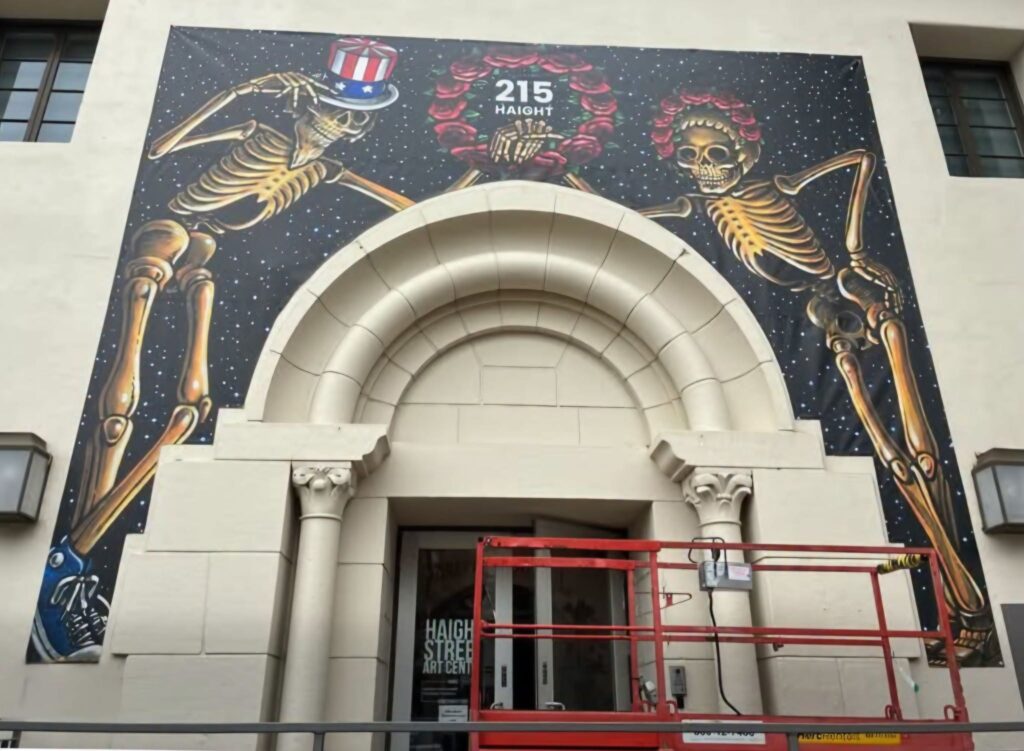
There are musical legacies, and then there are living ecosystems. The Grateful Dead belong to the second category, and in the summer of 2026, the evidence is everywhere at once — in a San Francisco gallery where a scaled Wall of Sound is broadcasting vault tapes to a room full of strangers, in the tour schedules of five distinct bands carrying the music into venues from Brooklyn to Bozeman, in the grooves of a newly pressed anniversary reissue cut from the original 1974 master recordings, and right here on The Grateful Dead Live, where tonight’s Music Plays The Band Radio Show turns the focus exactly where it belongs: on the cover bands, tribute acts, and legacy ensembles that have quietly become one of the most vital forces keeping this music in front of living audiences.
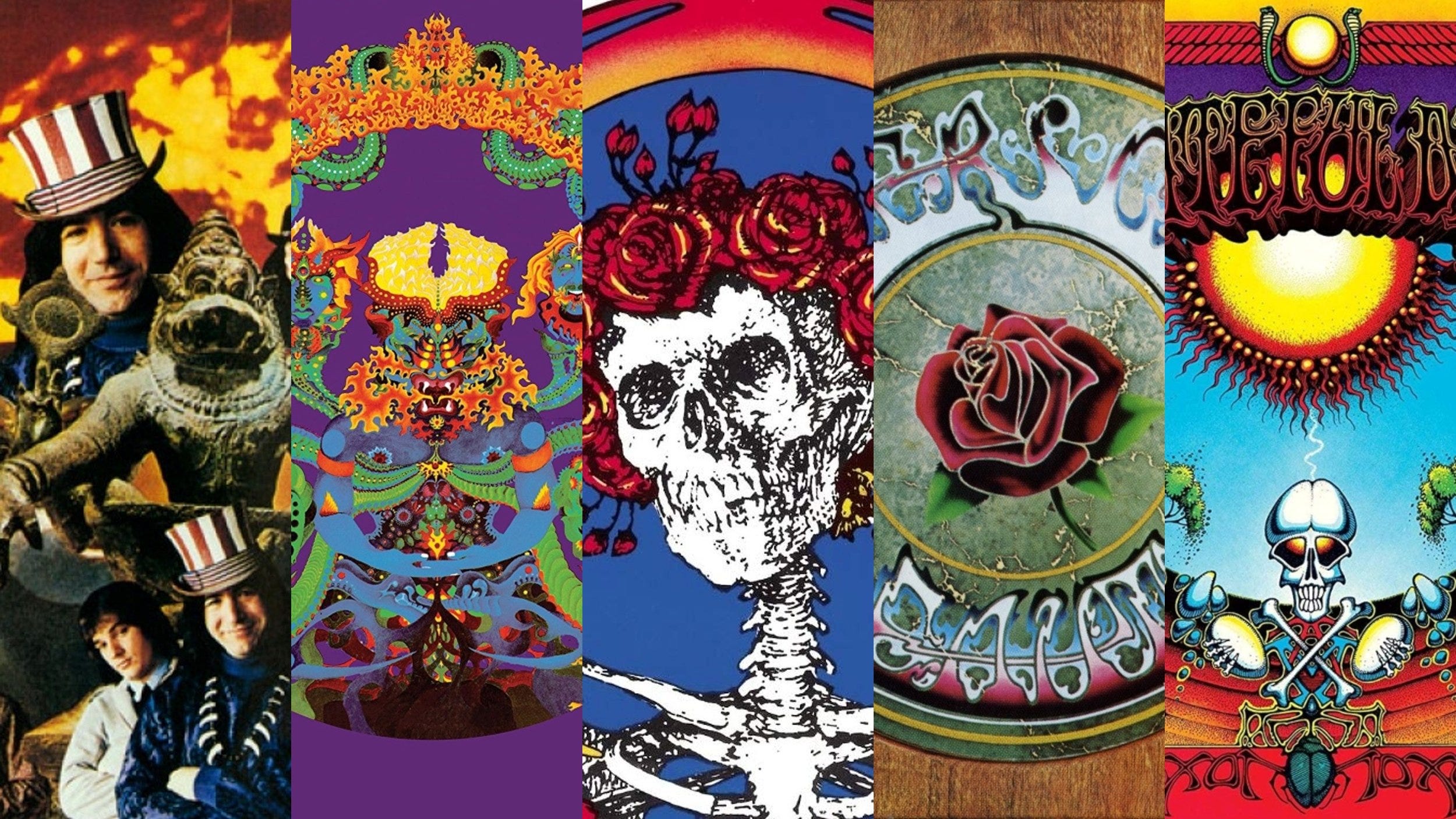
Every week, the Music Plays The Band Radio Show dedicates its airtime to the world of Grateful Dead cover bands — not as a nostalgic gesture, but as a genuine recognition of the role these artists play in sustaining a musical tradition that was always meant to be communal, participatory, and endlessly renewable. The Grateful Dead themselves understood that the music was bigger than any single performance, any single lineup, any single night. The cover band universe that has grown up around their catalog is not a pale imitation of something that once existed. It is the living continuation of something that never stopped. Tonight’s show puts that argument in musical form.
The timing could not be more apt. This summer has produced an extraordinary concentration of Grateful Dead-related activity — new exhibitions, remastered records, tour announcements from multiple major touring acts, and a tributary landscape that now runs from New England club stages to California amphitheaters. Here is everything you need to know.
The Forever Grateful Exhibition Just Opened, and It Is Already Something Special
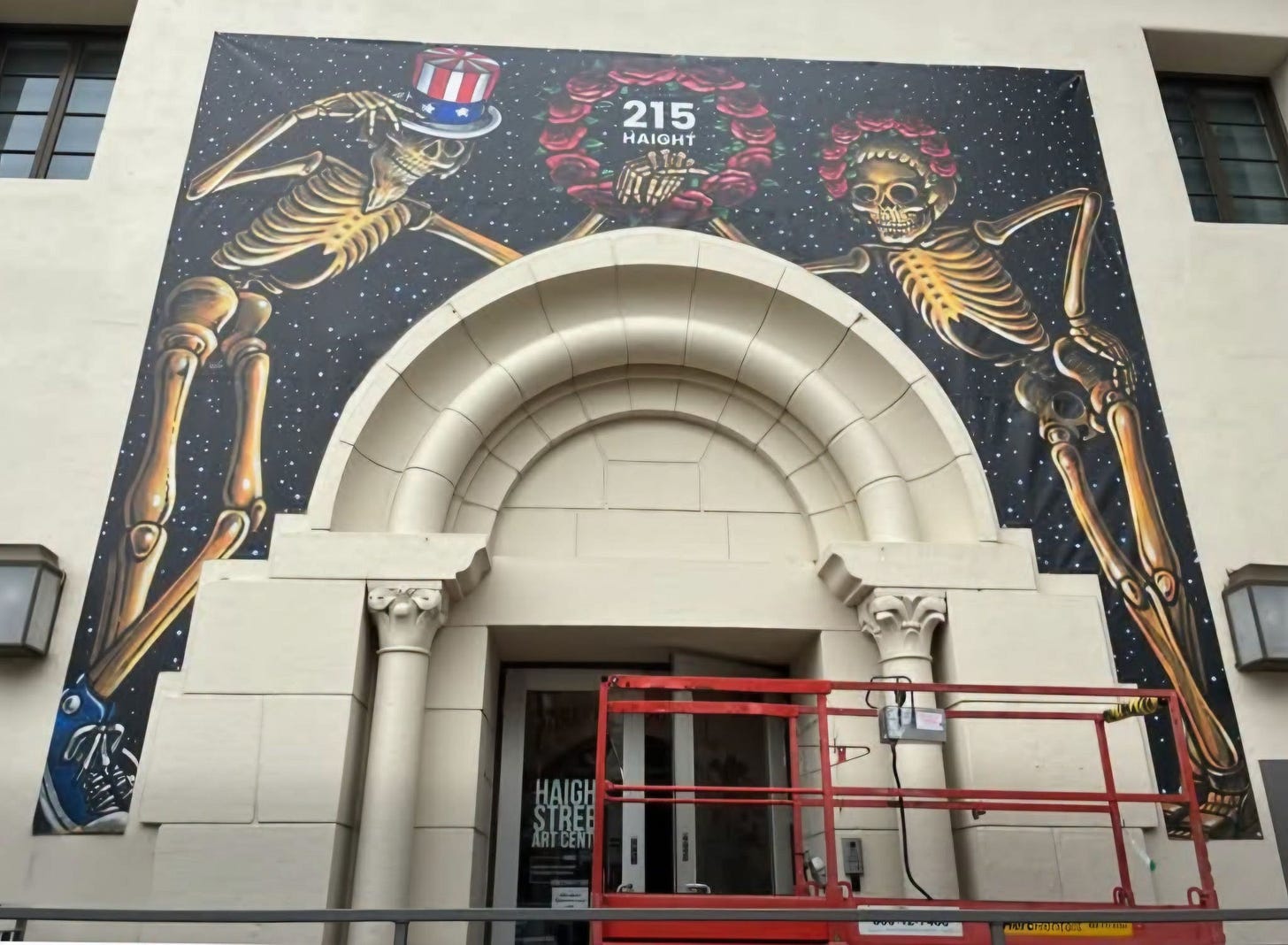
The Haight Street Art Center in San Francisco opened its doors this week to an exhibition that has been building anticipation in the Dead community for months, and the scale of what has been assembled inside is genuinely impressive. Forever Grateful is the name, and the ambition behind it matches the title.
More than four hundred original pieces fill the space — rare paintings, vintage lithographs, instruments, and photographs drawn from corners of the band’s archive that most fans have never encountered in person. This is not a greatest-hits survey dressed up in gallery clothing. It is a serious archival undertaking that treats the Grateful Dead as the cultural institution they always were and too rarely received formal recognition for being.
The centerpiece of the exhibition is a fully operational scaled replica of the band’s legendary Wall of Sound PA system, and the decision to make it functional rather than merely decorative is exactly right. The Wall of Sound — the extraordinary 1974 speaker array that represented the apex of the band’s live sound philosophy before its sheer physical and financial scale made it impractical — was never just an object. It was an argument about what concert audio could be. Having it play actual vault recordings in the middle of the gallery transforms the exhibition from a collection of artifacts into something closer to an experience. Visitors are not simply looking at the Dead’s history. They are hearing it, through the same kind of sonic architecture that defined the band’s most ambitious live period. Read More on The Grateful Dead Substack!
Music Plays The Band Radio Show: Why the Cover Band World Has Never Mattered More
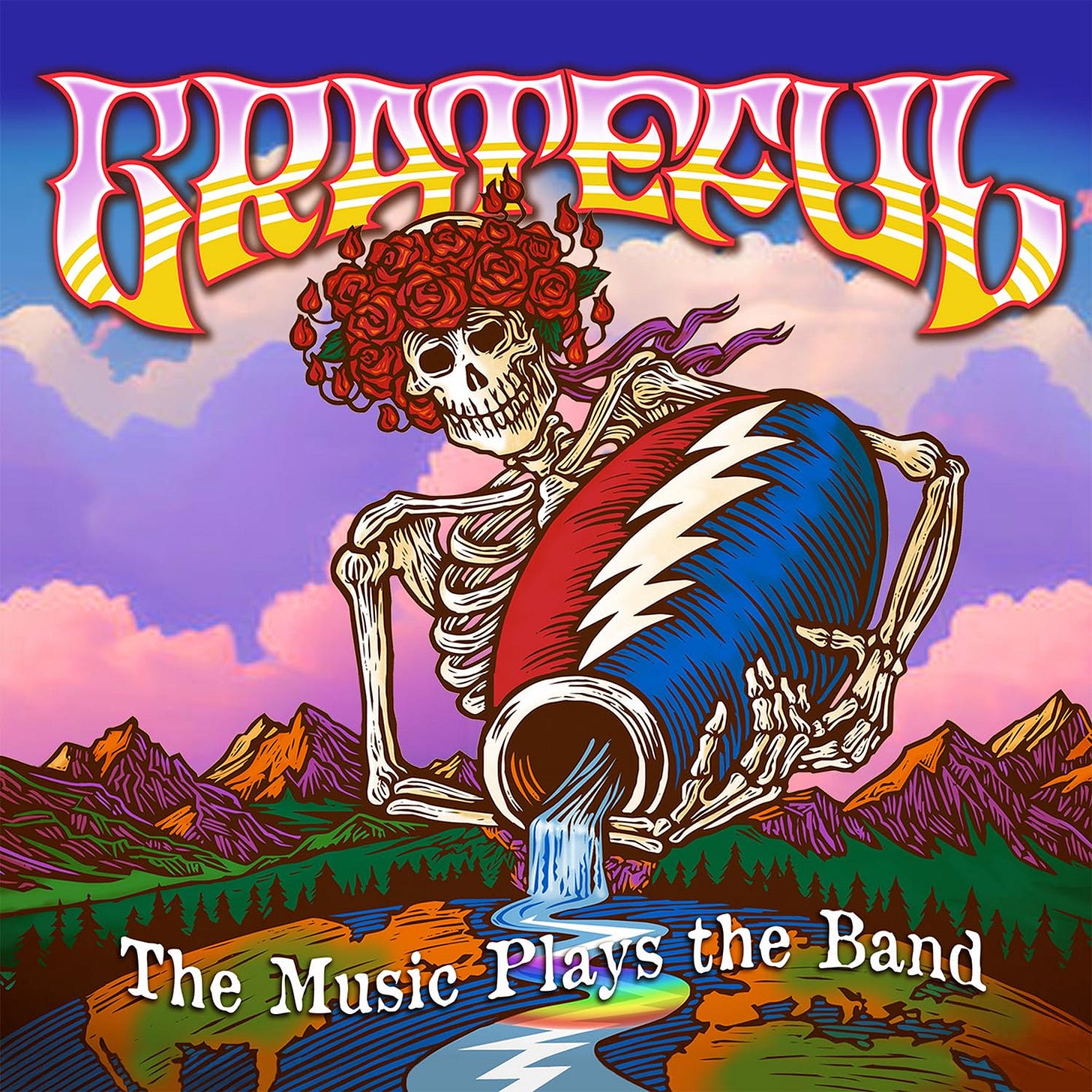
Tonight’s broadcast from The Grateful Dead Live is dedicated to the proposition that the cover band universe surrounding the Dead’s catalog is not a secondary phenomenon — not an afterthought or a consolation prize for fans who missed the original. It is, in many respects, the truest expression of what the band always stood for.
The Grateful Dead spent thirty years building a musical community premised on the idea that the songs were invitations rather than monuments. They played different versions of the same songs every night for decades, not because they could not remember the originals but because they believed that live music exists to discover something, not simply to reproduce it. The hundreds of cover bands and tribute acts that now carry this catalog forward are doing exactly what that philosophy always implied was possible: they are finding new entry points into familiar material, bringing their own musical personalities to songs that are capacious enough to hold them, and sustaining the community that formed around the music long after the core band ceased to tour. Read More on The Grateful Dead Substack!
Joe Russo’s Almost Dead: The Band That Changed What a Dead Cover Could Sound Like
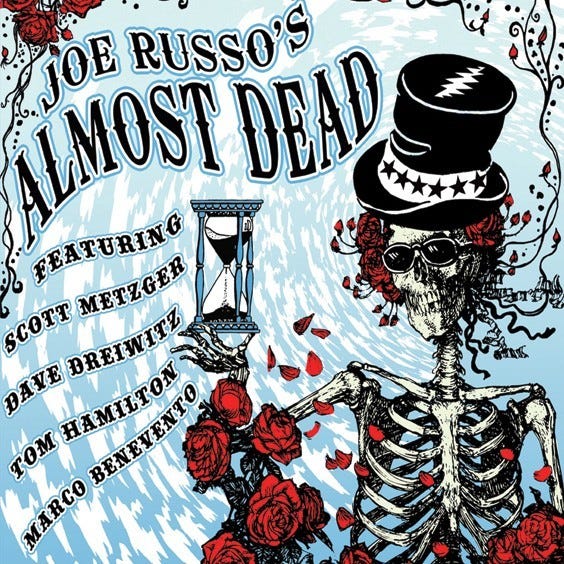
No act in the modern tributary landscape has done more to redefine what a Grateful Dead cover band can be than Joe Russo’s Almost Dead, and their 2026 touring schedule confirms that their ambitions have not contracted at all. JRAD just announced their fall tour dates, beginning with a new stop at the MGM Music Hall at Fenway in Boston on September 24th before moving to The Rooftop at Pier 17 in New York City for a two-night stand on September 25th and 26th. From there the tour pushes into the Midwest, with dates in Madison, Chicago, and Grand Rapids through early October. Read More on The Grateful Dead Substack!
Dark Star Orchestra: The Standard-Bearers, Heading to Berkeley and Beyond
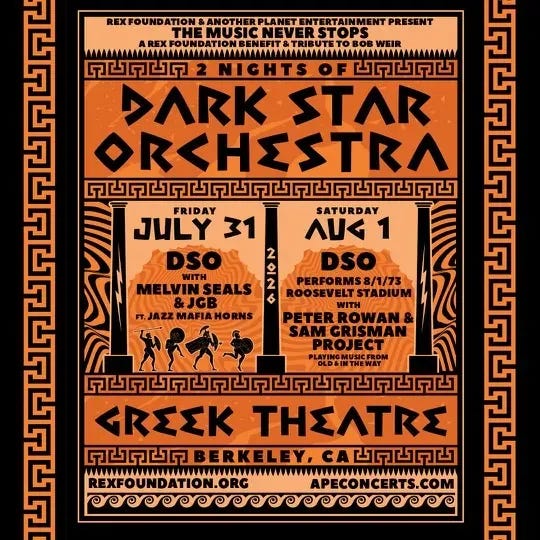
Dark Star Orchestra occupies a position in the Dead tribute world that is essentially without parallel: they are the most rigorously historical of the major touring acts, the ensemble most committed to the project of recreating specific documented concerts in their entirety, and they have sustained that commitment for more than twenty-five years without the approach ever feeling stale or academic. Their summer and fall 2026 touring confirms that the demand for what they do remains as strong as ever.
The headline event in their immediate calendar is a two-night benefit for the Rex Foundation at the Greek Theatre in Berkeley on July 31st and August 1st. The Rex Foundation has been the Dead community’s philanthropic arm since 1983, and a Greek Theatre appearance is the kind of high-profile, meaning-laden booking that reflects DSO’s standing as genuine stewards of the legacy rather than simply skilled performers. The outdoor Berkeley setting, the cause, the venue’s own history — all of it adds up to something that will matter to people who care about more than just the setlist. Read More on The Grateful Dead Substack!
Live Dead & Brothers: The Family Business, Touring Again
Among the various formations carrying the Dead’s musical DNA forward in 2026, Live Dead & Brothers occupies a unique position. This is not a tribute band in the conventional sense — it is an ensemble comprising actual members and legacy figures from the extended families of both the Grateful Dead and the Allman Brothers Band, which means that what happens on stage is not a recreation of something historical but a genuine continuation of living musical relationships. The psychedelic blues tradition that connects these two bands runs deeper than genre; it is a shared philosophy about improvisation, community, and the relationship between a band and its audience. Among the various formations carrying the Dead’s musical DNA forward in 2026, Live Dead & Brothers occupies a unique position. This is not a tribute band in the conventional sense — it is an ensemble comprising actual members and legacy figures from the extended families of both the Grateful Dead and the Allman Brothers Band, which means that what happens on stage is not a recreation of something historical but a genuine continuation of living musical relationships. The psychedelic blues tradition that connects these two bands runs deeper than genre; it is a shared philosophy about improvisation, community, and the relationship between a band and its audience. Among the various formations carrying the Dead’s musical DNA forward in 2026, Live Dead & Brothers occupies a unique position. This is not a tribute band in the conventional sense — it is an ensemble comprising actual members and legacy figures from the extended families of both the Grateful Dead and the Allman Brothers Band, which means that what happens on stage is not a recreation of something historical but a genuine continuation of living musical relationships. The psychedelic blues tradition that connects these two bands runs deeper than genre; it is a shared philosophy about improvisation, community, and the relationship between a band and its audience. Read More on The Grateful Dead Substack!
Terrapin Flyer: Chicago to the Rockies, Wave That Flag
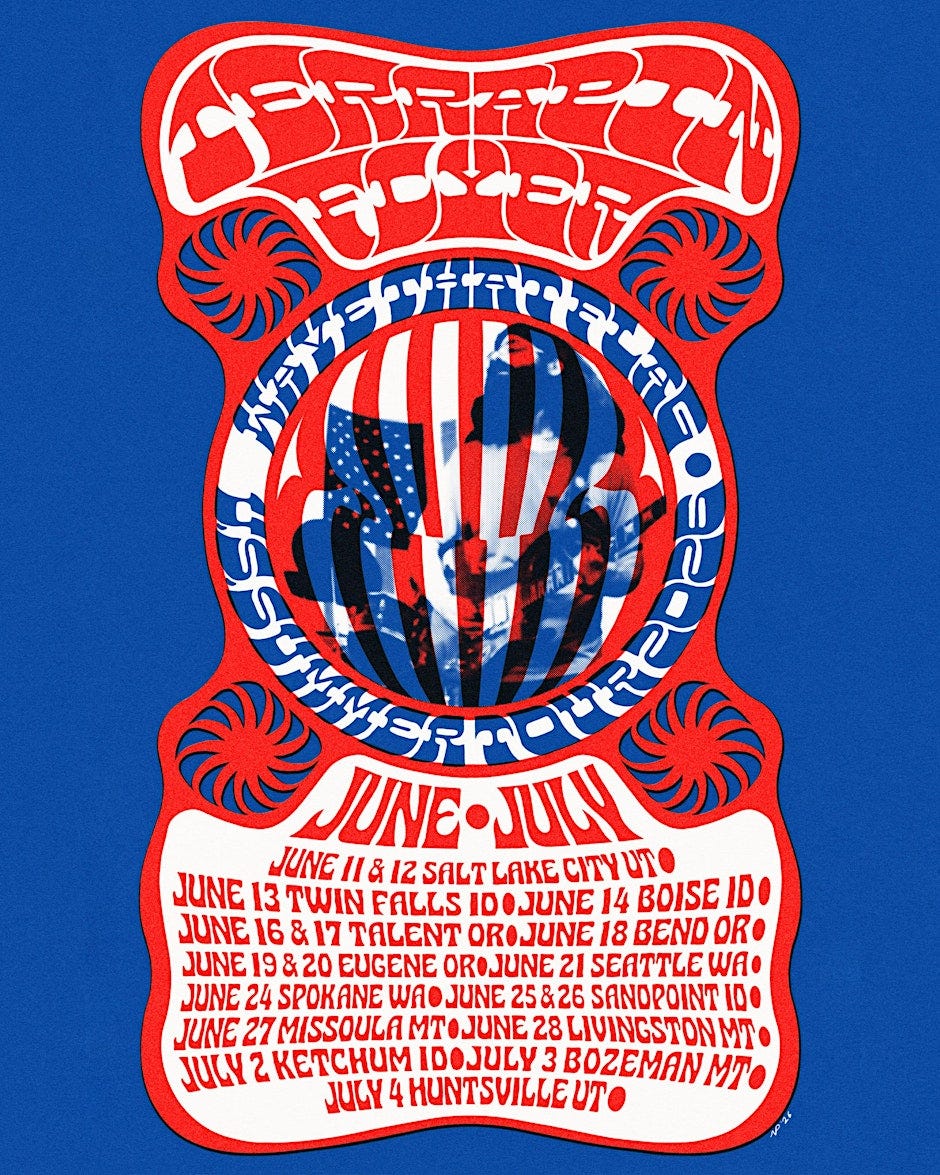
The Chicago-based Terrapin Flyer has been one of the most consistently working ensembles in the national tribute circuit for years, and their Wave That Flag Summer Tour confirms that consistency has not become complacency. The tour moves through the Northwest and Rocky Mountain regions, with a significant multi-night run in Montana that includes an appearance at The ELM in Bozeman on July 3rd. The Western dates suit them well — there is something about the landscape of the Mountain West that has always resonated with Dead music in a particular way, and Terrapin Flyer playing Bozeman on the eve of the Fourth of July is exactly the kind of detail that makes the live music calendar worth paying attention to. Read More on The Grateful Dead Substack!
Bearly Dead: New England’s Finest, Heading to Brooklyn
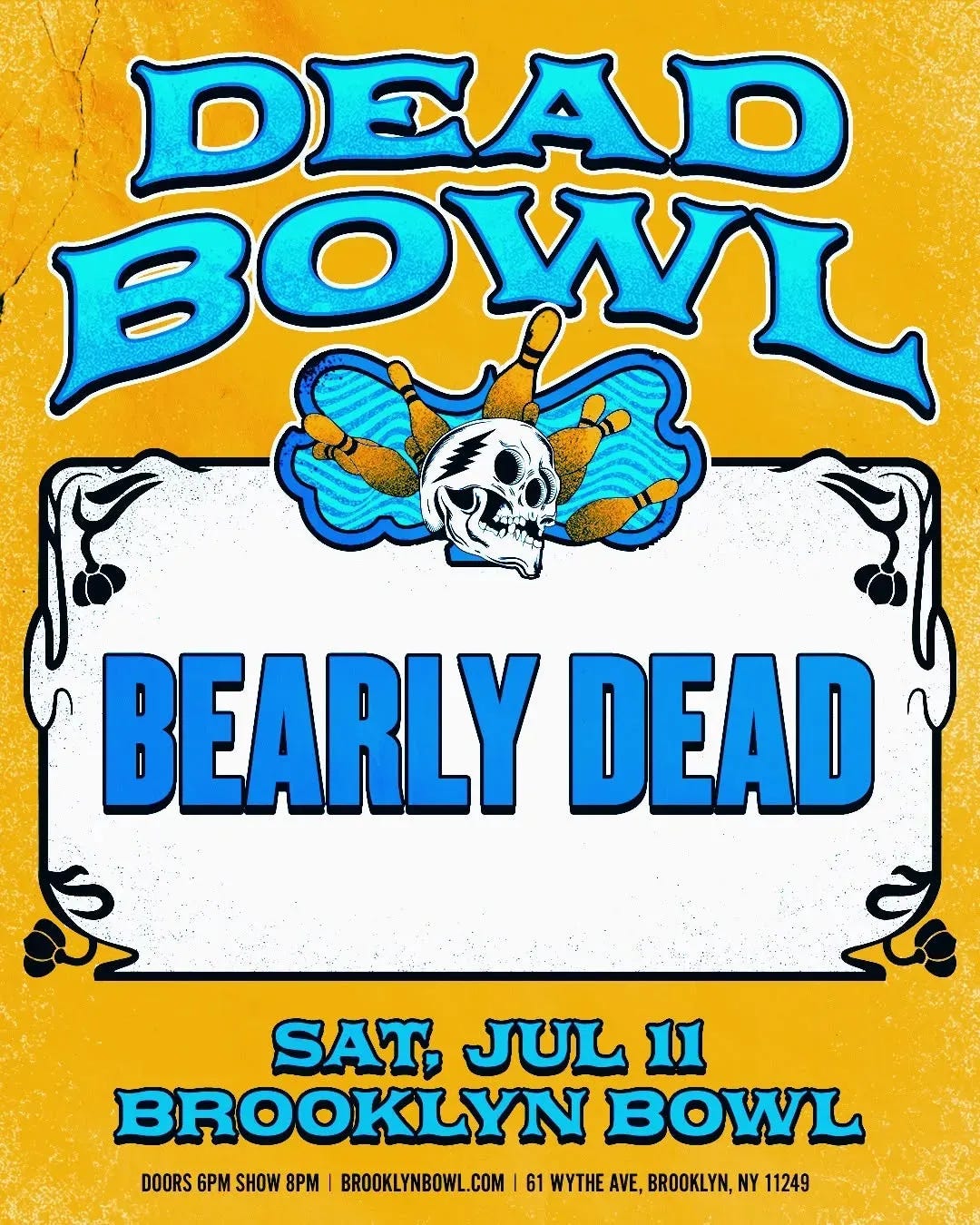
For fans in the Northeast, Bearly Dead remains the gold standard of regional Dead tribute acts, and their summer 2026 schedule is as busy as anyone could reasonably expect a touring band to be. Their July and August club dates run through Massachusetts, New Hampshire, and New York with the energy and dedication of a band that treats every regional show as an event worth showing up for. The highlight of the immediate calendar is a headline slot at the Brooklyn Bowl on July 11th — a venue that has become one of the most natural homes for this kind of music in New York City, and a booking that reflects Bearly Dead’s standing as an act with genuine reach beyond their New England base. Read More on The Grateful Dead Substack!
The Terrapin Roadshow and the Lesh Family Legacy
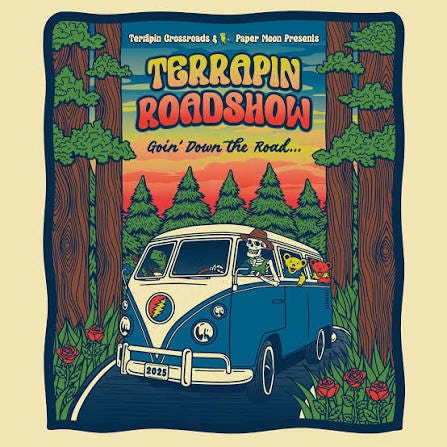
Grahame Lesh and the extended Lesh family continue to be among the most active presences in the organized tribute landscape, scheduling regional dates through the revived Terrapin Roadshow banner. The name carries its own weight — Terrapin Crossroads, the Marin County venue that Phil Lesh opened as a community gathering space and musical laboratory, represented one of the most genuine attempts to sustain the participatory spirit of Dead culture in a physical space. Its closure left a gap that the Roadshow is now filling on the road, bringing that same spirit of community and musical openness to venues across multiple regions. Read More on The Grateful Dead Substack!
Steal Your Face at Fifty: The Anniversary Remaster Is Here
![Steal Your Face (50th Anniversary Remaster)(Dead.net Exclusive)[2LP]](https://substackcdn.com/image/fetch/$s_!BRXM!,w_1456,c_limit,f_auto,q_auto:good,fl_progressive:steep/https%3A%2F%2Fsubstack-post-media.s3.amazonaws.com%2Fpublic%2Fimages%2Ff22563ff-1a0a-4e8a-856c-a2fa6723cbe1_2000x2000.png "Steal Your Face (50th Anniversary Remaster)(Dead.net Exclusive)[2LP]")
Among the most significant archival events of the current release cycle is the 50th Anniversary Remaster of Steal Your Face, the 1974 live double album recorded during the Wall of Sound retirement run — the same era that the Forever Grateful exhibition draws so heavily from. Rhino and Dead.net have officially launched pre-orders, and the specifications of this pressing reflect the seriousness with which the release has been approached. Read More on The Grateful Dead Substack!
What All of This Adds Up To
Step back from the individual pieces — the exhibition, the tours, the reissue, the radio show — and what you see is a musical culture that has somehow found a way to be simultaneously historical and contemporary, archival and alive. The Grateful Dead built something that was always going to outlast them, not because they planned it that way but because the music itself demanded it. Songs that reward improvisation will always find improvisers. Communities built on shared listening will always find new things to listen to together.
Tonight’s Music Plays The Band Radio Show is one hour in that ongoing conversation, and it is the right place to be. The cover bands and tribute acts featured on this program are not filling a void left by the original. They are doing what the music always asked of everyone who encountered it: showing up, paying attention, finding something new inside the familiar, and passing it forward. That has been the project from the beginning. In the summer of 2026, with more people doing it in more ways than ever before, the project is in excellent hands.
Turn it on. Listen close. The music plays the band, and tonight, the band plays on.

