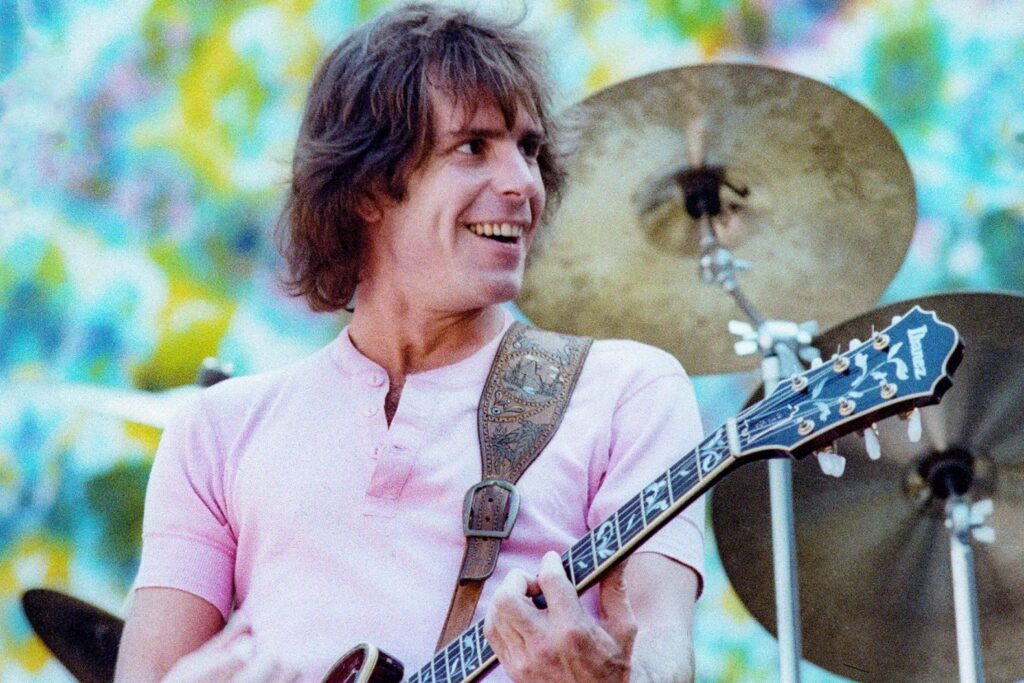
Bob Weir’s Vision for a 300-Year Grateful Dead Legacy Is Reshaping American Music History as Stanford Scholars, Symphonic Arrangers, and The Ace Radio Show Continue Expanding the Dead’s Cultural Future
The story of the Grateful Dead has always been larger than rock music itself. Long before streaming platforms, legacy branding, and archival box sets became central pillars of the modern music business, the Grateful Dead had already evolved into something few artists in American history ever achieve: a living cultural ecosystem. Their music moved beyond records and concerts into mythology, improvisation, scholarship, philosophy, visual art, grassroots community building, and intergenerational storytelling. What makes the current era of Grateful Dead history especially remarkable, however, is that the evolution of that legacy is no longer being driven only by surviving fans and tribute musicians. It is now being formally preserved, translated, documented, and studied as part of America’s long-term musical heritage.
At the center of that movement stands Bob Weir, whose late-career artistic ambitions may ultimately become one of the most historically important developments in the entire Grateful Dead story. For decades, Weir was viewed primarily as the rhythm guitarist, vocalist, and improvisational architect standing alongside Jerry Garcia during the Grateful Dead’s endless touring odyssey. But in recent years, Weir’s focus shifted toward something much larger than performance itself. His mission became preservation. Not preservation in the nostalgic sense of protecting memories, but preservation in the academic, orchestral, and historical sense of ensuring that the Grateful Dead songbook survives centuries into the future as a foundational piece of American musical folklore.
That vision has now become one of the most ambitious musical archiving projects ever attempted by a rock musician.
Working alongside Stanford University music professor Dr. Giancarlo Aquilanti, Weir helped launch a decade-long effort to formally transcribe and orchestrate the Grateful Dead catalog into symphonic classical arrangements designed to outlive the original performers, the original audience, and potentially even the modern music industry itself. The goal was radical in scope yet deeply consistent with the Grateful Dead’s longstanding philosophy of musical evolution. Rather than allowing the Dead’s music to remain frozen inside aging recordings and fading touring memories, Weir wanted the catalog transformed into formal orchestral compositions capable of being studied, taught, interpreted, and performed hundreds of years from now.
Weir openly discussed the idea that his later creative decisions were increasingly shaped by one question: what would musicologists think about this work three centuries into the future?
That mindset fundamentally reframed the Grateful Dead catalog not as a collection of rock songs, but as an evolving American songbook comparable to traditional folk standards, jazz compositions, or classical masterworks that continue living long after their creators disappear. Instead of relying on living members of the Dead universe to keep the music active, Weir’s strategy aimed to institutionalize the compositions themselves within the language of formal music education and orchestral performance.
The result has become one of the most fascinating crossovers between American improvisational rock and classical composition in modern music history.
Under Aquilanti’s direction, the arrangements were never intended to function as decorative orchestral accompaniment behind a traditional rock concert. The symphonic structures themselves became the centerpiece. Aquilanti approached the Grateful Dead catalog not as songs requiring enhancement, but as thematic compositions capable of standing on their own through orchestral interpretation. Horn sections, string movements, layered overtures, counterpoint passages, and extended symphonic transitions were designed to allow orchestras themselves to become the primary storytellers.
This distinction became central to the project’s artistic legitimacy. Many crossover rock-orchestra collaborations simply place symphonic textures behind familiar songs. What Weir and Aquilanti pursued was far more structurally ambitious. Entire movements were composed where orchestral sections carried the emotional and melodic weight independent of rock instrumentation. The arrangements treated Grateful Dead themes as recurring motifs capable of being woven together into long-form orchestral narratives.
Part of what made the collaboration so unique was Aquilanti’s own musical background. Raised in a small Italian town and educated through the traditions of European conservatory training, Aquilanti did not initially come from the world of American jam bands, psychedelic improvisation, or folk-rock counterculture. Weir reportedly spent years personally introducing him to the roots traditions that informed the Grateful Dead’s identity — jug-band music, Delta blues, Appalachian folk, early Americana, bluegrass structures, and improvisational storytelling traditions that formed the foundation beneath the Dead’s sprawling sonic experimentation.
That educational exchange ultimately became one of the most important aspects of the project itself. Weir understood that translating the Grateful Dead into orchestral language required more than simply transcribing notes. The emotional spirit of the music had to survive the translation. The looseness, unpredictability, melancholy, optimism, wandering movement, and communal warmth embedded within the original songs all needed to remain intact even inside formal symphonic structures.
The scale of the orchestral compositions themselves reflects that ambition. Aquilanti composed massive overtures weaving together thematic material from some of the Grateful Dead’s most beloved compositions, including “Brokedown Palace,” “Dark Star,” “Stella Blue,” “Shakedown Street,” and “Saint of Circumstance.” Rather than isolated song recreations, the arrangements function more like interconnected movements inside a larger American musical suite.
The philosophical implications of the project extend far beyond the Grateful Dead alone. In many ways, Weir is challenging longstanding assumptions about the cultural hierarchy between classical institutions and improvisational American music traditions. By placing the Grateful Dead into formal orchestral environments, he is arguing that the emotional, compositional, and improvisational depth of the catalog deserves preservation alongside historically recognized canonical works.
For decades, the Grateful Dead existed outside traditional academic validation despite profoundly influencing modern live music culture. Their work shaped improvisational performance structures, audience participation culture, touring economics, recording communities, merchandising strategies, and grassroots music fandom. Yet because the Dead resisted traditional industry systems and prioritized spontaneity over polish, many institutional music spaces struggled to classify them within conventional frameworks.
That perception is now changing dramatically.
Musicologists, archivists, conservatories, and universities are increasingly treating the Grateful Dead as a serious subject of study tied directly to American cultural history, folk evolution, improvisational theory, and performance philosophy. The Stanford collaboration represents one of the clearest signs yet that the Grateful Dead are transitioning from legendary touring act into formally recognized American musical heritage.
Those ambitions became tangible through a series of major live performances showcasing the orchestral arrangements in real-world concert settings.
In 2022, Weir and Wolf Bros staged a groundbreaking residency alongside the National Symphony Orchestra at the Kennedy Center. The performances marked the first full-length collaboration between the National Symphony Orchestra and a major rock artist in that format, creating a historic convergence between American symphonic institutions and improvisational rock culture.
The concerts demonstrated that the Grateful Dead catalog could successfully operate inside fully orchestrated environments without losing its emotional identity. Songs long associated with psychedelic exploration and improvisational freedom suddenly existed inside sweeping orchestral passages while still retaining the humanity and warmth that defined the original material.
Weir later brought the project westward for another celebrated performance at Frost Amphitheater, where the arrangements were performed alongside the Stanford Symphony Orchestra in what many viewed as a symbolic homecoming for the academic side of the project itself.
Following Weir’s passing, archivists, conductors, and music scholars have reportedly continued cataloging, preserving, and organizing the symphonic charts to ensure the long-term continuation of the work. The broader goal remains exactly what Weir envisioned: allowing orchestras anywhere in the world to someday perform Grateful Dead compositions centuries from now without requiring any direct connection to the original rock-band format.
That vision remains deeply connected to the spirit celebrated nightly on The Ace Radio Show, the acclaimed program devoted to the solo projects, collaborations, and musical evolution of Bob Weir himself. The show has become an increasingly important platform for exploring the full breadth of Weir’s artistry beyond his foundational role in the Grateful Dead.
While Garcia often occupied the mythological center of Dead culture, Weir’s contributions to the band’s sound were equally transformative. His unconventional rhythm guitar structures, jazz-influenced chord voicings, folk sensibilities, Americana storytelling instincts, and adventurous harmonic approaches helped create the open-ended improvisational environment that defined the Grateful Dead experience. The Ace Radio Show continues highlighting that musical depth while exploring Weir’s solo catalog, collaborative projects, orchestral experiments, and continued influence on modern improvisational music.
More importantly, the show reflects the same central philosophy driving the Stanford archiving initiative itself: the belief that the Grateful Dead’s music was never intended to remain static. It was built to evolve, reinterpret itself, and continue speaking differently to every generation that encounters it.
That may ultimately become Weir’s greatest contribution to American music history. Not merely preserving the Grateful Dead as a memory, but ensuring the catalog remains alive enough to keep changing long after everyone originally involved is gone.
In an industry obsessed with short-term trends and disposable content cycles, Weir spent his later years thinking in centuries.
And because of that vision, the Grateful Dead may continue echoing through concert halls, conservatories, symphony orchestras, classrooms, and future generations of musicians hundreds of years from now — not as nostalgia, but as living American musical language.