Jerry Garcia’s Legacy Enters a Powerful New Chapter as the First Fully Authorized Documentary Unlocks Private Archives While the JGB Radio Show Continues Celebrating the Endless Reach of Garcia’s Musical Spirit. The enduring world surrounding Jerry Garcia has always existed in a space far larger than traditional rock mythology. Decades after his passing, Garcia remains one of the most deeply analyzed, celebrated, discussed, and spiritually influential figures in American music history. His legacy transcends the boundaries of classic rock because the culture that formed around his music never stopped evolving. It expanded outward into improvisational music, live-performance philosophy, visual art, Americana, bluegrass, jazz fusion, psychedelic exploration, tape-trading communities, and one of the most loyal fan movements ever assembled around an artist. Now, in what may become one of the most important Grateful Dead-related projects in years, Garcia’s story is entering a completely new era through the first fully authorized documentary ever created with unrestricted cooperation from the Garcia estate itself.
For longtime Deadheads, music historians, collectors, and newer generations discovering the improvisational universe of the Grateful Dead for the first time, the announcement represents something extraordinarily significant. For decades, Jerry Garcia’s life has been interpreted through fragmented archival footage, concert recordings, secondhand interviews, biographies, documentaries, and oral histories. Yet much of Garcia’s deeply personal world remained inaccessible, protected inside private family archives and never-before-opened collections. That is about to change in dramatic fashion.
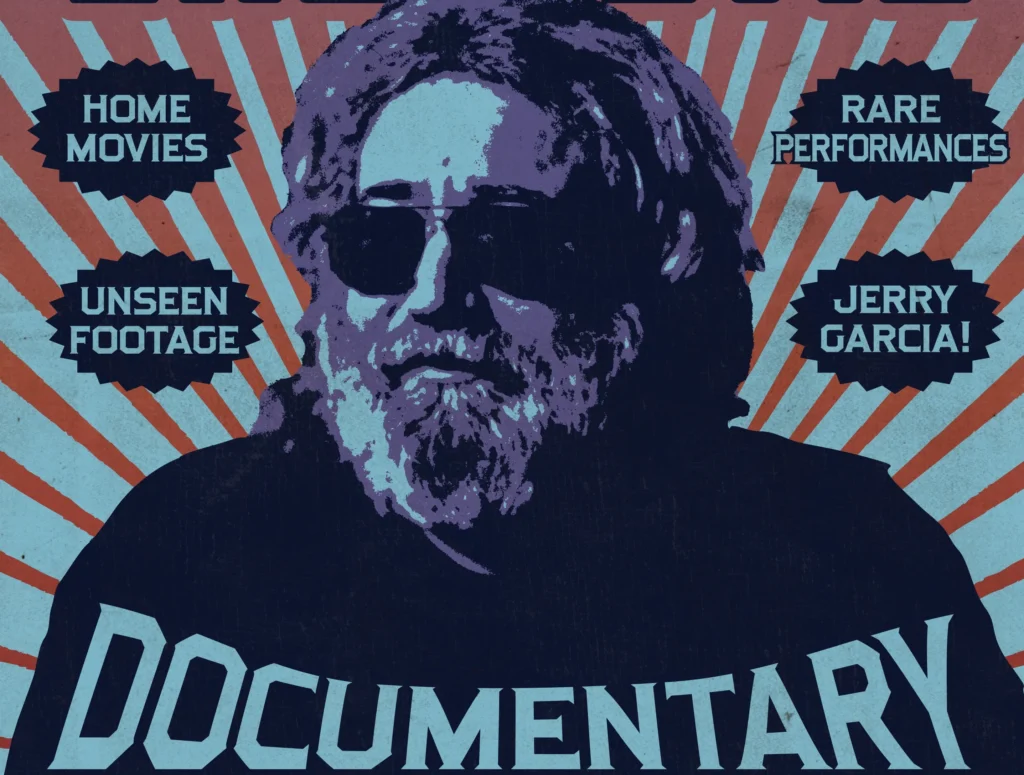
The newly announced feature documentary, directed by Justin Kreutzmann, is being developed with unprecedented access to Garcia’s personal archives, home footage, interview recordings, private tapes, creative materials, and deeply personal documentation that has never been made available publicly before. The project is already being viewed across the music world as potentially the definitive cinematic portrait of Garcia not simply as a performer or countercultural icon, but as a human being whose artistic philosophy fundamentally altered live music forever.
What immediately separates this production from virtually every prior Grateful Dead or Jerry Garcia film project is the level of direct family participation. The documentary is fully authorized by the Garcia estate and backed by Jerry Garcia Family LLC, opening creative and historical doors that had previously remained closed to outside filmmakers. Garcia’s daughter, Trixie Garcia, is serving as an executive producer on the project, further signaling the intimate and deeply personal nature of the film’s direction.
The involvement of Justin Kreutzmann adds an even more emotional dimension to the production. As the son of Grateful Dead drummer Bill Kreutzmann, Justin did not experience Garcia as a distant cultural icon. He grew up inside the inner orbit of the Grateful Dead universe itself. According to those close to the project, Garcia viewed him almost as extended family, creating a level of trust and access that would have been impossible for an outside director to replicate. That emotional connection may ultimately become the defining strength of the film.
Rather than simply constructing another chronological music documentary built around familiar concert clips and touring history, Kreutzmann’s stated goal is to present Garcia from Garcia’s own point of view. That distinction matters enormously. The film reportedly intends to rely heavily on decades of archived interviews, private recordings, personal conversations, and unreleased footage to allow Garcia’s own voice and perspective to shape the narrative organically. Instead of reducing him to the mythology that has formed around his public image, the production seeks to rediscover the person beneath the iconography.
That approach could fundamentally reshape how future generations understand Garcia’s life and artistic identity. Mainstream depictions of the Grateful Dead often reduce the band to simplistic cultural shorthand about psychedelic experimentation, tie-dye imagery, or endless touring mythology. But those closest to Garcia have long argued that his true brilliance extended far beyond the stage. He was an obsessive creative thinker, a student of American roots music, a visual artist, a restless improviser, a deeply introspective personality, and a musician constantly chasing emotional authenticity through spontaneous creation.
The documentary’s access to previously unseen material appears poised to illuminate those dimensions in ways audiences have never experienced before. Among the most anticipated elements are private home movies and personal tapes recorded by Justin Kreutzmann himself during years spent traveling alongside Garcia and the extended Grateful Dead family. These are not recycled archival assets repeatedly circulated throughout music documentaries over the last several decades. Many of these recordings have reportedly remained entirely unseen by the public until now.
Equally compelling is the project’s access to unreleased audio interviews and deeply personal conversations involving Garcia himself. For Deadheads who have spent decades analyzing live recordings, interviews, lyrics, and philosophical commentary searching for insight into Garcia’s worldview, this material may become historically invaluable. Garcia’s public persona often carried an almost mythical ambiguity. He rarely presented himself as a conventional celebrity and frequently resisted attempts to define the Grateful Dead experience in simplistic terms. Hearing him reflect privately and candidly through newly unearthed recordings may provide the closest audiences have ever come to understanding the man behind the mythology.
The production team surrounding the documentary further reinforces the scale and seriousness of the undertaking. The film is being presented in partnership with RadicalMedia, the acclaimed production company behind the Oscar-winning documentary Summer of Soul. Their involvement signals a cinematic ambition that extends far beyond fan-service nostalgia. RadicalMedia has repeatedly demonstrated an ability to transform music history into emotionally immersive storytelling that resonates with audiences far outside traditional fan communities.
Additional collaboration from Red Light Management and Jerry Garcia Family LLC positions the project as one of the most comprehensive and institutionally supported Grateful Dead-related productions ever attempted. The combined involvement of archival custodians, filmmakers, musicians, family members, and long-standing members of the Dead community suggests a unified effort to preserve Garcia’s story with an unprecedented level of care and historical authenticity.
The timing of the announcement is equally important because it arrives during another enormous resurgence in Grateful Dead culture overall. Across America, tribute bands, archival releases, improvisational festivals, museum exhibitions, and live reinterpretations of the Dead catalog are experiencing massive audience growth. Younger listeners who never witnessed Garcia perform live are increasingly discovering the music through modern improvisational acts, vinyl reissues, streaming archives, and curated live-performance culture.
In many ways, Garcia’s influence today may actually be broader than it was during certain points of his lifetime. His approach to improvisation has become foundational to the jam-band world. His embrace of Americana and roots traditions helped inspire entire generations of crossover musicians. His collaborative spirit shaped how modern improvisational ensembles interact onstage. Even outside of rock music, Garcia’s philosophy of creative freedom continues influencing jazz musicians, bluegrass performers, indie artists, experimental players, and improvisational collectives worldwide.
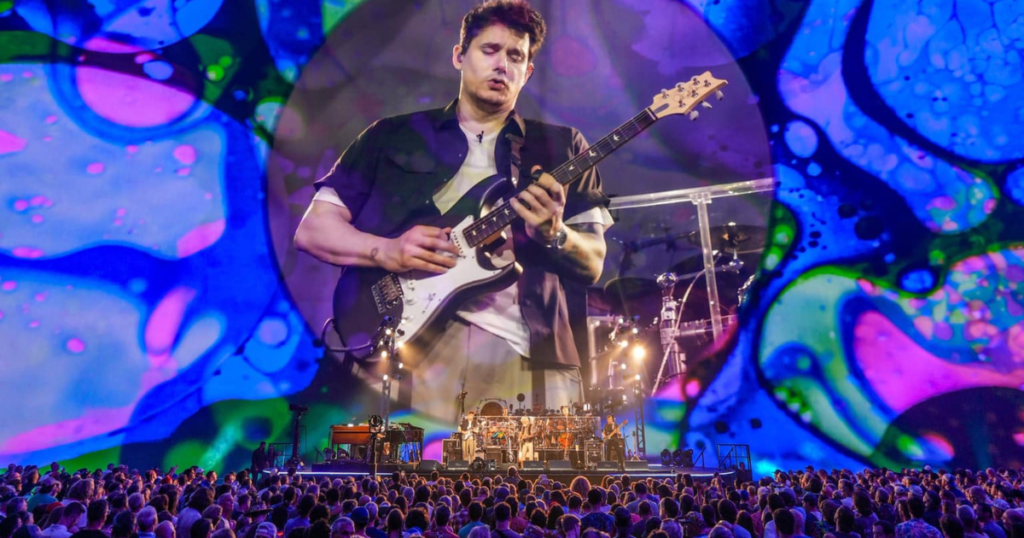
That ongoing influence remains fully alive tonight during The JGB Radio Show, the celebrated program dedicated to the music and enduring spirit of the Jerry Garcia Band and Garcia’s expansive solo universe. The JGB Radio Show has become an increasingly important destination for fans seeking a deeper connection to Garcia’s non-Grateful Dead catalog, showcasing performances that highlight the emotional range, musical versatility, and improvisational warmth that defined the Jerry Garcia Band experience for decades.
Unlike the sprawling psychedelic intensity often associated with Grateful Dead performances, the Jerry Garcia Band occupied its own emotional and musical territory. Gospel influences, rhythm and blues traditions, folk storytelling, reggae textures, spiritual balladry, and deeply expressive improvisation all merged into performances that frequently felt more intimate, soulful, and emotionally direct. The JGB Radio Show continues preserving that atmosphere while introducing new listeners to the profound depth of Garcia’s solo legacy.
The importance of the Jerry Garcia Band within Garcia’s broader artistic identity cannot be overstated. For many longtime fans, JGB performances revealed a different side of Garcia entirely — one less centered on experimentation for its own sake and more focused on emotional communication through song interpretation. Whether performing Dylan material, gospel-influenced ballads, traditional folk songs, or extended improvisational meditations, Garcia approached the Jerry Garcia Band with a looseness and emotional vulnerability that remains deeply affecting decades later.
As excitement builds around the documentary, another important clarification has also emerged within the Deadhead community. Many fans initially confused this newly announced archival film with a completely separate Hollywood project that was announced around the same period. The distinction between the two productions is substantial.
The Justin Kreutzmann film is an authorized documentary grounded in real archival material, private footage, and firsthand historical access. By contrast, the separate Martin Scorsese-led project is a scripted dramatic biopic reportedly set to star Jonah Hill as Garcia. While that fictionalized interpretation may eventually become a major cinematic event in its own right, the Kreutzmann documentary is positioned as something far more intimate, historically immersive, and emotionally authentic.
For many Deadheads, that authenticity is everything.
The Grateful Dead community has always valued lived experience over polished mythology. Tape hiss mattered. Imperfect improvisation mattered. Human vulnerability mattered. Emotional truth mattered. Garcia himself rarely appeared interested in celebrity narratives or polished image construction. He cared about the music, the people around him, the constant search for creative connection, and the mysterious communal energy that only truly existed inside live performance itself.
That spirit is exactly why Garcia’s legacy remains so powerful in 2026. His music was never designed to be frozen in time. It was built to evolve, reinterpret itself, and continue speaking differently to every generation that encounters it. The same philosophy driving modern Grateful Dead tribute culture, improvisational touring bands, archival preservation projects, and live radio programs today can all be traced directly back to Garcia’s refusal to treat music as something static.
As this landmark documentary moves closer to production, audiences are not simply preparing to revisit the story of a legendary musician. They are preparing to rediscover the humanity behind one of America’s most transformative artistic figures through the voices, footage, memories, and private moments that have remained hidden for decades.
And for a cultural movement built entirely around the idea that the music never truly stops, that next chapter may become one of the most important yet.
Justin Kreutzmann has quietly become one of the most respected music filmmakers working inside the extended Grateful Dead universe, building a career that stretches across landmark rock documentaries, concert films, archival projects, and behind-the-scenes productions tied directly to some of the most important names in live music history. As the son of Bill Kreutzmann, Justin grew up immersed in the Grateful Dead world from the inside, surrounded not only by the music itself but by the personalities, culture, creativity, and unpredictability that defined the band’s orbit for decades. Long before becoming an established filmmaker, he was already documenting life around the Dead with cameras in hand, capturing candid moments and backstage footage while still growing up within the traveling circus that surrounded the band.
Over the years, Kreutzmann has developed a reputation for creating deeply personal music films that focus less on surface-level celebrity mythology and more on the emotional and artistic humanity behind iconic musicians. His projects consistently reflect an insider’s perspective, shaped by relationships and trust built over a lifetime inside the live music community.
Among his most acclaimed directorial efforts is Let There Be Drums!, the celebrated documentary exploring the evolution, artistry, and cultural impact of drumming across modern music history. The film brought together an extraordinary lineup of legendary percussionists and musicians, including Ringo Starr, Stewart Copeland, Mickey Hart, and Taylor Hawkins, offering a wide-ranging look at rhythm as the heartbeat of rock music itself.
Kreutzmann also played a major creative role in The Other One: The Long Strange Trip of Bob Weir, serving as executive producer on the intimate documentary chronicling the life, evolution, and musical legacy of Bob Weir. The film became widely praised for its emotional honesty and its ability to portray Weir not simply as a member of the Grateful Dead, but as an artist navigating decades of cultural change, personal growth, and musical reinvention.
His involvement continued with Long Strange Trip, the expansive multi-part Grateful Dead documentary executive produced by Martin Scorsese. Widely regarded as one of the most comprehensive examinations ever produced about the Grateful Dead, the series explored the band’s rise, contradictions, creative breakthroughs, touring mythology, and cultural impact with a level of detail rarely seen in music documentaries.
Another standout project came with Move Me Brightly, which Kreutzmann directed as both a tribute concert film and a celebration of what would have been Jerry Garcia’s 70th birthday. Filmed at Bob Weir’s TRI Studios, the production blended live performances, storytelling, and reflections on Garcia’s enduring influence while capturing the improvisational spirit that continues defining the Grateful Dead legacy.
Kreutzmann later expanded beyond the Dead universe with projects like Break on Through: A Celebration of Ray Manzarek and The Doors, a concert documentary honoring the musical legacy of legendary The Doors keyboardist Ray Manzarek. The film further demonstrated his ability to handle artist-driven legacy productions with emotional authenticity rather than traditional rock-documentary excess.
Longtime Deadheads also remember Kreutzmann’s earliest work behind the camera during the late 1980s and early 1990s, when he began directing projects tied directly to the Grateful Dead’s touring life and visual media presence. One of the most notable early moments came with “Dead Ringers: The Making of ‘Touch of Grey,’” the behind-the-scenes film chronicling the production of the Grateful Dead’s landmark MTV-era music video for “Touch of Grey.” Remarkably, Kreutzmann directed the project while still a teenager, earning praise from Garcia himself, who reportedly referred to him as a “film whiz” at the time.
He later directed “Backstage Pass,” a fan-favorite documentary that provided an unusually candid look at the realities of life on the road with the Grateful Dead during the early 1990s. Rather than glamorizing touring culture, the film captured the exhaustion, spontaneity, humor, and humanity behind one of the most unconventional touring operations in music history.
Kreutzmann also directed the official video for “The Thrill Is Gone,” the celebrated acoustic collaboration between Jerry Garcia and David Grisman, further cementing his longstanding creative relationship with Garcia-related projects and musicians from the extended Dead family.
Outside of the Grateful Dead universe, Kreutzmann has continued building a respected body of work directing music specials, tour productions, and concert-related projects involving legendary artists including The Who, U2, and Mike Campbell of Tom Petty and the Heartbreakers.
What separates Kreutzmann from many traditional music-documentary filmmakers is his rare position as both insider and documentarian. He is not approaching these artists from the outside looking in. He lived inside the culture that shaped them. That perspective continues giving his projects an intimacy and authenticity that resonates deeply with audiences who value emotional truth and lived experience over polished music-industry mythology.