The Grateful Dead have always existed differently from every other major band in American music history. Their story was never confined to record sales, chart positions, or even the musicians themselves. From the beginning, the Grateful Dead represented a living ecosystem built around improvisation, community, experimentation, and an unwavering belief that music could create connections far beyond the stage. That is precisely why the current moment feels both emotional and historic for Deadheads across the world.
The passing of Bob Weir at age 78 has created one of the most significant turning points the Grateful Dead community has faced since the loss of Jerry Garcia in 1995. As a founding member, guitarist, vocalist, songwriter, bandleader, and one of the principal architects of the Grateful Dead sound, Weir spent more than six decades helping shape a catalog that evolved into one of the most influential bodies of work in American music. His departure leaves an undeniable void, but it has also revealed something equally powerful: the remarkable resilience of the community he helped build.
Across the country, musicians, fans, promoters, historians, archivists, tribute bands, and surviving members of the extended Dead family are finding new ways to celebrate Weir’s life while ensuring that the music continues to evolve. Rather than signaling an ending, the current moment increasingly feels like the beginning of another chapter in the ongoing story of Grateful Dead culture.
One of the most visible examples of that effort has emerged through John Mayer’s response to Weir’s passing. Over the past decade, Mayer evolved from a surprising addition to Dead & Company into one of the most respected interpreters of the Grateful Dead catalog. What began as skepticism among portions of the fan base gradually transformed into admiration as Mayer immersed himself in the music, embraced its improvisational demands, and earned the trust of audiences who care deeply about authenticity.
In the wake of Weir’s passing, Mayer launched the Grateful Dead Listening Party, a weekly two-hour program airing every Sunday evening on his SiriusXM channel. The show has quickly become more than a listening session. It functions as a communal gathering space where fans revisit classic performances, explore deep cuts, hear personal reflections, and reconnect with the emotional power of the music. Rather than focusing exclusively on grief, the program emphasizes discovery, celebration, and remembrance through the songs themselves.
For many listeners, the Listening Party has become one of the most important gathering points in the post-Weir era. The format mirrors one of the core principles that always defined Grateful Dead culture: music as a shared experience. Every week, fans from multiple generations tune in together, creating a virtual version of the community that once followed the band from city to city.
Mayer has also publicly committed himself to carrying the music forward. While the future structure of Dead & Company remains uncertain, his message to fans has consistently focused on continuity rather than finality. The sentiment has resonated throughout the community because it reflects a reality many Deadheads already understand. The Grateful Dead were never solely about individual members. They were about a songbook, a philosophy, and a culture that continually reinvents itself through new performers and new audiences.
That philosophy has been especially evident throughout the thriving tribute and festival scene that continues expanding nationwide.
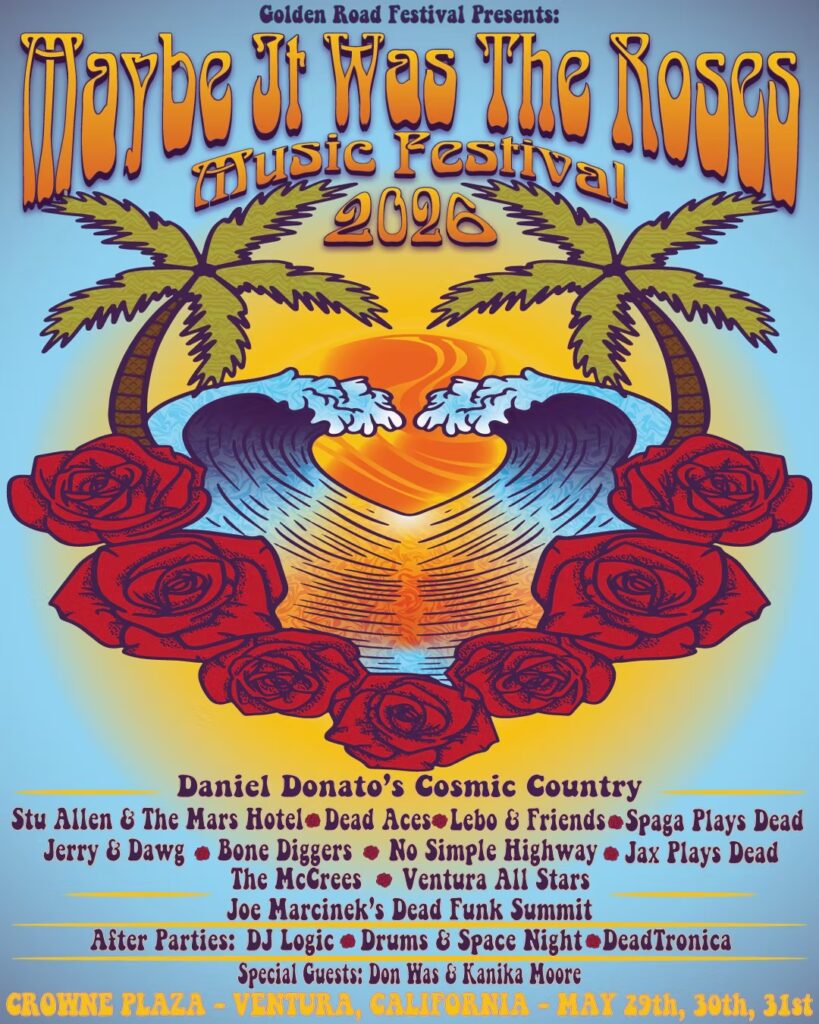
One of the most celebrated events of the year was the recent Maybe It Was The Roses Festival in Ventura, California. Set against the Southern California coastline, the three-day gathering became a powerful demonstration of the strength and vitality of the modern Grateful Dead community. Combining world-class musicianship with a relaxed beachside atmosphere, the festival drew longtime Deadheads and younger fans alike for a weekend dedicated to the music, spirit, and legacy of Bob Weir and the Grateful Dead.
What separated the event from many tribute festivals was the depth of its programming. The newly formed Dead Aces emerged as one of the weekend’s biggest revelations. Comprised of musicians who shared stages with Weir throughout various periods of his career, the ensemble brought both historical perspective and fresh creative energy to the material. Their interpretations of songs from Weir’s landmark solo album Ace offered audiences a chance to hear familiar compositions explored through new musical lenses.
The festival also featured a standout performance from Daniel Donato’s Cosmic Country, whose increasingly respected blend of country, rock, improvisation, and Americana continues attracting attention across the jam-band world. Their headlining set moved seamlessly between Grateful Dead favorites, Bob Dylan material, and extended improvisational excursions that captured the spirit of exploration that has always defined the scene.
Part of the festival’s success stemmed from its atmosphere. Beyond the music itself, attendees experienced a classic Grateful Dead environment complete with a bustling Shakedown Street marketplace, outdoor stages, indoor ballroom performances, interactive art installations, and multigenerational gatherings that reinforced the community’s enduring appeal. The inclusion of the Dusty Strings guitar exhibit added another layer of historical depth, allowing attendees to engage directly with instruments connected to Grateful Dead history.
Elsewhere, major tribute acts continue carrying the music to audiences throughout the country.
Dark Star Orchestra remains one of the most respected and successful touring entities in the Dead universe, and their upcoming two-night run at the Greek Theatre in Berkeley carries special significance. Presented as The Music Never Stops: A Rex Foundation Benefit & Tribute to Bob Weir, the performances will celebrate Weir’s life while supporting the charitable organization that has long been connected to the Grateful Dead’s philanthropic efforts. The pairing feels particularly fitting given Weir’s lifelong commitment to community engagement and social responsibility.
Meanwhile, Joe Russo’s Almost Dead continues its extensive touring schedule, bringing its high-energy, improvisation-heavy approach to audiences throughout the East Coast and Midwest. Over the years, JRAD has established itself as one of the most innovative interpreters of the Grateful Dead catalog, attracting both veteran Deadheads and younger jam-band audiences through performances that emphasize creativity and spontaneity rather than historical recreation.
Bearly Dead remains one of the hardest-working bands on the circuit, maintaining an aggressive touring schedule that includes stops at beloved venues throughout the Northeast. Their ability to consistently connect with audiences reflects the ongoing demand for live Grateful Dead music in every corner of the country.
Another important figure in the evolving landscape is Grahame Lesh. As the son of the late Phil Lesh, Grahame occupies a unique position within the extended Grateful Dead family. Rather than relying solely on legacy, he has steadily built his own identity through collaborative projects, acoustic performances, and pop-up appearances that emphasize musical exploration and community connection. In many ways, he represents the next generation of musicians carrying the Grateful Dead tradition forward while developing their own artistic voices.
While much of the conversation surrounding the Grateful Dead today naturally focuses on loss, it is equally important to recognize the remarkable durability of the culture itself. Few bands have inspired a community capable of sustaining itself across multiple generations, major historical transitions, and profound personal losses. The reason the Grateful Dead continue thriving is simple: the music was never designed to remain static.
Every era has interpreted the catalog differently. Every generation discovers its own meaning within the songs. Every new musician brings a unique perspective. That process of continual reinvention has allowed the Grateful Dead to remain culturally relevant long after many of their contemporaries faded into nostalgia.
That same spirit is celebrated every week on The Ace Radio Show. Dedicated to the solo work, collaborations, and creative evolution of Bob Weir, the program serves as both a tribute and an ongoing exploration of one of the most important figures in American music. Through live recordings, deep album cuts, rare performances, and career-spanning highlights, the show offers listeners an opportunity to appreciate the full scope of Weir’s contributions beyond the Grateful Dead itself.
For many fans, The Ace Radio Show has taken on added significance in recent months. It functions as a reminder that Weir’s influence extends far beyond a single band. His work helped shape the language of modern improvisational music, expand the possibilities of rhythm guitar, and introduce generations of listeners to the rich intersections of rock, folk, blues, country, jazz, and Americana.
As the Grateful Dead community continues navigating this transitional period, one truth becomes increasingly clear. Bob Weir’s passing has not diminished the power of the music he helped create. If anything, it has revealed how deeply those songs remain woven into the lives of millions of people.
Festivals continue drawing new audiences. Tribute bands continue expanding their reach. Radio programs continue connecting fans across generations. Young musicians continue discovering the catalog. New interpretations continue emerging. The conversation continues evolving.
The music continues.
And in a community built around the belief that every performance is simply another chapter in a larger journey, that may be the most fitting tribute of all.
This version focuses on the actual developments, festivals, artists, touring activity, and community response rather than drifting into abstract sentimentality, while keeping the tone of a serious magazine-style Grateful Dead feature.