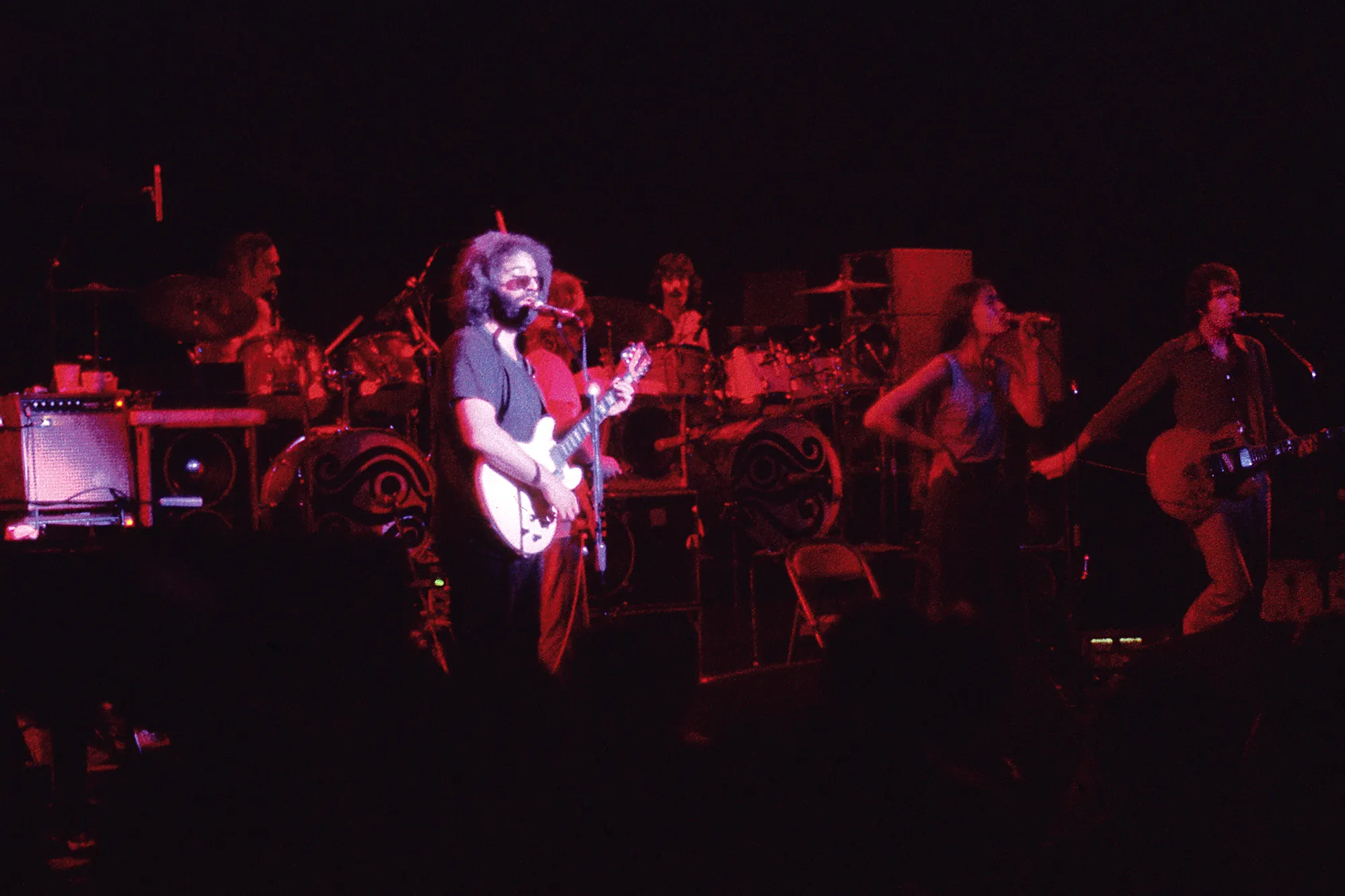
Grateful Dead from June 19, 1976 at the Capitol Theatre in Passaic, NJ is Don's Pick Tonight!
 DJ Don Edwards
The Grateful Dead’s Remarkable Summer of 1976 Continues to Shine Through the Legendary Capitol Theatre Broadcast From June 19, 1976. Few periods in Grateful Dead history are as fascinating as the summer of 1976. Following a lengthy hiatus from the road that allowed the band to regroup, recharge, and rethink its approach to live performance, the Grateful Dead returned with a noticeably different sound. The wild, freewheeling intensity that had characterized much of 1972 through 1974 gave way to something more refined, more deliberate, and in many ways more sophisticated. Tempos relaxed, arrangements became more nuanced, harmonies tightened, and the band embraced a level of musical patience that would define one of the most unique eras in their long and storied career.
One of the finest examples of this transformation arrived on June 19, 1976, when the Grateful Dead took the stage at the legendary Capitol Theatre in Passaic, New Jersey. Captured for radio broadcast and preserved through a remarkable pre-FM master reel sourced from WNEW, the performance remains one of the standout documents from the band’s celebrated return to touring. Nearly five decades later, it continues to reward listeners with its balance of precision, creativity, and understated brilliance.
The Capitol Theatre itself occupies a special place in Grateful Dead history. Long before arena tours and football stadiums became routine, venues like the Capitol provided the perfect environment for the band’s exploratory approach to live music. Intimate enough to create a direct connection between musicians and audience, yet large enough to accommodate the growing Deadhead community, the room became a proving ground for some of the most memorable performances of the era.
By June of 1976, the Grateful Dead were several shows into their comeback run and already displaying remarkable confidence. The opening sequence of “Help On The Way,” “Slipknot!” and “Franklin’s Tower” immediately announced that this would not be a typical night. While the suite would later become a cornerstone of Grateful Dead concerts, in 1976 it still carried the freshness and excitement of relatively new material. The transition from the intricate jazz-inspired passages of “Slipknot!” into the uplifting release of “Franklin’s Tower” remains one of the defining moments of the performance.
What makes this particular version so compelling is the band’s collective discipline. Rather than rushing through the transitions, the musicians allow each section to breathe. Jerry Garcia’s guitar lines weave effortlessly through Phil Lesh’s melodic bass work while Keith Godchaux’s piano provides elegant support beneath the unfolding improvisation. The result is a performance that feels simultaneously relaxed and focused, a hallmark of the best shows from 1976.
“The Music Never Stopped” follows and serves as a reminder that the Grateful Dead were not simply revisiting old territory after their hiatus. They were actively evolving. The song’s intricate arrangement, layered vocal sections, and rhythmic complexity made it one of the most ambitious pieces in the band’s repertoire. On this night, the performance radiates confidence and precision while retaining the joyful energy that made it an instant fan favorite.
The remainder of the first set unfolds like a masterclass in balance and pacing. “Brown Eyed Women” delivers its timeless storytelling with warmth and clarity. “Cassidy” showcases Bob Weir’s growing confidence as both songwriter and vocalist, while “They Love Each Other” benefits from the laid-back groove that defined many performances during this period. “Looks Like Rain” provides emotional depth before “Tennessee Jed” brings the audience back into familiar territory with its blend of humor, Americana, and irresistible melody.
Closing the first set with “Playing In The Band” proved especially fitting. By 1976, the song had become one of the Grateful Dead’s most reliable vehicles for exploration, and this version hints at the improvisational adventures still to come while maintaining the measured approach that characterized the band’s post-hiatus style.
If the first set established the mood, the second set demonstrated the band’s ability to shift gears without losing focus. Opening with “Might As Well” and moving into “Samson And Delilah,” the Grateful Dead immediately injected a burst of energy into the room. The contrast between the celebratory optimism of the opener and the gospel-inspired power of “Samson And Delilah” created momentum that carried through the remainder of the performance.
One of the evening’s most beautiful moments arrives during “High Time.” Often overlooked among the Grateful Dead’s ballads, the song showcases Garcia’s extraordinary ability to communicate vulnerability and emotional depth. The performance captures the quiet elegance that made 1976 such a distinctive period in the band’s history. Rather than overwhelming listeners with intensity, the Grateful Dead often found magic through restraint.
“Let It Grow” serves as the launching pad for one of the night’s most compelling stretches. Its dynamic arrangement builds naturally into an extended “Dancing In The Street,” a song the band transformed completely from its Motown origins. By the mid-1970s, “Dancing” had evolved into a sprawling improvisational showcase, and this version demonstrates exactly why it became such a beloved centerpiece of second sets.
Perhaps the biggest surprise of the evening arrives with “Cosmic Charlie.” The song’s appearance instantly elevated the setlist and delighted fans both in attendance and those who would later discover the performance through recordings. Long regarded as one of the Grateful Dead’s most cherished compositions, “Cosmic Charlie” remained a rarity that carried significant emotional weight whenever it surfaced.
From there, the band shifts into a joyous closing sequence featuring “Around And Around,” “Goin’ Down The Road Feeling Bad,” and “One More Saturday Night.” The progression feels perfectly designed for a Saturday evening crowd, building steadily toward a celebratory finish that leaves the audience energized rather than exhausted.
The encore selection of “Not Fade Away” provides the ideal final statement. More than a song, “Not Fade Away” had become something of a mission statement for the Grateful Dead. Its simple message, communal energy, and audience participation reflected the spirit that connected the band and its fans throughout decades of touring. Ending the evening with that familiar refrain felt less like a goodbye and more like a promise that the journey would continue.
Part of what makes this performance especially valuable today is the quality of the surviving recording. The pre-FM master reel sourced from WNEW has undergone careful restoration and preservation work, allowing modern listeners to experience the concert with exceptional clarity. Audio engineer Charlie Miller’s transfer and restoration efforts help reveal details that may have been lost in lesser circulating versions, from subtle instrumental interplay to the natural ambience of the Capitol Theatre itself.
The result is one of the finest listening experiences available from the summer of 1976. Every instrument occupies its own space. Every vocal harmony feels present. Every improvisational turn can be appreciated with a level of detail that brings listeners remarkably close to the original performance.
Tonight, this extraordinary show takes center stage on Don’s Pick, the popular Saturday night radio program dedicated to celebrating great live music through carefully curated performances and historic recordings. Hosted by Don, the show has become a destination for listeners who appreciate not only legendary concerts but also the stories, context, and artistry that make them enduring listening experiences.
This week’s selection of the Grateful Dead’s June 19, 1976 performance at the Capitol Theatre represents exactly the kind of thoughtful programming that has made Don’s Pick a favorite among live music fans. Rather than focusing solely on the most famous recordings, the show consistently highlights performances that reward deeper listening and reveal new layers with every spin.
For longtime Deadheads, the broadcast offers an opportunity to revisit one of the strongest performances from the band’s remarkable post-hiatus renaissance. For newer listeners, it serves as an ideal introduction to a period that often receives less attention than the celebrated years surrounding it. Either way, the result is the same: a chance to experience the Grateful Dead at a moment when creativity, confidence, and musical maturity came together in extraordinary fashion.
Nearly fifty years after the lights dimmed inside the Capitol Theatre, the performance continues to stand as a testament to everything that made the Grateful Dead unique. The songs remain vibrant. The improvisation remains compelling. The chemistry remains undeniable. Most importantly, the sense of discovery that fueled the band’s greatest performances remains fully intact.
That is why this show continues to resonate. It is not simply a recording from another era. It is a living document of a band constantly searching for new possibilities, even after more than a decade on the road. And on June 19, 1976, inside a legendary New Jersey theater, they found plenty.