| San Jose Earthquakes and the Grateful Dead Bring Live Spirit to the Pitch With Limited-Edition Tie-Dye Kits |
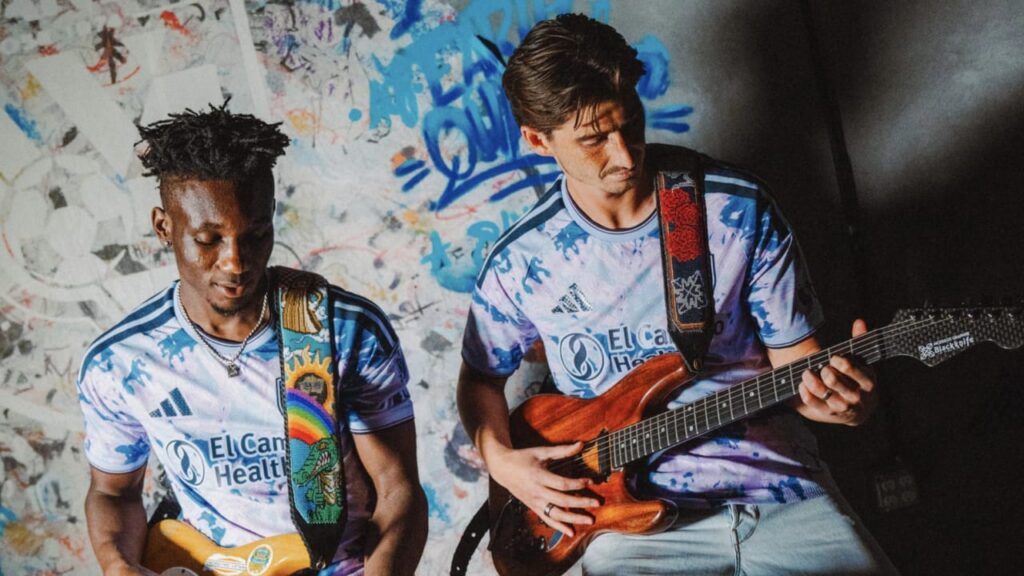
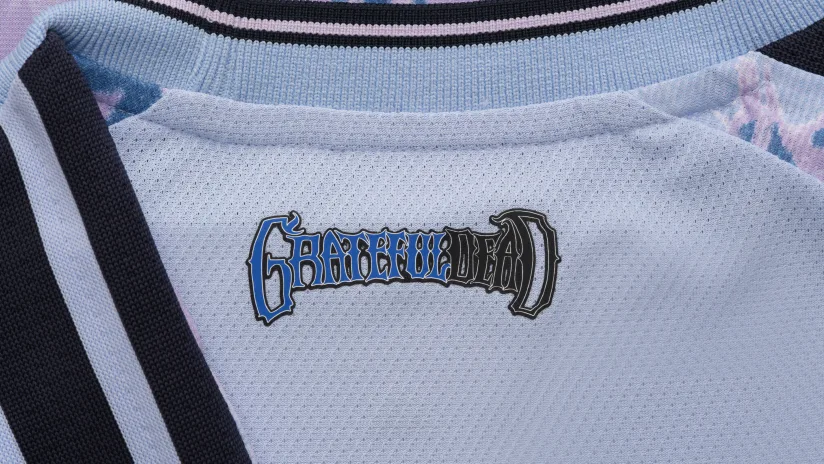
| At The Grateful Dead Live, the rule is simple: every song lives in its truest form — the live version. That same philosophy now carries into the sports world as the San Jose Earthquakes join forces with Grateful Dead for a collaboration that feels less like a merch drop and more like a cultural crossover built for community, movement, and shared experience. The Earthquakes are unveiling limited-edition Grateful Dead kits that merge the visual language of the band with the identity of the Bay Area’s long-standing MLS club. The design centers on a vivid blue tie-dye base, anchored by the instantly recognizable skull imagery that has followed Deadheads from parking-lot tailgates to stadium floors for generations. It’s bold, unmistakable, and intentionally expressive — much like a live “Dark Star” that refuses to stay inside fixed boundaries. This isn’t nostalgia for nostalgia’s sake. It’s a living, present-day extension of what the Grateful Dead have always represented: participation over perfection, experience over polish, and the idea that culture grows strongest when it happens in real time, with real people. Free launch party at PayPal Park The collaboration officially kicks off with a free public launch party at PayPal Park on Saturday, February 14, from 2 to 4 p.m. The event is designed as a low-barrier, open-door celebration — the kind of gathering that mirrors the Grateful Dead’s long tradition of welcoming newcomers into the scene without pretense or gatekeeping. For fans of the band, the team, or both, the launch offers a first look at the kits in person and a chance to experience how the collaboration translates off the rack and into a shared social space. It’s the rare crossover that feels natural to the region: Northern California roots, counterculture history, and a modern sports identity built on loyalty and community. At The Grateful Dead Live, where every track played is a live performance by design, this launch fits perfectly into the same ethos — presence matters. You show up, you feel the energy, and you become part of the moment. On-field debut against Atlanta United The kits will move from celebration to competition on February 28, when the Earthquakes take the field at home against Atlanta United FC. This is where the collaboration becomes more than just visual flair. It becomes performance gear, worn under stadium lights, in front of a live crowd, inside the pressure and unpredictability that define professional soccer. Much like a Grateful Dead setlist that evolves night to night, no two matches unfold the same way — and that sense of improvisation is what makes the pairing feel surprisingly authentic. For a club competing in Major League Soccer, the decision to embrace a band whose legacy is rooted in extended jams, audience connection, and creative freedom sends a clear message: this is not a safe, corporate-only collaboration. It’s a statement about identity, place, and the cultural DNA of the Bay Area. A collectible poster from Stanley Mouse Fans attending the February 28 debut match will also receive a limited commemorative poster created by legendary artist Stanley Mouse — one of the most influential visual architects of the Grateful Dead’s iconic imagery. Mouse’s work helped define how the band looked to the world long before digital branding existed. His illustrations fused surrealism, counterculture, and classic American design into visuals that felt as transportive as the music itself. Including his art in this collaboration ties the modern MLS rollout directly back to the creative roots that shaped the Dead’s original visual identity. For collectors, this poster alone is likely to become a sought-after piece. For longtime fans, it represents continuity — a reminder that the Grateful Dead’s story has always been carried not just through sound, but through artwork, posters, and the physical objects that documented a moving, evolving live experience. This Earthquakes partnership reflects that same philosophy in a different arena. A jersey becomes meaningful when it’s worn in motion. A design becomes culture when people gather around it. A collaboration becomes authentic when it belongs to the place it represents. From the open-air launch party at PayPal Park, to the live match debut against Atlanta United, to a hand-held Stanley Mouse poster passed from stadium staff to fans in the stands, every part of this rollout is built around shared presence — not passive consumption. For Deadheads who have spent decades chasing live tapes, tour stops, and once-in-a-lifetime performances, this crossover lands in familiar territory. It isn’t about owning something limited. It’s about being there when it happens. And in the world of The Grateful Dead Live, that’s the only version that really counts. |
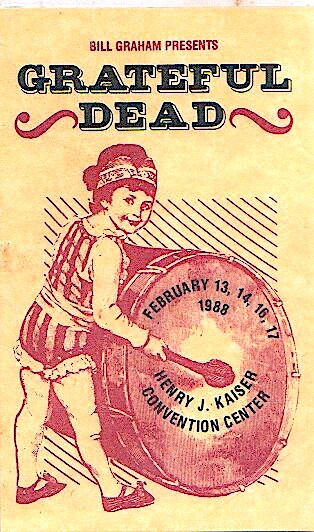
| Don’s Pick: February 14, 1988 – Kaiser Auditorium, Oakland — A Valentine’s Day show |
| HeadingA late-’80s Dead show with an uneven start, an increasingly confident first set, and a second set that delivers what Deadheads chase: multiple peaks, real movement, and that unmistakable feeling of the band locking in and lifting the room. Kaiser Auditorium holds a special place in the Bay Area concert story, and it’s the kind of venue where the Grateful Dead could feel simultaneously enormous and close enough to touch. Set One (Live) Touch of Grey Feel Like a Stranger Franklin’s Tower Walkin’ Blues When Push Comes to Shove Cassidy “Touch of Grey” arrives with ambition, but it doesn’t land cleanly from start to finish. Still, there’s something valuable in hearing the band go for dynamics instead of autopilot—especially in an era when the “hit” could have easily become routine. “Feel Like a Stranger” keeps the room moving and functions as a familiar early-set anchor. The groove is there even when the edges are a bit rough. Then “Franklin’s Tower” becomes one of the first moments where the show takes on color. The late-’80s sound palette can be polarizing, but this is exactly where it helps: Brent Mydland’s textures—hushed synth shading and bright keyboard filigree—add warmth and a kind of shimmering lift that pushes the song beyond “standard.” “Walkin’ Blues” does its job—tight, sturdy, functional—before the set dips briefly into a section that many listeners treat as a skip. But the closing “Cassidy” changes the temperature. This version doesn’t just pass by—it opens up. It’s the first time all night the performance feels like it has real dimension: the band listening closely, stretching the internal conversation, and building energy in a way that suggests the second set might be where the real action lives. Set Two (Live) China Cat Sunflower → I Know You Rider Samson & Delilah Terrapin Station Drums → Space → I Need a Miracle → Stella Blue Throwing Stones Turn On Your Love Light Encore: The Mighty Quinn The launch pad is classic: “China Cat Sunflower → I Know You Rider.” The transition carries that unmistakable lift—the kind of sequence that can flip an entire room from attentive to ecstatic in a matter of minutes. It’s not just nostalgia; it’s structural brilliance. “China Cat” sets the kinetic pulse, “Rider” releases it into full-throated celebration. “Samson & Delilah” keeps the pace charging forward—one of those songs that, when it’s hitting, feels like a marching band disguised as rock and roll. Then comes “Terrapin Station.” This performance is a vital effort: committed vocals, a clear sense of shape, and an emotional center that makes it feel like more than “the slot in the set where Terrapin goes.” It may not be the most transcendent Terrapin of the era, but it has urgency—and in 1988, urgency matters. “Drums → Space” continues the nightly ritual. Not every night becomes a cosmic masterpiece, but even the “standard” Drums/Space has an essential role: it clears the air, resets the stage, and makes the post-space landing feel like a real return. The landing sequence—“I Need a Miracle → Stella Blue”—is a classic emotional pivot. “Miracle” brings the energy back, but the heart of this pairing is “Stella Blue.” Even an “okay” Stella is worth hearing, because the song itself is built to deliver gravity. It turns the room inward before the closing push. And that push is there. “Throwing Stones” climbs steadily to a satisfying crescendo—one of the better late-set builds of the night—before “Turn On Your Love Light” brings the party back with swagger, bounce, and that loose, skiffle-style joy the Dead could summon when they wanted to remind everyone this is supposed to be fun. Finally, the encore: “The Mighty Quinn.” This is where Brent’s colors really matter again—his phrasing and tone complement Jerry’s vocal delivery and give the ending a buoyant, communal finish. Read More! Valentine’s Day 1988 at Kaiser Auditorium |