
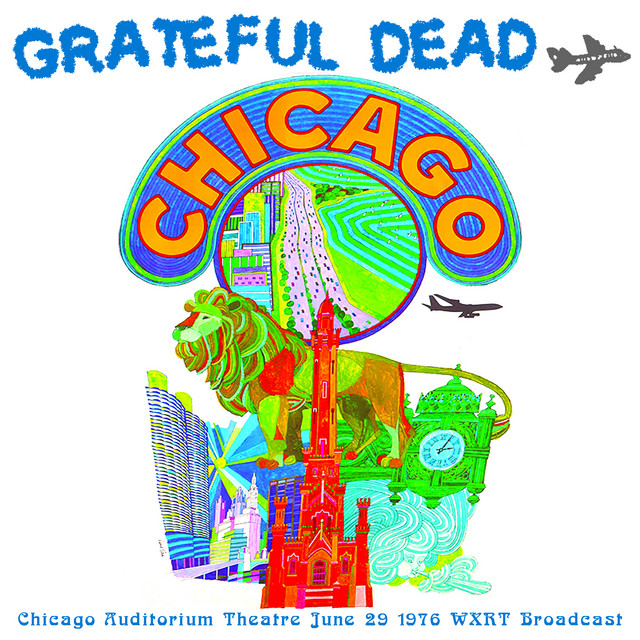
There are bands that leave catalogs. Then there are bands that leave civilizations. The Grateful Dead did the latter, and in the summer of 2026, nearly three decades after Jerry Garcia’s passing, the evidence is impossible to ignore. From SiriusXM studios to the muraled streets of Asbury Park, from California cannabis tours to a New Jersey record pressed into 180 grams of pure vinyl history, the Dead’s universe is not merely surviving — it is expanding, deepening, and pulling in new generations with the same gravitational force it always has. Tonight, that force lands squarely on The Grateful Dead Live, where Don’s Pick spotlights one of the most quietly magnificent concerts the band ever played: June 29, 1976 at the Auditorium Theatre in Chicago, Illinois.
Don’s Pick Tonight: June 29, 1976 — Chicago’s Auditorium Theatre
Every Saturday night, Don’s Pick delivers exactly what devoted listeners have come to trust — a single, carefully chosen recording from the vast archive of Grateful Dead live performance, presented with the context, reverence, and musical intelligence the music deserves. Tonight’s selection is the band’s June 29, 1976 performance at the Auditorium Theatre in Chicago, and the case for why this particular concert deserves your full, undivided attention is as rich as the recording itself.
Among the most devoted corners of the Dead community, few eras generate as much genuine fascination as the summer of 1976. The band had emerged from an extended touring hiatus fundamentally changed — not in ways that were flashy or immediately obvious, but in ways that rewarded patient listening. The years immediately following the hiatus revealed a group of musicians who had collectively decided to stop chasing the moment and start inhabiting it. The restless, sometimes chaotic energy that defined stretches of their early 1970s work had been replaced by something more deliberate, more architecturally sound, and ultimately more emotionally affecting. Songs were allowed to breathe. Arrangements evolved. Improvisation developed organically rather than erupting out of obligation.
The June 29 Chicago performance captures all of that in real time. What makes it stand apart from other celebrated shows of the period is its combination of compositional clarity and spontaneous electricity — the sense that the band was simultaneously executing something planned and discovering something new. That particular tension, the feeling of five musicians walking a tightrope between structure and flight, is the thing that Dead devotees spend years trying to articulate, and this concert offers it in abundance.
The Auditorium Theatre itself is worth acknowledging as more than just a backdrop. One of Chicago’s most storied venues, its architecture creates an acoustic environment that lent the recording a warmth and dimensionality that distinguishes it even among the period’s strongest documentation. Listening tonight, pay attention to the way sound fills the room in the quieter passages — the way Garcia’s guitar lines seem to float above the rhythm section before locking back in. This is a concert that rewards headphones and full attention.
Nearly fifty years after it was recorded, the June 29, 1976 show remains one of the genuinely underrated gems of the post-hiatus era, a title that becomes less surprising once you realize how many extraordinary concerts the band produced in that single summer season. The competition is fierce. But tonight, Don’s Pick makes the case that this one stands in a category of its own.
Tune in. Turn it up. This is exactly what Saturday night radio was made for.
John Mayer Is Taking the Music Apart in the Best Possible Way
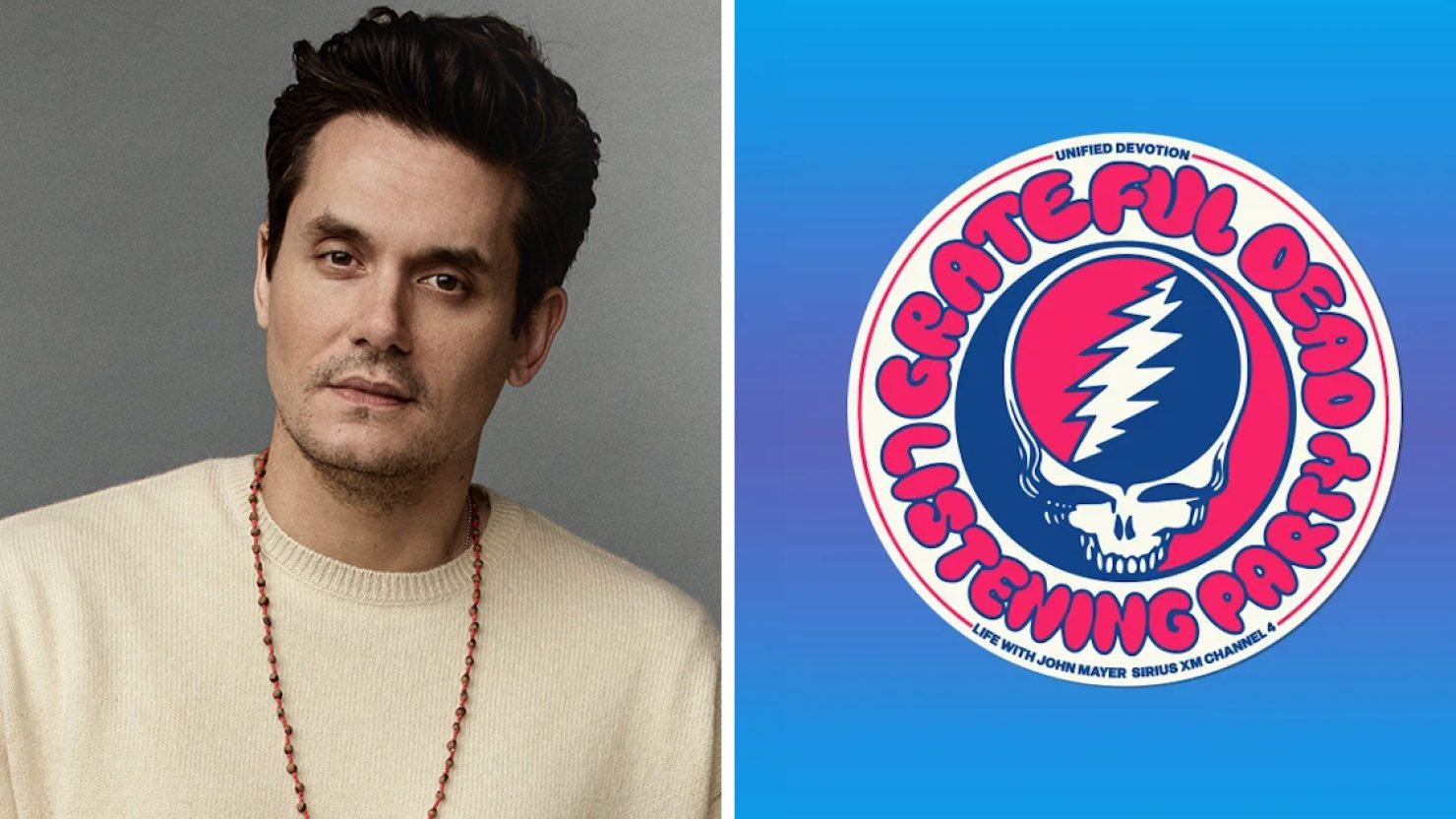
For a musician of John Mayer’s profile to dedicate a weekly SiriusXM program entirely to the Grateful Dead is, on its surface, a remarkable thing. For that program to be genuinely illuminating rather than simply promotional is something rarer still. His Sunday night series, Grateful Dead Listening Party on SiriusXM Channel 4, has quietly become one of the most substantive ongoing discussions of Dead music happening anywhere in public life, and the reason is simple: Mayer is not performing fandom. He is doing actual musical analysis.
The recent episode addressing Box of Rain is an instructive example. Mayer played a live version of the Phil Lesh classic and, rather than simply praising it in the abstract language that surrounds so much rock reverence, he talked about the specific anxiety he has always carried into performing it. He recalled a 2019 Dead & Company show where the teleprompter feeding him lyrics malfunctioned mid-verse, leaving him stranded inside one of the catalog’s most emotionally demanding songs. His willingness to laugh at that moment while also conveying just how high the stakes felt reveals something important about how seriously he takes the material. He also noted that Dead & Company performed Box of Rain only eight times in total — a statistic that underscores both the song’s weight and the caution with which the band approached it.
His segment on Not Fade Away carried a different kind of emotional gravity entirely. Since the passing of Bob Weir, Mayer has spoken about using the analytical process — breaking down the dual-guitar rhythmic architecture of the song, examining how the two guitar parts interlock and generate forward motion — as a means of processing grief. He described the song as a kind of mainframe, a structural core that keeps the broader community oriented and connected. It is the sort of insight that only comes from someone who has spent thousands of hours inside the music rather than simply admiring it from the outside.
Perhaps the most revealing detail Mayer has shared on the program is his pre-show ritual. Before every performance, he listens to a specific sequence of nine Jerry Garcia and Grateful Dead tracks in the production area backstage. He described these particular recordings not as warm-ups or mood-setters but as something more functionally essential — a process for recalibrating his internal compass toward the kind of open, responsive improvisation the music demands. The phrase he used to describe the desired mental state — “straight down the road” — is itself borrowed from Dead parlance, and it captures something precise about what the music asks of its performers: not inspiration, exactly, but alignment.
For longtime fans who have sometimes struggled to explain what Mayer brings to this repertoire, the Listening Party program is the most compelling argument he has made. He understands the architecture, respects the history, and is willing to be publicly vulnerable about the ways the music has shaped him. That combination is increasingly rare in conversations about legacy rock.
New Jersey’s Tribute Scene Is Keeping the Catalog Alive All Summer
For fans in the Garden State, the next several weeks represent an unusually rich opportunity to experience the Dead’s music performed live, with three distinct acts bringing very different approaches to the material across three different venues.
The summer opens with the Lovelight Band, one of the region’s most enthusiastic and high-energy Grateful Dead tributes, taking over the Anchor Rock Club in Atlantic City on the Fourth of July. A holiday weekend show at a venue known for its seaside energy is exactly the kind of setting where this music thrives — the looseness, the communal spirit, the way a warm night and a crowd in a shared mood can make even familiar songs feel newly minted. The Lovelight Band delivers that experience with consistency, and an Atlantic City show on July 4th is about as close to a genuine summer celebration as the tribute circuit offers.
Later in the summer, Dead on Live steps into considerably more formal territory with a theater booking at the Mayo Performing Arts Center in Morristown on August 6th. If the Lovelight Band brings the party, Dead on Live brings the scholarship. They are among the most respected ensembles in the North Jersey scene precisely because their approach is rooted in historical specificity — full, note-for-note recreations of documented historical Dead setlists before expanding into open improvisation. Their treatment of Bear’s Choice material in particular has earned them a following among fans who care as much about accuracy as energy. A proper theater setting at MPAC gives the music room to open up in ways that smaller venues simply cannot accommodate, and the production value that comes with that environment rewards the investment.
Running through the weekends and filling the gaps in the calendar is Diamond Eye Jack, the region’s most versatile Dead-adjacent act by virtue of their dual-catalog approach. Rather than limiting themselves strictly to Grateful Dead material, they move freely between the main band’s repertoire and the more intimate, jazz-inflected world of the Jerry Garcia Band — a combination that allows them to cover emotional and stylistic ground that a single-catalog tribute cannot. Their regular appearances at Willie McBride’s in Branchburg provide exactly the kind of low-key, high-quality weekly anchor that keeps a local scene healthy. This is music as a living, breathing part of the community, not a periodic special event.
Taken together, these three acts represent something genuinely valuable about the current moment in Dead fandom: the recognition that the catalog is large enough, and varied enough, to support multiple completely different interpretive approaches simultaneously. You do not have to choose between reverence and celebration. You can have both, sometimes in the same summer.
Garcia Hand Picked Brings the Legacy to California, From a New Direction
The Garcia estate’s cannabis brand, Garcia Hand Picked, has always occupied an interesting position in the broader landscape of Dead-related ventures — a commercial enterprise that nonetheless manages to feel connected to something authentic about Garcia’s own relationship to California’s counterculture. This summer’s Homecoming Tour across California deepens that connection by pairing its legacy strain showcases with something genuinely worth driving for: a traveling exhibition of rare 1970s original Jerry Garcia photographs sourced directly from the Retro Photo Archive.
These are not the familiar images. The prints being exhibited represent a slice of Garcia’s visual history that most fans have never encountered — candid, unguarded moments from a period when the band was at its most musically adventurous and its public profile was still being formed. Pairing that exhibition with the strain showcases creates an event that operates on multiple frequencies simultaneously: sensory, historical, and communal in exactly the way the Dead always intended their world to be.
The Aoxomoxoa Connection: Art, Architecture, and the Rick Griffin Legacy
One of the more unexpected recent developments in the Dead’s extended cultural universe has been the formal tribute issued by the estate of Rick Griffin, the psychedelic poster artist whose visual language became inseparable from the band’s public identity during its most creatively explosive years. The estate’s archive display focused specifically on the relationship between Bob Weir’s rhythm guitar work and Griffin’s visual aesthetic — a connection that, once articulated, seems almost obvious in retrospect.
The argument the tribute makes is structural. Weir’s playing was never simply accompaniment. His intricate, syncopated rhythm work created a sonic architecture that was simultaneously supportive and generative — a foundation that gave other musicians room to move while also providing its own distinct contribution to the overall texture. Griffin’s visual art, and the Aoxomoxoa album artwork in particular, operated on a similar principle: dense, layered, full of information at every scale, but organized around an underlying logic that prevented it from collapsing into chaos. The suggestion that Weir’s playing served as the sonic canvas on which Griffin’s most iconic work found its visual expression is a genuinely illuminating reframing of both artists’ contributions.
Meanwhile, in Asbury Park, a different kind of tribute has taken shape organically. The Bob Weir mural located just north of Convention Hall on Ocean Avenue has become something more than public art — it has been transformed by local fans into a living, flower-lined memorial that reflects the genuine affection this community holds for the music and the people who made it. New Jersey has always had a particular relationship to the Dead that is easy to overlook from a distance. Tonight’s Don’s Pick, built around a 1976 recording, is one reminder of why that relationship runs deep.
The Forever Grateful Exhibition Is Almost Here
Mark July 3rd on your calendar. The Haight Street Art Center in San Francisco is launching what promises to be the most comprehensive physical exhibition of Grateful Dead memorabilia assembled in years, and the scope of what is being displayed is genuinely impressive. More than four hundred pieces of rare band artifacts will be on view, including custom fan mail envelopes, band memorabilia spanning multiple decades, and — most strikingly — a fully functional, one-quarter-scale replica of the legendary Wall of Sound PA system.
For anyone who has only ever read about the Wall of Sound — the band’s extraordinary 1974 speaker array that represented both the apex of their live sound ambitions and the moment those ambitions became financially unsustainable — seeing even a scaled replica in person is an opportunity to understand something that words struggle to convey. The Wall was not merely large. It was a philosophy about what concert sound could be, built into physical form. Having it present in the exhibition transforms the space from an archive into something closer to an argument.
A companion exhibition is scheduled to follow at Golden Gate Park on September 5th, extending the celebration into the fall and giving the broader Bay Area community an opportunity to engage with the material outside of a gallery context.
On a Back Porch, Vol. 3: Worth the Wait
The third volume of the acoustic curation series On a Back Porch has not yet arrived, but it remains one of the more genuinely anticipated releases in the pipeline. The project’s first two installments established a template — intimate, carefully selected, acoustically warm — that positioned it as a counterweight to the more formally produced archival releases. Volume 3 is still coming. When it does, it will be worth the patience.
Dogfish Head, the Dead, and a New Jersey Record That Ties It All Together
Of all the projects currently living in the Grateful Dead’s extended creative orbit, perhaps none is more unexpectedly satisfying than the collaboration between the band and Dogfish Head Craft Brewery. What could have been a simple licensing arrangement has instead become a genuinely thoughtful convergence of two institutions that share a commitment to craft, community, and the belief that the right experience, shared with the right people, is one of life’s genuinely irreplaceable pleasures.
The centerpiece is a six-track live compilation released on 180-gram vinyl as a Record Store Day exclusive, curated by Grateful Dead archivist David Lemieux alongside Dogfish Head founder Sam Calagione and his son. Lemieux’s involvement guarantees that the recording selections reflect genuine archival thinking rather than greatest-hits familiarity, and the Calagiones’ participation ensures that the pairing between the music and the beer was considered with the same seriousness that Dogfish Head brings to its brewing.
Here is the detail that makes the whole project land differently for New Jersey listeners: the opening track is a 1976 live recording of Samson and Delilah captured at the Capitol Theatre in Passaic. That is not a peripheral footnote — it is the first thing you hear when the needle drops, a New Jersey performance opening a release that celebrates one of American music’s most enduring collaborative legacies. For anyone who has spent time in the Passaic area, or who grew up hearing about the Capitol Theatre’s storied run as a Dead venue, that opening track carries a weight that goes beyond the music itself.
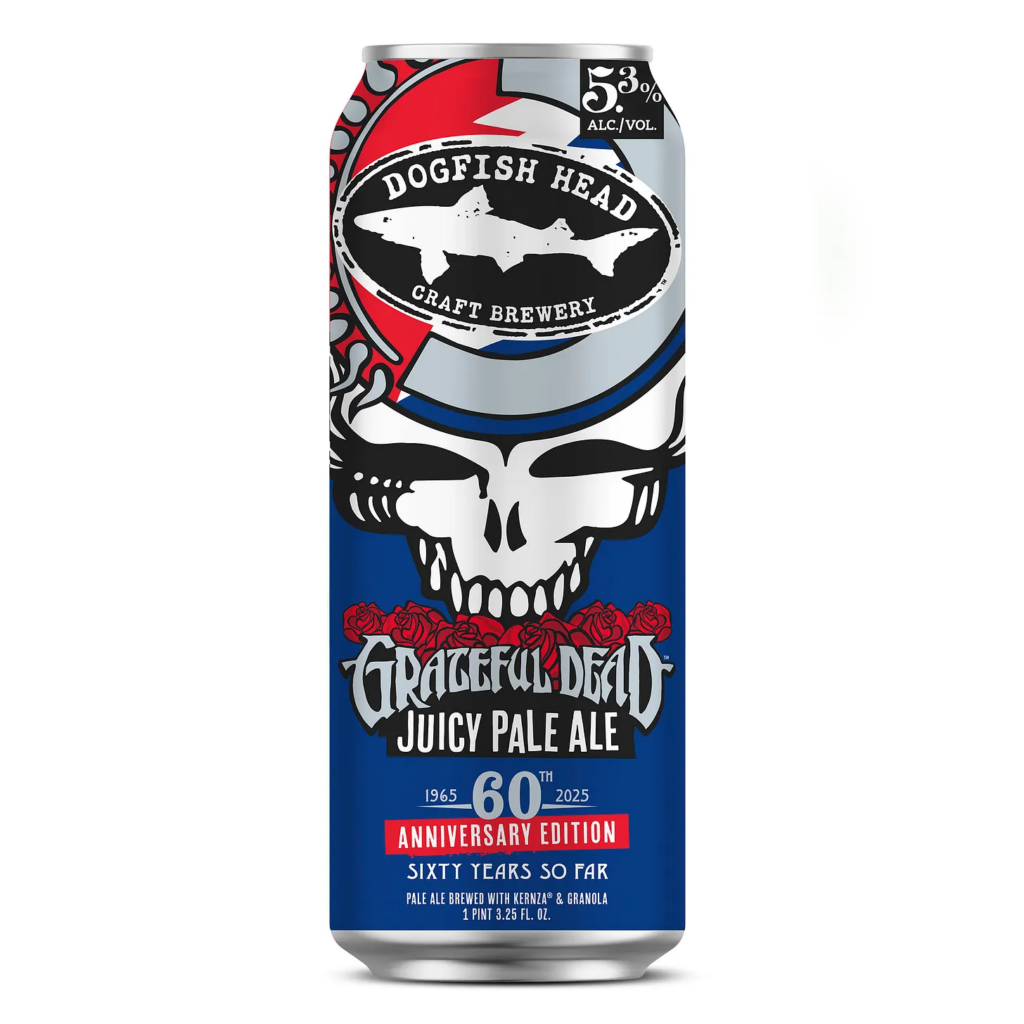
The accompanying beer was developed specifically for this project. The Grateful Dead Citrus Daydream Lager, along with a Juicy Pale Ale, was created to complement the listening experience rather than simply share branding space with it. The Steal Your Face skull on the cans is a nice touch, but the real story is in the product itself — a core beer that stands on its own merits while being designed to be enjoyed alongside the record. That specificity of intention is what separates a genuine collaboration from a marketing partnership, and Dogfish Head and the Dead estate have consistently demonstrated they understand the difference.
It would be tempting to attribute the current vitality of the Grateful Dead’s cultural presence to nostalgia alone — to the predictable cycle by which a generation’s music eventually becomes its defining cultural artifact. But nostalgia alone does not produce the depth of ongoing engagement that the Dead continue to generate. Nostalgia does not explain John Mayer spending Sunday nights doing structural analysis of Bob Weir’s rhythm playing. It does not explain Dead on Live recreating specific historical setlists note-for-note in a Morristown theater. It does not explain David Lemieux and Sam Calagione making a vinyl record together that opens with a 1976 Passaic recording.
What explains all of that is something different: a body of music that genuinely rewards serious attention, combined with a community of listeners and performers who have collectively decided that serious attention is exactly what it deserves. The Dead were always, at their best, an argument that popular music could be something more than entertainment — that it could be a practice, a discipline, a ongoing conversation between musicians and audience and the long history of American improvised sound. Fifty years on, that argument is still being made, and it is still being won.
Tonight, Don’s Pick puts June 29, 1976 on the air. In a summer this rich with Dead-related activity, it is somehow fitting that the most important event on the calendar is also the simplest: someone who knows the music well, sharing a recording that deserves to be heard, with listeners who have learned to trust his judgment.
That is what the Grateful Dead built. That is what the music still does.
Tune in tonight.

