
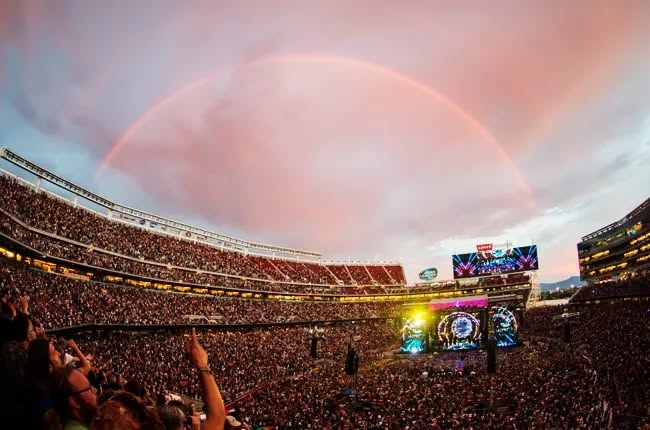
There are defining moments in the history of the Grateful Dead that every Deadhead remembers. Some are measured by legendary performances, groundbreaking tours, or unforgettable improvisations that forever altered the band’s musical direction. Others are remembered because they marked the end of an era while simultaneously proving that the music could never truly end. Few events accomplished both quite like Fare Thee Well, the historic five-concert celebration that reunited the surviving members of the Grateful Dead for one final series of performances during the summer of 2015.
More than a decade later, those concerts remain among the most significant live music events of the twenty-first century. They were not simply reunion shows or anniversary celebrations. They represented the closing chapter for one generation of musicians while laying the foundation for everything that followed, from Dead & Company and countless tribute ensembles to the ongoing evolution of the Grateful Dead community itself.
When the Fare Thee Well concerts were announced, anticipation reached extraordinary levels throughout the music world. Demand for tickets became one of the largest in modern concert history as hundreds of thousands of Deadheads attempted to secure seats for what many believed would be the final opportunity to witness the surviving core members performing together.
The celebration unfolded across two unforgettable weekends.
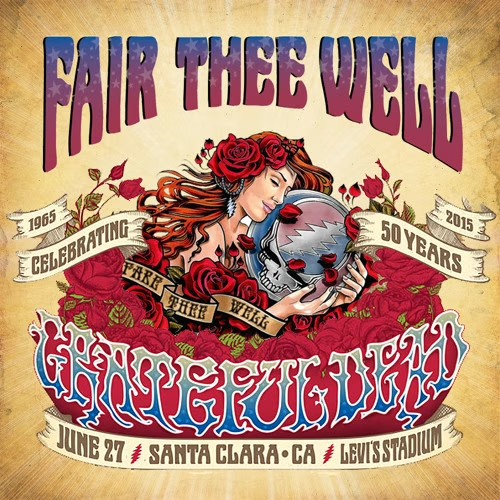
The first two performances took place on June 27 and June 28, 2015, at Levi’s Stadium in Santa Clara, California, only a short distance from the Grateful Dead’s longtime Northern California home. Those concerts carried enormous symbolic importance, bringing the band back to the region where so much of its remarkable journey began during the countercultural explosion of the 1960s.
One week later, the celebration shifted to Chicago’s legendary Soldier Field for three consecutive performances on July 3, July 4, and July 5. The choice of venue carried profound historical significance. Soldier Field was where Jerry Garcia had performed his final Grateful Dead concert twenty years earlier, making the return deeply emotional for both the musicians and the thousands of fans who filled the stadium.
The performances reunited the four surviving core members of the Grateful Dead: Bob Weir, Phil Lesh, Bill Kreutzmann, and Mickey Hart. Together, they represented more than half a century of musical history and one of the most influential partnerships ever assembled in American music. Joining them was an exceptional supporting cast led by Phish guitarist Trey Anastasio, longtime keyboardist Jeff Chimenti, and pianist Bruce Hornsby, each bringing their own musical identity while honoring the improvisational traditions that had always defined the Grateful Dead.
From the opening notes in Santa Clara through the emotional conclusion in Chicago, the performances became a celebration of every era of the Grateful Dead’s remarkable journey. Rather than attempting to recreate the past exactly as it had been, the musicians embraced the philosophy that had guided the band from its earliest days: every performance should be a new conversation.
That approach proved especially important given the impossible task facing Trey Anastasio. Rather than attempting to imitate Jerry Garcia, Anastasio wisely chose to interpret the music through his own voice while remaining respectful of Garcia’s melodic sensibilities. His willingness to serve the songs rather than imitate a legend earned widespread respect throughout the Deadhead community and demonstrated exactly why the Grateful Dead catalog has remained so durable across generations.
Each evening featured carefully assembled setlists spanning virtually every period of the band’s career. Songs such as “Truckin’,” “Scarlet Begonias,” “China Cat Sunflower,” “Estimated Prophet,” “Terrapin Station,” “Uncle John’s Band,” “Sugar Magnolia,” and countless others reminded audiences of the remarkable depth and diversity of the Grateful Dead songbook.
The concerts were filled with emotional moments, but perhaps none resonated more deeply than the final encore at Soldier Field. As the last notes faded and the musicians gathered together one final time, the significance of the moment became impossible to ignore. For the first time since the Grateful Dead formed in 1965, fans were witnessing the conclusion of an extraordinary chapter in American music history.
Yet the remarkable legacy of Fare Thee Well extends far beyond those five concerts.
Rather than serving as a farewell to the music itself, the performances demonstrated that the Grateful Dead songbook had become something much larger than any single lineup. The concerts proved that new musicians could successfully interpret the material while preserving its improvisational spirit. They introduced younger audiences to the live experience and reinforced the idea that the Grateful Dead’s greatest achievement was not simply creating songs but building a musical tradition capable of evolving across generations.
In many respects, Fare Thee Well became the bridge connecting two different eras. Without those performances, the extraordinary success of Dead & Company may never have unfolded as it did. The chemistry established during those reunion concerts reaffirmed that the music remained relevant, vibrant, and capable of filling stadiums decades after Jerry Garcia’s passing.
Today, the influence of Fare Thee Well can be seen throughout the modern Grateful Dead landscape. Tribute bands continue introducing new audiences to the catalog. Family-led projects preserve the music through festivals and collaborative performances. Archival releases continue uncovering remarkable moments from the vault. Younger musicians reinterpret familiar songs while remaining faithful to the improvisational philosophy that always distinguished the Grateful Dead from every other band.
The ripple effects extend far beyond touring. They have shaped festivals, orchestral collaborations, educational programs, museum exhibitions, and an ever-expanding archive that allows new generations to experience the music in ways that were unimaginable only a few decades ago.
The Grateful Dead have always believed that songs should remain alive rather than frozen in time. Fare Thee Well became perhaps the clearest demonstration of that philosophy. The concerts honored history without becoming trapped by it, proving that the music’s future would ultimately depend upon its willingness to continue changing.
That same philosophy remains at the heart of tonight’s Fare Thee Well Radio Show, a program dedicated exclusively to the remarkable musical journey that unfolded after Jerry Garcia’s passing in 1995. Rather than focusing on the original Grateful Dead years, the show celebrates the extraordinary body of work created by the surviving members through projects including The Other Ones, The Dead, RatDog, Phil Lesh & Friends, Furthur, Dead & Company, and the historic Fare Thee Well concerts themselves.
Every broadcast explores the evolution of the music as it continued finding new voices, new audiences, and new creative directions. Through carefully selected live recordings, listeners experience how Bob Weir, Phil Lesh, Mickey Hart, Bill Kreutzmann, and their remarkable collaborators carried the Grateful Dead tradition into a new century while remaining true to the principles of improvisation, exploration, and musical conversation that always defined the band.
Tonight’s edition of the Fare Thee Well Radio Show pays tribute to the remarkable legacy born from those unforgettable concerts in 2015 and the extraordinary musical journey that followed. It serves as a reminder that Fare Thee Well was never simply about saying goodbye. It was about celebrating everything that had come before while embracing everything still waiting to be discovered. As the Grateful Dead universe continues evolving, tonight’s Fare Thee Well Radio Show celebrates the remarkable musical journey that followed Jerry Garcia’s passing. Unlike traditional Grateful Dead programs that focus primarily on the original band, Fare Thee Well is dedicated exclusively to the live music created by the many projects formed by the surviving members after 1995. Every broadcast explores performances by The Other Ones, The Dead, RatDog, Phil Lesh & Friends, Furthur, Dead & Company, and, of course, the historic Fare Thee Well reunion concerts themselves. The show follows the evolution of the Grateful Dead songbook as it continued to grow through new lineups, fresh collaborations, and fearless improvisation, proving that the music never stopped after Jerry Garcia’s passing—it simply found new voices to carry it forward.
Tonight’s program places a special spotlight on the historic Fare Thee Well Levi Stadium concerts of 2015, revisiting one of the most emotional weekends in Grateful Dead history. Listeners will hear live performances from the five-show celebration that reunited Bob Weir, Phil Lesh, Bill Kreutzmann, and Mickey Hart for the final time on stage together. From the opening weekend at Levi’s Stadium in Santa Clara to the unforgettable three-night finale at Chicago’s Soldier Field, the broadcast captures the emotion, musicianship, and sense of history that made Fare Thee Well one of the defining live music events of the decade. Whether you experienced those concerts in person or are hearing them for the first time, tonight’s Fare Thee Well Radio Show offers another opportunity to relive the performances that closed one extraordinary chapter while opening the next generation of Grateful Dead music.
Looking back today, the significance of those five concerts continues to grow. They marked the final appearance of the surviving Core Four onstage together, closing one of the greatest chapters in rock history. At the same time, they opened countless new pathways that continue shaping the Grateful Dead universe today.
The venues have gone quiet. The tour posters have become collector’s items. The applause has faded into history.
But the songs remained. The improvisation continued. The community grew. And the spirit that filled stadiums in Santa Clara and Chicago during the summer of 2015 still echoes every time musicians gather to play this extraordinary music.
For the Grateful Dead, Fare Thee Well was never truly an ending. It was simply the beginning of the next chapter.

