There are defining moments when the creative language of the Grateful Dead evolves beyond performance and recording into something broader, more dimensional, and more permanent. In the summer of 2026, that evolution is being driven with clarity and purpose by Mickey Hart, whose latest body of work positions rhythm not just as something to be heard, but as something that can be seen, studied, and experienced in physical form.
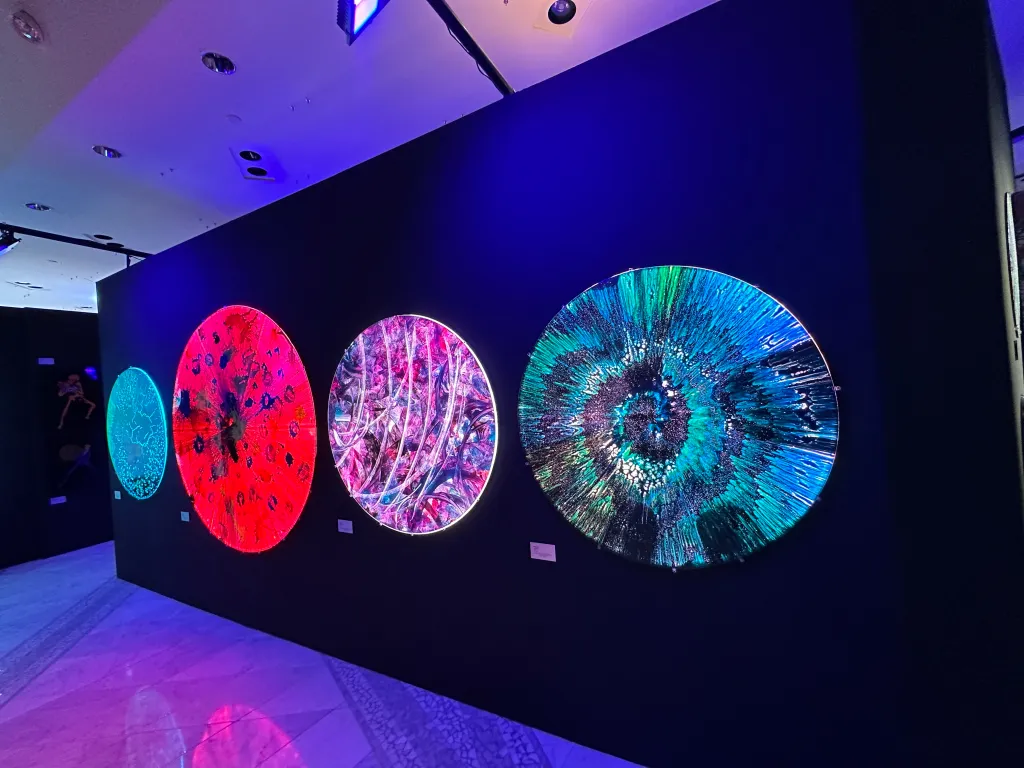
Opening July 24 and running through September 21, 2026, “Art at the Edge of Magic” at the Haight Street Art Center represents a milestone moment—not only for Hart personally, but for the broader cultural framework that has always surrounded the Grateful Dead. This is his first major museum exhibition in San Francisco, a city intrinsically tied to the band’s origin and identity, and the scale of the presentation reflects decades of exploration, experimentation, and conceptual development.
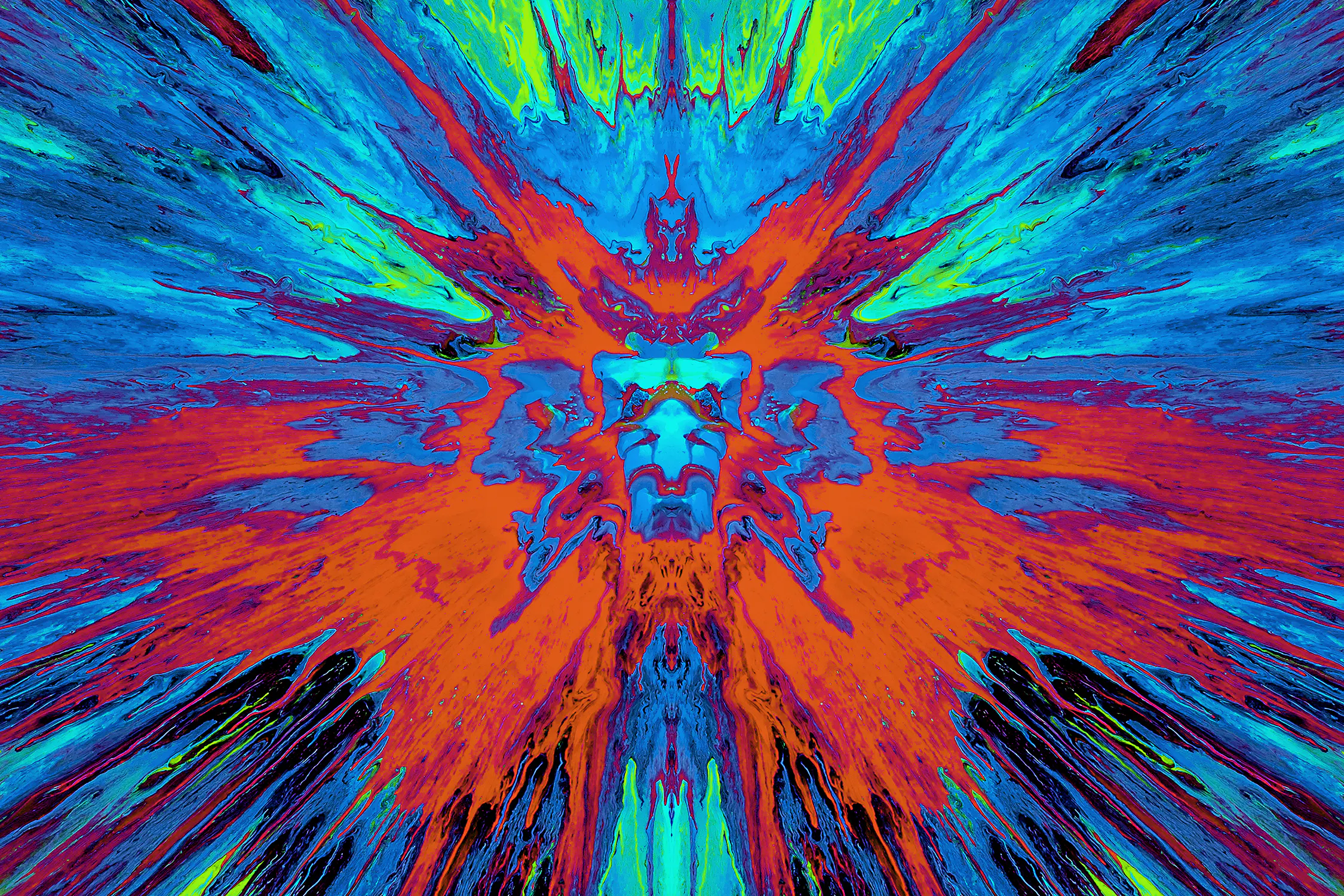
The exhibition features nearly 100 original works, each rooted in Hart’s pioneering discipline of “vibrational expressionism,” a method that transforms the invisible mechanics of sound into tangible visual compositions. These are not conventional paintings. They are the direct result of sonic energy—created through the physical act of drumming and the resulting frequencies that ripple across unconventional surfaces including drumheads, cymbals, metal plates, and plexiglass. What emerges is a body of work that captures motion without freezing it, energy without diluting it, and rhythm without reducing it to abstraction.
This approach is not an extension of music into art in the traditional sense; it is a restructuring of how artistic mediums intersect. Hart’s work operates at the intersection of physics, rhythm theory, and visual composition, where vibration becomes both the tool and the subject. The pieces carry an immediacy that mirrors live improvisation, yet they remain fixed in form—creating a tension between spontaneity and permanence that will feel familiar to anyone who understands the deeper mechanics of the Grateful Dead’s live legacy.
The exhibition’s opening celebration on July 31, 2026, from 4:00 PM to 9:00 PM, is positioned as a central cultural moment within the summer calendar in San Francisco. Designed as both an artistic unveiling and a community gathering, the event will bring together collectors, fans, and those embedded in the extended Dead universe for a first immersive experience of the collection. It is also the first opportunity to access a limited-edition show poster—an exclusive collaboration between Hart, artist Je Noodle, and the iconic Stanley Mouse, whose visual contributions have long been inseparable from the Grateful Dead’s identity.
What distinguishes this exhibition from a standard gallery presentation is its philosophical continuity with Hart’s lifelong work as a percussionist. The same principles that guided his approach to rhythm—layering, improvisation, tonal exploration, and global influence—are embedded in each visual piece. The materials themselves reinforce that connection; by using instruments and performance-related surfaces as canvases, Hart collapses the boundary between creation and documentation. These works are not representations of rhythm—they are rhythm, translated into a different sensory dimension.
Extending this exploration into an ongoing broadcast format is the weekly “Planet Drum Circle” radio show, co-hosted by Hart and Bill Kreutzmann. Airing every Sunday, the program functions as a global survey of percussion, rhythm traditions, and sonic experimentation, reinforcing the idea that rhythm is a universal language that predates and transcends genre. The show moves fluidly across cultural and stylistic boundaries, connecting indigenous percussion forms, contemporary rhythmic innovation, and archival material into a cohesive listening experience that mirrors the exploratory ethos of the Grateful Dead at their most adventurous.
“Planet Drum Circle” is not structured as passive listening—it is designed as an immersion into rhythm as a living system. For listeners engaging with Hart’s visual exhibition, the radio show serves as a parallel entry point, offering an auditory counterpart to the same concepts explored visually in “Art at the Edge of Magic.” Together, they form a multi-platform expression of Hart’s core thesis: that vibration, rhythm, and resonance are foundational forces that can be interpreted across mediums without losing their integrity.
The timing of the July 31 opening is intentional, positioned as a prelude to a larger moment within the Grateful Dead’s extended cultural calendar. However, the exhibition stands entirely on its own terms. It is not dependent on performance, nor does it function as a companion piece to live music. Instead, it asserts itself as a fully realized artistic statement—one that expands the vocabulary of what the Grateful Dead legacy represents in 2026.
For San Francisco, the significance is equally pronounced. Hosting Hart’s first major museum exhibition in the city reconnects the Grateful Dead’s forward momentum with its geographic roots, reinforcing the idea that this legacy is not static or archival, but actively evolving. The Haight Street Art Center becomes more than a venue; it becomes a focal point for a broader conversation about art, sound, and cultural continuity.
In its totality, “Art at the Edge of Magic” is not simply an exhibition—it is a culmination of decades of inquiry into the nature of rhythm and its place within human expression. It demonstrates that the Grateful Dead’s influence extends far beyond its recorded catalog or live performances, reaching into disciplines that challenge traditional definitions of art itself.
Mickey Hart’s work in 2026 makes one thing unmistakably clear: the conversation that began with the Grateful Dead is still unfolding, still expanding, and still pushing into new territory. Through visual art, through broadcast, and through a relentless commitment to exploration, that legacy continues to redefine what it means to create, to listen, and to experience rhythm at its most elemental level.