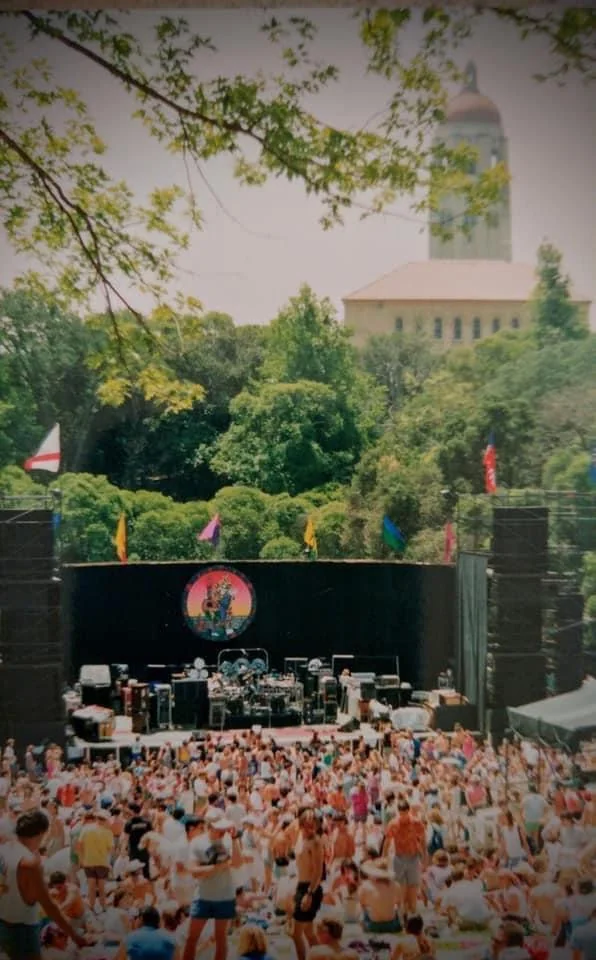
Few artistic institutions in American history have managed to remain as culturally alive, spiritually influential, and musically relevant as The Grateful Dead. More than sixty years after the band first emerged from the psychedelic underground of Northern California, the music continues to expand into new generations, new formats, new live interpretations, and entirely new cultural spaces. What began as an experimental improvisational rock collective in the mid-1960s has transformed into one of the most enduring and deeply studied musical movements ever created. In 2026, that momentum is stronger than ever.
The Grateful Dead no longer exist merely as a legendary band from another era. They function as an ongoing cultural force whose influence reaches across live music, Americana, improvisational rock, archival preservation, cannabis culture, independent radio, visual art, and modern touring communities. Every year brings new discoveries from the vault, new tribute performances, new interpretations of classic material, and fresh insight into the creative ecosystem built by Jerry Garcia, Bob Weir, Phil Lesh, Bill Kreutzmann, Mickey Hart, Ron “Pigpen” McKernan, Robert Hunter, and the extended family surrounding the Dead universe.
What makes 2026 especially remarkable is the sheer volume of meaningful developments surrounding the Grateful Dead legacy. From groundbreaking archival releases and anniversary editions to new tribute tours, historic real estate news, and continued exploration of Jerry Garcia’s solo work, the modern Deadhead community finds itself in the middle of another major renaissance period. The music is not slowing down. If anything, it is becoming more deeply woven into the fabric of American culture with every passing year.
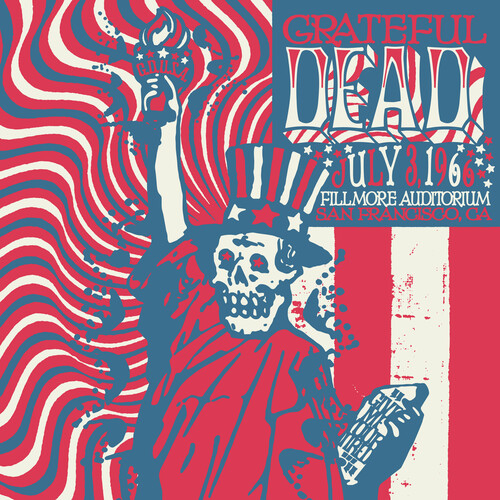
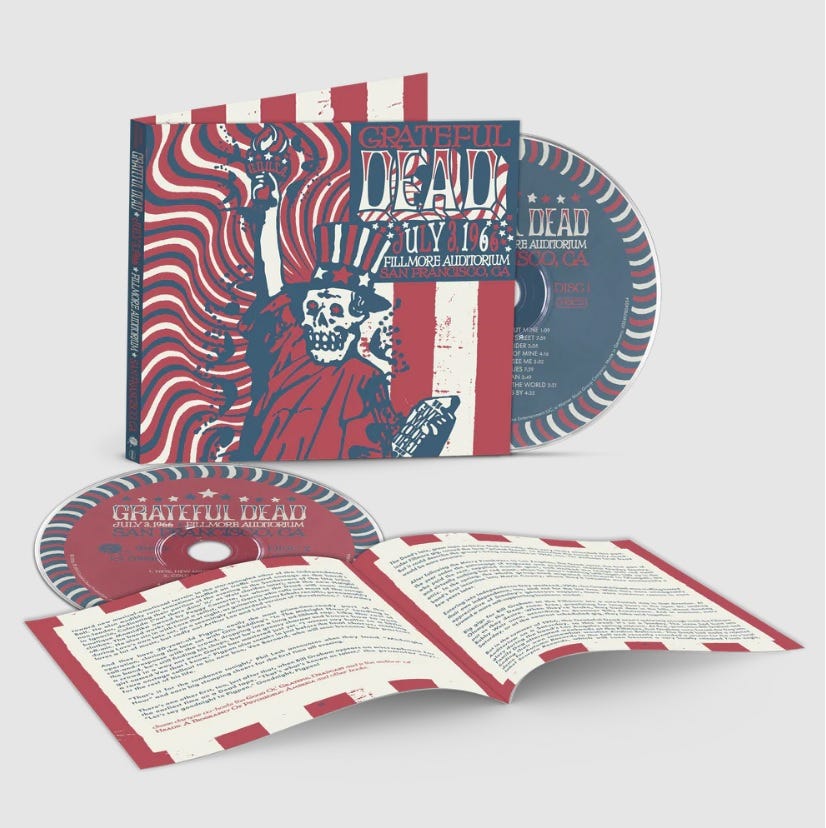
The largest announcement shaking the Dead community this year arrived on May 22, 2026, when the band officially revealed an extraordinary archival release tied directly to the earliest days of the Grateful Dead story. To commemorate the 60th anniversary of one of the most historically important performances in the band’s existence, Rhino Records will release the complete Fillmore Auditorium concert from July 3, 1966, on limited-edition vinyl exactly sixty years after the performance itself. For longtime collectors and historians, the significance of this release cannot be overstated.
The Fillmore Auditorium recording represents the earliest complete live Grateful Dead concert ever officially released. That fact alone makes it one of the most important archival discoveries in the band’s entire vault history. Captured during the infancy of the San Francisco psychedelic scene, the performance documents a version of the Grateful Dead still evolving in real time, balancing raw blues structures, exploratory improvisation, folk roots, and the beginnings of the cosmic experimentation that would eventually redefine live rock music forever.
Hearing the Grateful Dead in 1966 is unlike hearing virtually any later era of the band. The performances carry a fierce unpredictability and youthful hunger that reveal a group still inventing itself nightly. The Fillmore itself remains sacred ground in American music history, serving as one of the foundational epicenters of the psychedelic revolution alongside venues like the Avalon Ballroom. By releasing the complete concert on vinyl in 2026, the Dead organization and Rhino Records are offering fans more than nostalgia—they are opening a portal into the exact moment where an entirely new musical language began to emerge.
The excitement surrounding the release also reflects the extraordinary appetite Deadheads still possess for live archival material. No major band in history has cultivated a deeper culture of live recording appreciation than The Grateful Dead. Every concert exists as its own ecosystem, its own emotional weather pattern, its own conversation between musicians and audience. That endless variation is why collectors continue obsessively studying performances decades later. Songs evolved nightly. Tempos changed. Solos stretched into unknown territory. Setlists became living narratives rather than predictable routines.
The band’s commitment to archival exploration continues beyond the Fillmore release through the ongoing Dave’s Picks subscription series, which remains one of the most respected live music archival programs in existence. The 2026 series opened with the announcement of Dave’s Picks Volumes 57 and 58, once again diving deep into multiple eras of Grateful Dead history to preserve historically important performances from vastly different periods of the band’s evolution.
What makes the Dave’s Picks series so culturally important is its dedication to documenting the complete arc of the Grateful Dead journey rather than focusing solely on mainstream highlights. The series consistently explores transitional years, experimental periods, overlooked tours, and performances that hardcore fans have circulated privately for years but newer audiences may never have experienced. In many ways, Dave’s Picks functions as a living historical archive for one of America’s most important touring bands.
That commitment to preservation matters deeply because The Grateful Dead never approached music as static entertainment. Their concerts were acts of exploration. Every show represented possibility rather than replication. Fans attended multiple nights because no one—including the band themselves—fully knew what might happen next. That philosophy changed live music permanently and laid the foundation for the entire jam band movement that followed.
The cultural footprint of the Grateful Dead in 2026 extends far beyond recordings and reissues. Late May also brought major news from Marin County when one of the most historically important buildings connected to the Dead’s recording legacy officially hit the market. The former Presbyterian church located at 1405 San Anselmo Avenue—later transformed into a legendary recording studio frequented by the Grateful Dead, Van Morrison, and Janis Joplin—was listed for sale at $4.4 million.
For music historians, the property represents far more than real estate. It stands as a physical artifact from one of the most creatively explosive eras in American music history. During the late 1960s and early 1970s, Marin County became an epicenter for artistic experimentation, communal living, and genre-defying musical collaboration. Spaces like the San Anselmo studio were not merely recording facilities; they were laboratories for creative risk-taking where musicians blurred the lines between rock, folk, blues, jazz, psychedelia, and Americana.
The fact that the property still commands such fascination decades later speaks to the enduring mythology surrounding the Grateful Dead and the broader Northern California counterculture movement. Fans continue seeking tangible connections to the environments where this music was born because the Dead represented more than songs. They embodied an entire worldview centered around freedom, improvisation, artistic curiosity, and community.
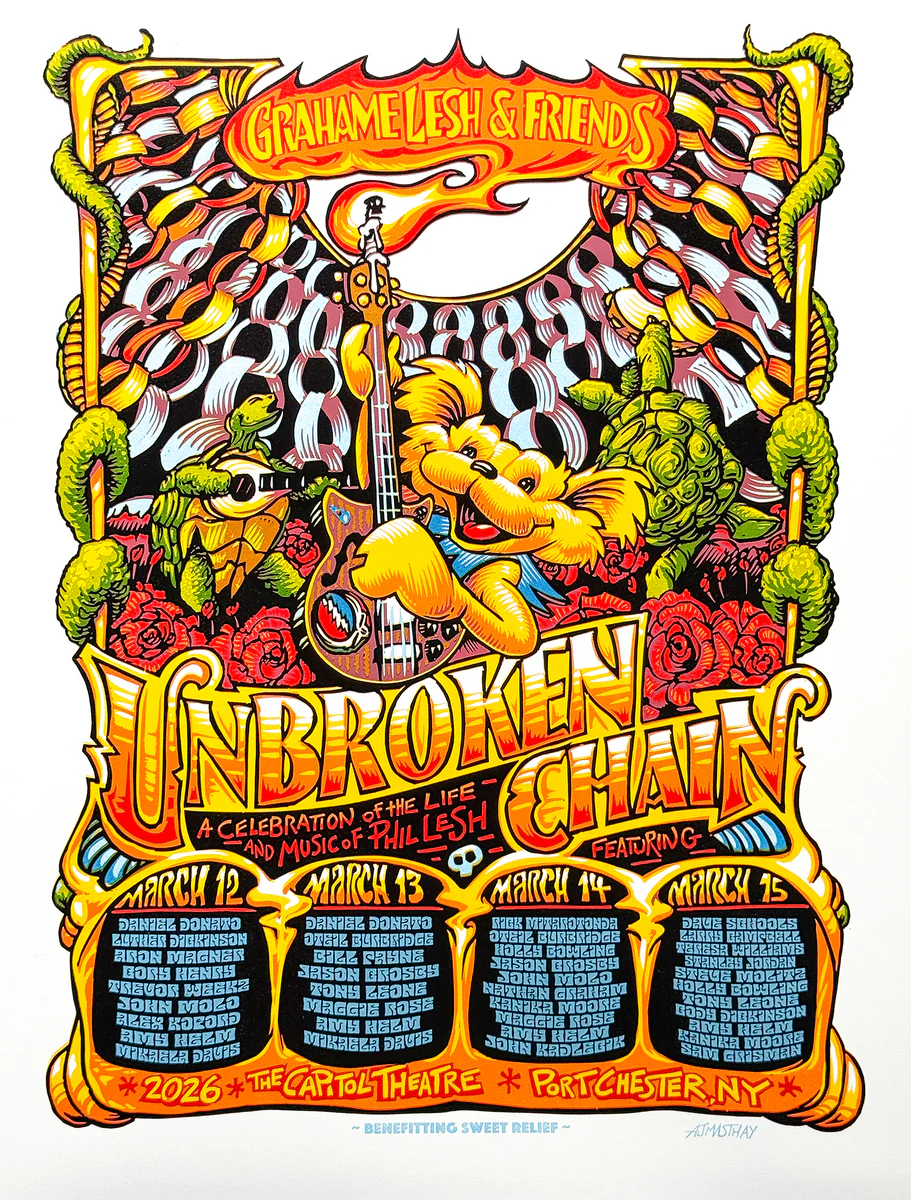
That same spirit remains alive through the expanding universe of tribute performances and musical celebrations connected to the Grateful Dead family tree. One of the most emotional and widely discussed developments of 2026 has been the evolution of Grahame Lesh & Friends’ Unbroken Chain concert series. Initially conceived as a tribute honoring the legacy of Phil Lesh, the series has now expanded into broader celebrations dedicated to the memory, music, and ongoing influence of Bob Weir as well.
The emotional power behind these performances comes from their authenticity. Unlike corporate nostalgia productions, many modern Dead-related tribute events are built by musicians who grew up deeply immersed in this music emotionally, spiritually, and personally. Grahame Lesh occupies a uniquely meaningful position within that ecosystem, carrying forward both musical lineage and the deeper communal philosophy associated with the Dead experience.
At the same time, the acoustic side of Grateful Dead history continues receiving long-overdue appreciation through the newly expanded Acoustic Reckoning Tour from acclaimed folk duo Gillian Welch and David Rawlings. Their 2026 announcement adds multi-night performances in Seattle and Portland while celebrating the 45th anniversary of Reckoning, the Grateful Dead’s landmark 1981 live acoustic album.
Reckoning occupies a fascinating place within the Dead catalog because it highlighted another crucial truth about the band: beneath all the psychedelic improvisation and electric experimentation existed a profound reverence for traditional American folk music. Acoustic Grateful Dead performances stripped the songs down to their emotional skeletons, revealing the storytelling depth at the heart of compositions like “Ripple,” “Bird Song,” “China Doll,” and “Dire Wolf.”
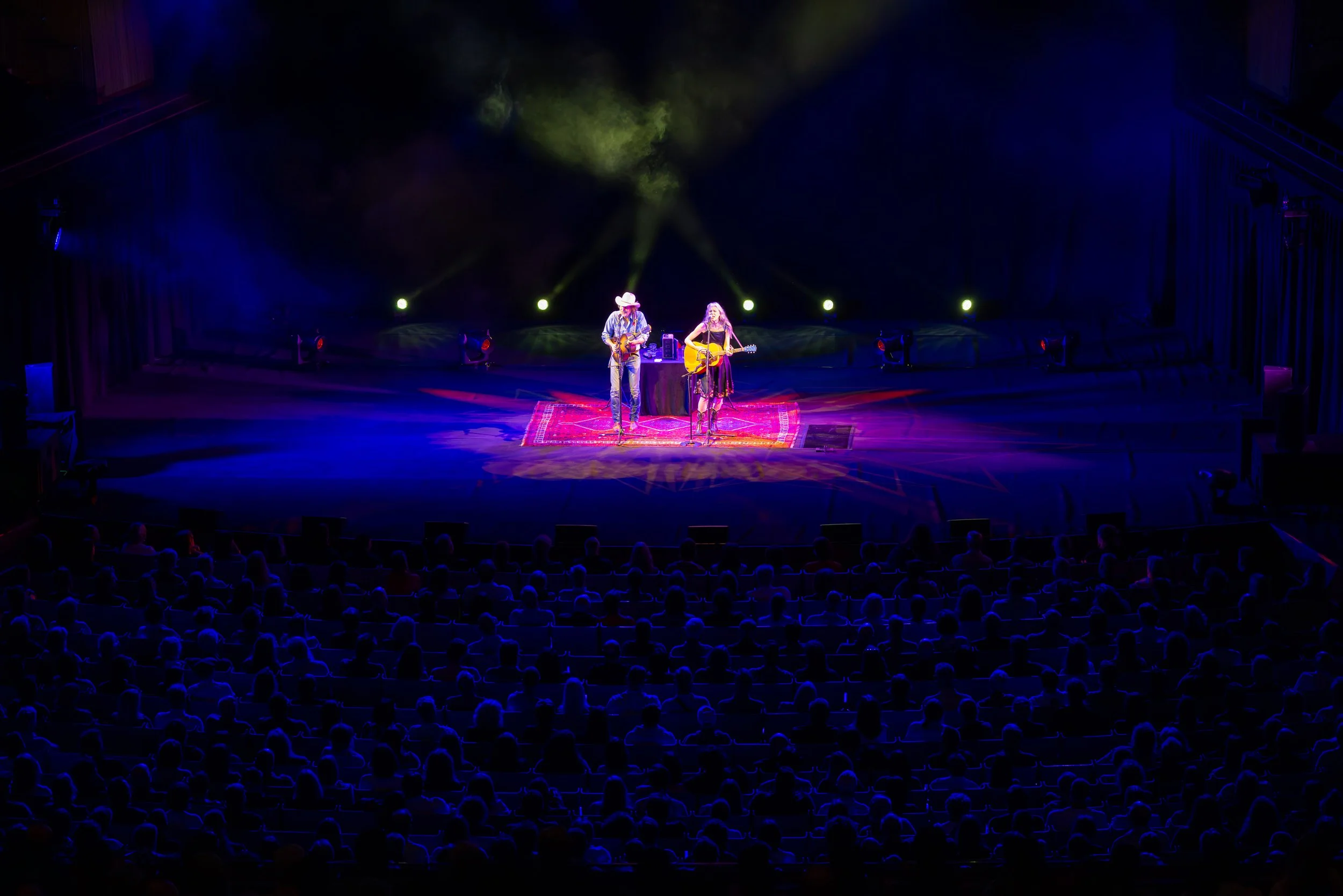
Welch and Rawlings are especially fitting artists to honor that legacy because their own work shares many of the same qualities that made the Dead’s acoustic material timeless: emotional honesty, rural imagery, haunted beauty, and a deep connection to American roots traditions. Their expanded tour demonstrates how Grateful Dead music continues influencing musicians far outside the traditional jam band universe.
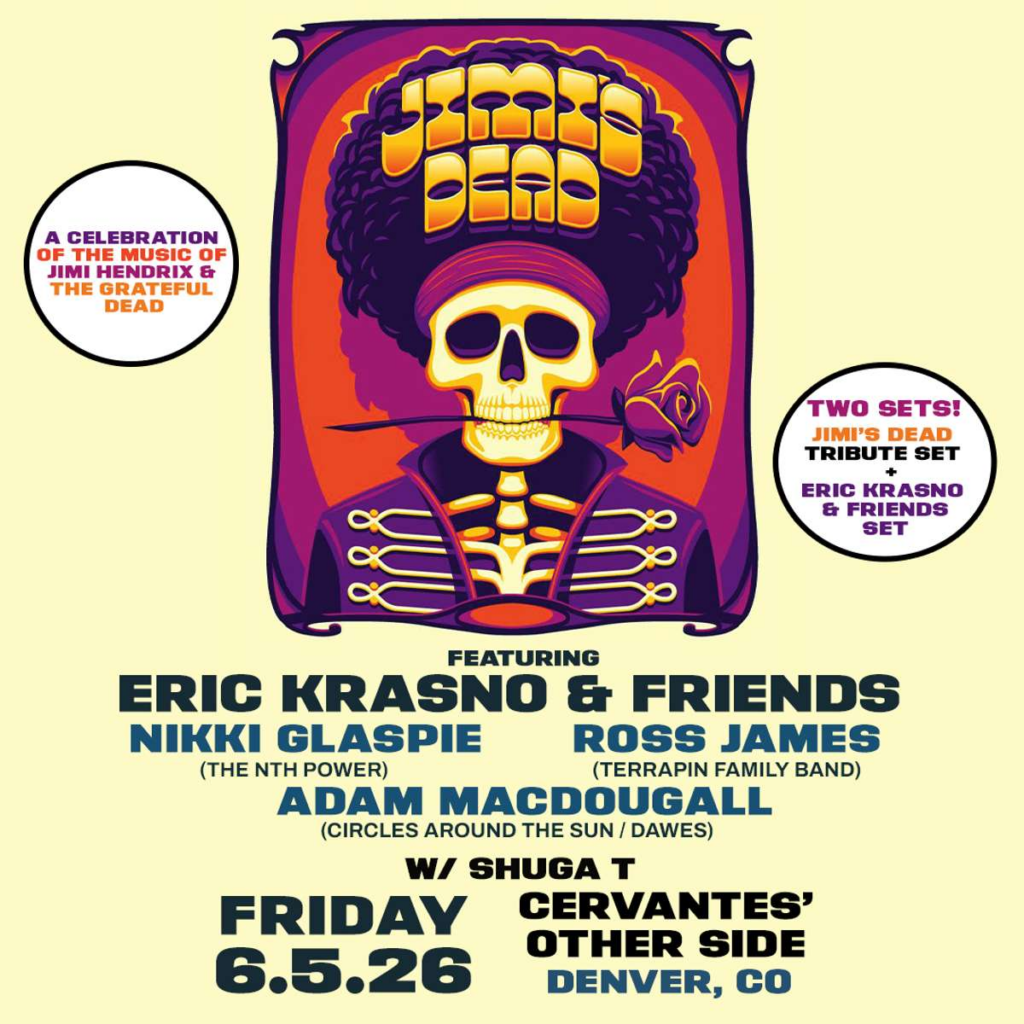
Another major tribute event generating excitement in 2026 comes from guitarist Eric Krasno, who announced a special “Jimi’s Dead” double-header event in Denver on June 5 alongside keyboardist Adam MacDougall and drummer Nikki Glaspie. The project blends the musical worlds of Jimi Hendrix and the Grateful Dead, two forces whose improvisational daring permanently altered the possibilities of rock music.
The pairing feels especially appropriate because both Hendrix and the Dead approached live performance as a vehicle for exploration rather than repetition. Their concerts prioritized risk, spontaneity, and emotional immediacy over polished predictability. Modern collaborations like “Jimi’s Dead” continue introducing younger audiences to that philosophy at a time when so much contemporary music feels algorithmically engineered rather than spiritually discovered.
No discussion of the Grateful Dead’s modern cultural presence would be complete without recognizing the continued expansion of Jerry Garcia’s solo legacy. While Garcia remains globally recognized as the heart and soul of the Grateful Dead, his work outside the band has gained tremendous appreciation in recent years among musicians, collectors, and younger listeners discovering the emotional depth of the Jerry Garcia Band catalog for the first time.
One of the most important modern celebrations of that musical legacy is The JGB Radio Show, also widely known as the Jerry Garcia Band Radio Show. The program has become a cherished destination for fans seeking deeper immersion into Garcia’s solo work, collaborations, and live performances outside the Grateful Dead framework. More than a radio broadcast, the show functions as an evolving archive of Garcia’s musical soul.
The JGB Radio Show captures the warmth, intimacy, and spiritual openness that defined so many Jerry Garcia Band performances. Unlike the cosmic unpredictability of Grateful Dead concerts, JGB shows often carried a looser, deeply soulful atmosphere rooted in rhythm and blues, gospel, reggae, folk, and emotional reinterpretations of classic songs. Garcia approached these performances with extraordinary sincerity, often sounding less like a rock icon and more like a lifelong student completely immersed in the joy of playing music.
That humility remains one of the defining reasons Jerry Garcia continues resonating across generations. His performances never felt driven by ego. He played with vulnerability. He chased feeling over perfection. Whether performing with the Grateful Dead or the Jerry Garcia Band, he approached music as a living conversation rather than a product.
The modern expansion of the Garcia legacy also includes one of the most authentic cannabis collaborations ever associated with a major artist estate. Garcia Hand Picked has become a standout success precisely because it was developed directly with Jerry Garcia’s family, including his daughters Trixie Garcia and Annabelle Garcia, alongside the Jerry Garcia Estate.
Unlike superficial celebrity cannabis branding efforts, Garcia Hand Picked was intentionally built around preserving Jerry’s values and communal philosophy. According to family members, Garcia viewed cannabis not as an isolated experience but as a social bridge designed to bring people together. That concept remains central to the brand’s identity.
The company partners with Holistic Industries while also collaborating with respected craft cultivators for regional projects, including West Coast partnerships with Solful. The result is a cannabis line that genuinely reflects the aesthetics, warmth, and spirit associated with Garcia himself.

Its product lineup includes curated flower strains, premium pre-rolls, eco-conscious packaging, and THC gummies inspired by Garcia’s actual guitar picks. Products like the Double Doobies and Roadie Packs have become especially popular among fans because they combine quality craftsmanship with subtle references to Dead culture and Garcia’s iconic imagery.
Even the visual presentation reflects a strong artistic identity, often featuring watercolor portraits of Garcia wearing his trademark sunglasses. Many strains also include curated playlists tied to specific moods and listening experiences, reinforcing the deep connection between music, atmosphere, and communal ritual that defined so much of Garcia’s life philosophy.
The company’s touring Airstream trailer, affectionately named “Bertha,” has further expanded the brand’s presence by appearing at dispensaries and live events while celebrating the broader Deadhead lifestyle. In many ways, the trailer functions almost like a traveling museum piece dedicated to preserving the wandering spirit associated with Grateful Dead touring culture.
The continuing relevance of all these projects reveals something larger happening culturally in 2026. The Grateful Dead are no longer simply surviving as a legacy act. They are actively growing. Younger audiences continue discovering the music through streaming platforms, vinyl culture, tribute concerts, archive releases, documentaries, cannabis collaborations, and live reinterpretations. Entire generations born decades after Jerry Garcia’s passing are developing emotional connections to this music because the themes embedded within it remain timeless.
Robert Hunter’s lyrics still resonate because they address universal human experiences: loss, freedom, mortality, wandering, redemption, heartbreak, joy, and spiritual searching. Garcia’s guitar work still inspires because it sounds emotionally human rather than mechanically perfect. The Grateful Dead endure because they created music that invites participation instead of passive consumption.
That spirit of openness remains their greatest legacy. The Grateful Dead built a world where concerts became communities, songs became journeys, and audiences became part of the performance itself. Few artists in modern history have created such a deeply participatory culture.
Now, sixty years after those earliest Fillmore performances, the music continues moving forward exactly the way it always has—through discovery, reinvention, and shared experience. The archives continue opening. The songs continue evolving. The community continues growing.
And somewhere, every single night, another listener hears Jerry Garcia’s guitar for the very first time and suddenly understands why this music never truly stopped living.